Some sewer lines sit behind houses, under treelines, inside golf courses, or down alleys where a full-size combination truck cannot follow. When a crew runs out of hose, runs out of road, or runs out of clearance, an easement machine becomes the right tool for the job. This guide walks municipal public works directors, utility superintendents, and contractors through how to decide whether an easement machine fits the operation, and how to spec one against the fleet you already run.
Key Takeaways
- An easement machine is a remote-controlled, tracked sewer cleaning unit built to reach lines in backyards, wooded easements, alleys, and other restricted locations a combination sewer truck cannot access.
- Choose an easement machine when access, not volume, is the limiting factor. For high-volume cleaning on accessible mains, a combination truck is still the right tool.
- The most important spec decisions are hose length and diameter, water tank capacity, remote control range, track ground pressure, and gate or fence clearance width.
- Most operations run an easement machine alongside a combination truck or trailer jetter, not in place of one. The two work together: the larger unit handles main runs, the easement machine reaches what the larger unit cannot.
- EPA estimates the U.S. has between 23,000 and 75,000 sanitary sewer overflows each year, many in lines that are difficult to access and easy to neglect.
- Total cost of ownership goes beyond the sticker. Factor in tow vehicle pairing, transport trailer needs, hose and nozzle replacement, parts availability, and recondition versus replace decisions on aging units.
What an Easement Machine Does, in Plain Terms
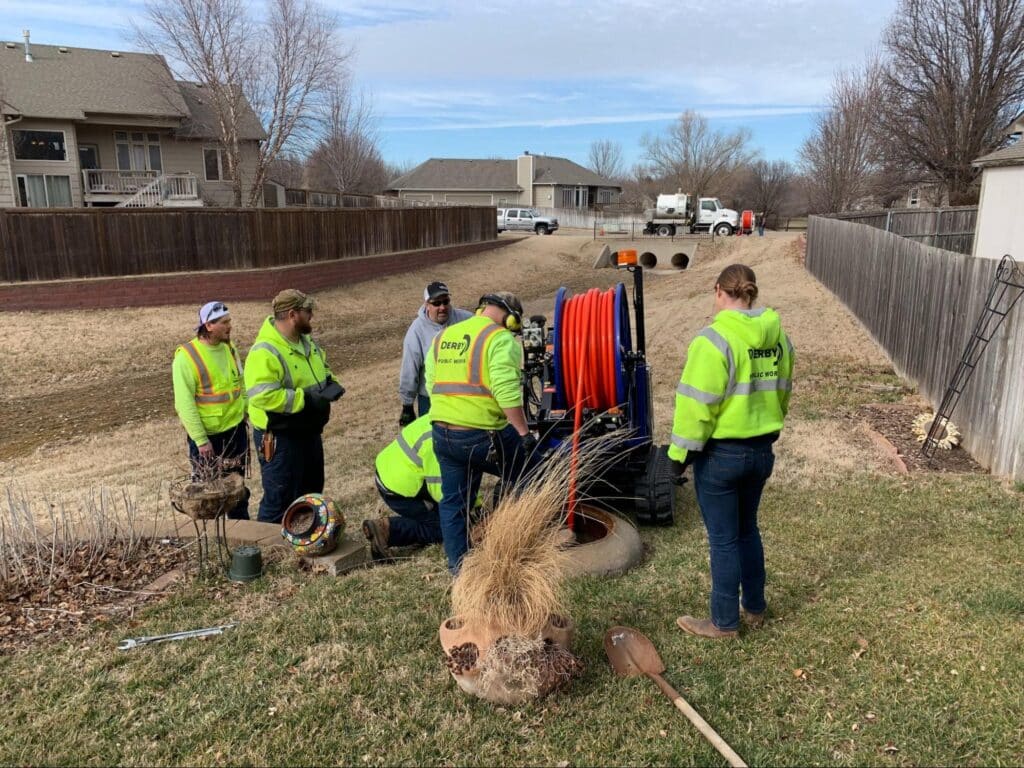
An easement machine is a remote-controlled, tracked vehicle that carries a sewer jetter and hose reel into locations a truck cannot reach. The operator stands at a safe distance and drives the unit across grass, gravel, mud, or pavement using a tethered or wireless remote. Once the machine reaches the manhole or cleanout, the crew runs the jetter line into the pipe and cleans the main the same way they would from a combination truck.
The advantage is access. Tracks distribute weight across a wide footprint, so the machine can cross soft ground without leaving the deep ruts a truck would. The compact frame fits through standard gates and between houses, and the remote keeps operators out of confined spaces and away from traffic exposure. For a closer look at the design features that make this possible, BEC’s overview of adding a sewer easement machine to your fleet walks through footprint, hose reach, track design, and operator controls in more detail.
When an Easement Machine Is the Right Fit (and When It Is Not)
The decision is rarely about brand or model. It is about access. Before evaluating units, walk through the question of whether the easement machine is the right category of equipment for the lines your crews struggle to maintain.
Choose an Easement Machine When:
- Sewer lines run through backyards, wooded easements, or between buildings where a truck cannot pull alongside the manhole.
- Crews lose hours on each call setting up long hose reaches from the street, or they cannot reach the manhole at all.
- Ground conditions (saturated turf, golf course fairways, mobile home park lots, cemetery grounds) cannot tolerate a heavy truck.
- Lines sit behind locked gates, narrow alley entries, or industrial campus interiors that block truck access.
- Right-of-way restrictions or traffic-control costs make street-side setups impractical for routine maintenance.
Stay With a Combination Truck or Trailer Jetter When:
- Most cleaning work is on accessible mains where a combo truck can park within standard hose reach of the manhole.
- Daily volume requires continuous water and large debris-tank capacity that an easement machine simply cannot carry.
- The fleet already runs a trailer jetter that handles the curbside and edge-access work effectively.
- Budget supports one unit and the operation has fewer than a handful of true easement-access calls per year.
The honest test is frequency. If easement-access lines come up weekly or even monthly, a dedicated machine pays for itself in labor saved and overflows prevented. If they come up only a couple of times a year, the math may favor coordinating with a neighboring utility or contractor instead of carrying the unit on the books.
Configuration Factors: What to Spec Before You Buy
Once an easement machine fits the operation, the next step is sizing the unit against the lines, the ground, and the support equipment already in the fleet. These are the spec decisions that determine whether the machine performs in the field or sits in the yard.
Hose Length and Diameter
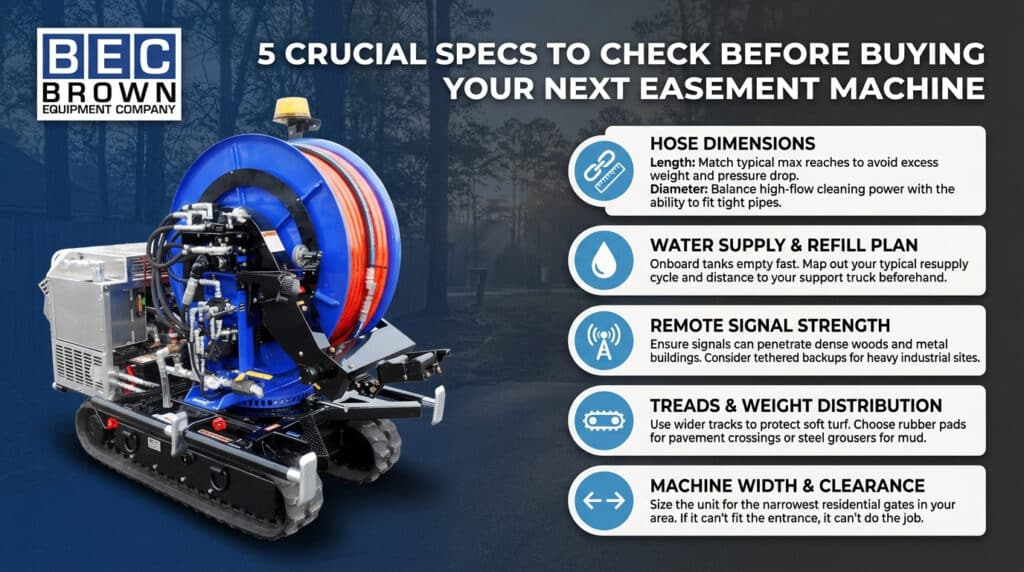
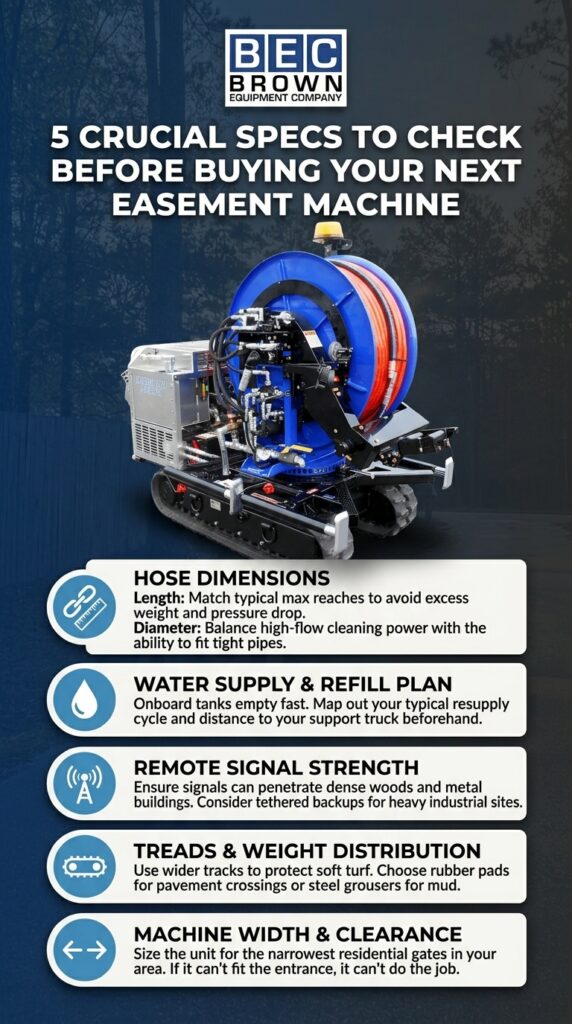
Hose reach drives where the machine can clean. Standard reels carry several hundred feet of jetter hose. Longer reaches extend coverage but add weight, reel size, and pressure loss along the run. Match hose length to the longest typical easement line in the service area, not the deepest worst-case scenario. Hose diameter affects flow rate and the size of debris the line can handle. Larger diameters move more water and clear heavier blockages; smaller diameters fit tighter laterals.
Water Tank Capacity and Resupply Strategy
Most easement machines carry a modest onboard water tank, often well under the volume of a combination truck. The machine is designed to operate within reach of a resupply source, typically the combination truck or a water tender staged at the road. When specing the unit, think about the resupply cycle. How far is the machine from the support truck on a typical call? How long can it operate before the tank runs dry? Pairing the machine with the right tow or support vehicle is part of the spec, not an afterthought.
Remote Control Range and Signal Reliability
Remote range determines how far an operator can position from the unit. Wooded easements and metal-frame buildings can interrupt wireless signal. Some units offer tethered backup or repeater options. If the operation includes industrial campuses with heavy metal infrastructure, confirm the remote performs reliably in that environment before purchase.
Track Configuration and Ground Pressure
Tracks distribute weight, which protects turf, soft ground, and finished surfaces. Wider tracks lower ground pressure, which matters on golf courses, cemeteries, and irrigated lots. Some units offer rubber-pad tracks for paved surfaces and steel grouser tracks for muddy or graded ground. Confirm the track configuration matches the surfaces the machine will cross most often.
Minimum Gate and Access Clearance
Width is the most overlooked spec. Standard residential gates run a predictable range, but older neighborhoods, alley entries, and industrial gate frames vary. Measure the narrowest access point on the routes the machine will travel. If the unit cannot fit through the gate, every other spec is academic.
How an Easement Machine Pairs With the Rest of the Fleet
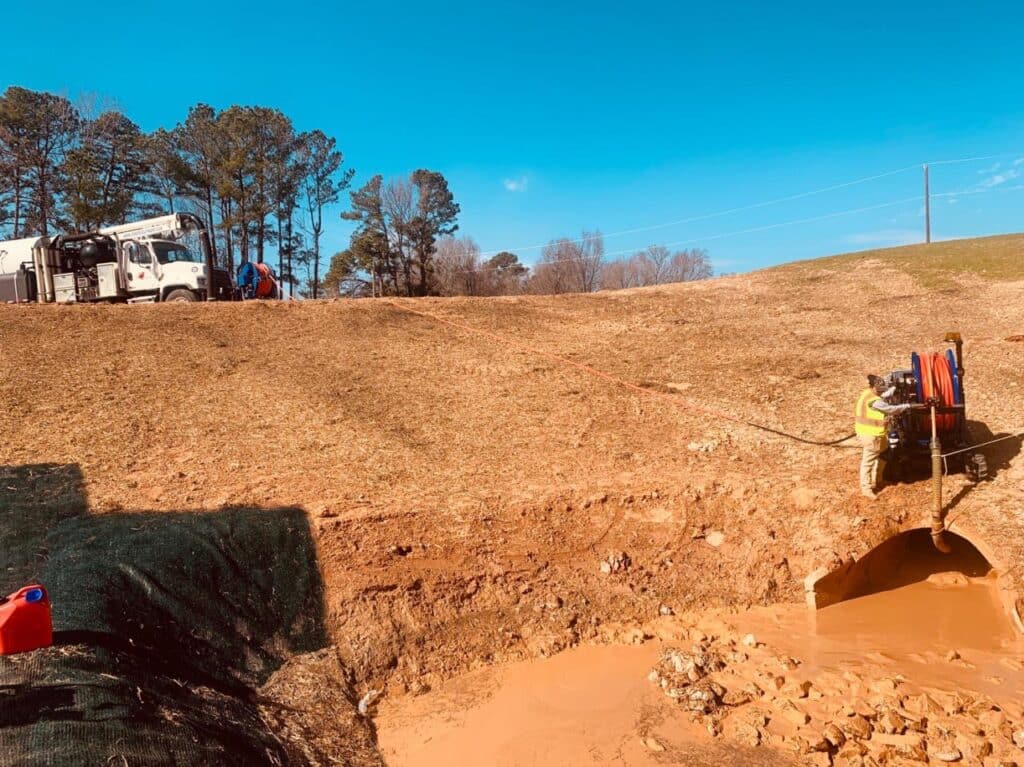
An easement machine does its best work as part of a broader sewer maintenance setup. Most operations stage a combination sewer truck or trailer jetter at the road and run the easement machine into the line from there. The combo truck supplies water and pulls debris. The easement machine handles the reach.
Pairing With a Combination Truck or Trailer Jetter
If your fleet already includes a combination truck, the easement machine is the access tool that fills the gap on lines the truck cannot reach. The combination sewer truck buyer’s guide covers the truck-side selection process in detail and pairs naturally with this resource for crews evaluating both categories at once.
Operations that run a trailer jetter for routine curbside work face a different gap. The trailer jetter handles street-accessible mains and laterals well, but cannot follow a line into a wooded easement or across a soft lot. An easement machine extends the same jetting capability into terrain the trailer cannot reach, so the two tools cover complementary ground rather than overlapping.
Transport Between Job Sites
Most easement machines move between job sites on a dedicated trailer towed by a service truck. Confirm the tow vehicle has the rating, hitch, and brake controller the trailer requires. For fleets without a suitable tow vehicle, transport-trailer customization may be worth scoping during purchase.
Use Case Scenarios Where an Easement Machine Earns Its Keep
The clearest justification for an easement machine is a list of recurring jobs where access blocks the crew from doing the work efficiently. The following scenarios drive most purchases.
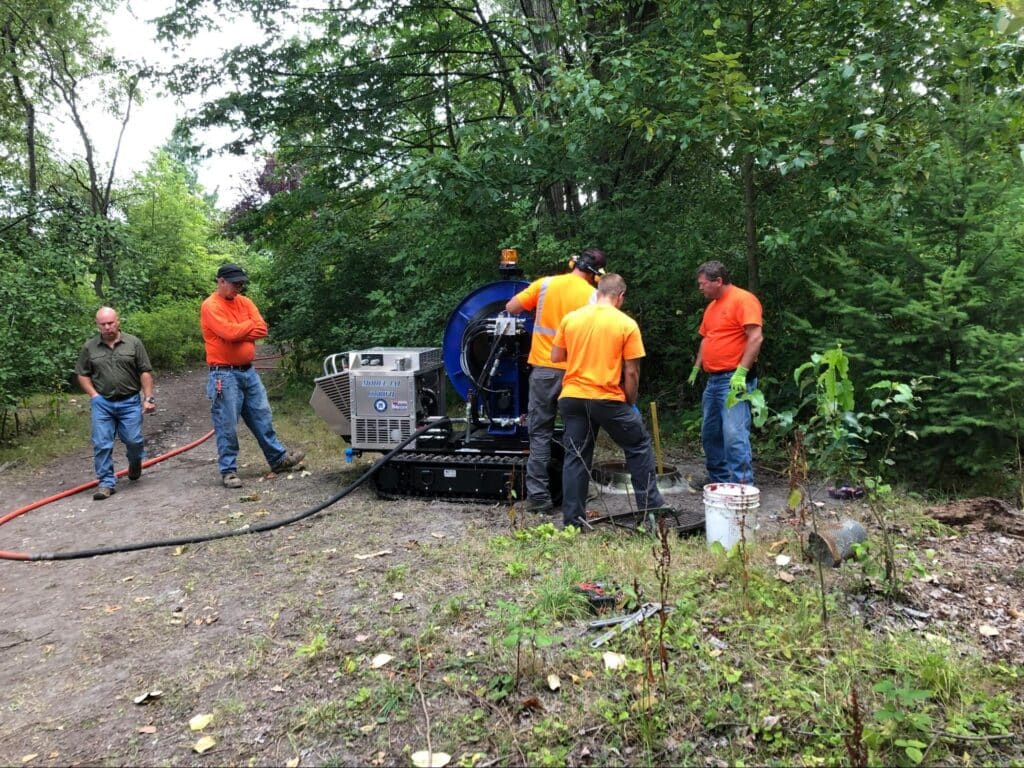
- Wooded easements behind residential subdivisions, where mains run along property lines through tree cover that blocks truck access.
- Narrow alleys and backyard service lines in older neighborhoods built before modern right-of-way standards.
- Golf courses with sewer mains crossing fairways, greens, and irrigated rough that cannot tolerate heavy axle loads.
- Mobile home parks with tight interior roads, narrow lot spacing, and overhead utilities that prevent standard truck operation.
- Industrial campuses and manufacturing sites with mains running behind buildings, through fenced yards, or across equipment-heavy work areas.
- Cemeteries, parks, and college campuses where turf protection and aesthetic concerns rule out heavier equipment.
- Mains running behind commercial strip centers, where loading docks, dumpster enclosures, and parked trailers block truck-side cleaning.
Many of these scenarios are also where sewer overflows originate. Lines that are hard to reach are lines that get cleaned less often, and lines that get cleaned less often fail more often. Proactive easement-line maintenance is one of the more practical ways a utility can reduce overflow risk in its hardest-to-serve areas.
Total Cost of Ownership and Buying Considerations
Wastewater infrastructure in the U.S. earned a D+ grade in the 2025 ASCE Report Card, unchanged from 2021. Over the past decade, the average number of collection system failures for combined water utilities increased from 2 to 3.3 per 100 miles of pipe, while the renewal and replacement rate for large wastewater capital projects fell from 3% to 2%. The maintenance burden on existing systems is rising while replacement budgets contract. “Every American household or business immediately feels the impact of just one inefficiency or failure in our built environment,” said Darren Olson, 2025 Report Card Chair at ASCE.
The nation’s sewers are worth more than $1 trillion as a collective asset, and the cost of letting an easement line fail typically dwarfs the cost of routine cleaning. Total cost of ownership for an easement machine should weigh both sides of that ledger.
What to Factor Into TCO
- Purchase price, including any spec options or transport-trailer customization.
- Tow vehicle, hitch, and brake controller upgrades if the current service truck is not rated for the trailer load.
- Hose, nozzle, and reel maintenance, which are wear items that need budgeted replacement intervals.
- Parts availability and service support over the unit’s expected life. A machine that is hard to support in the field costs more over time than one that is easier to maintain.
- Operator training, since the remote control workflow is different from operating a truck-mounted jetter.
- Resale or recondition value at end of service life.
New, Used, or Reconditioned
Used and reconditioned easement machines can deliver real value when the unit has documented service history, current hose and reel condition, and a working remote control. Before buying used, inspect the tracks for wear, check the engine and hydraulic system for leaks, and confirm the water tank and pump are in serviceable condition. Aging units in good mechanical shape are often strong reconditioning candidates rather than full replacements, particularly when the chassis and tracks are still sound.
Whether new or used, the long-term value of an easement machine depends on how well it is supported after the sale. Maintenance, repairs, and parts availability keep the unit on the job rather than in the yard waiting for service. A dealership relationship that includes hands-on training, regional service coverage, and parts on the shelf is part of the purchase, not separate from it.
How to Get to a Confident Decision
The right way to evaluate an easement machine is on the ground, not on paper. A free on-site demonstration on a representative easement line is the most direct way to confirm a unit fits the operation. Your BEC Equipment Consultant can coordinate the demo, walk through the spec decisions that matter for your routes, and connect the evaluation to the rest of your sewer and water management equipment setup.
Frequently Asked Questions About Easement Machines
What is an easement machine used for?
An easement machine is used to clean sewer lines that a combination sewer truck cannot reach. That includes mains running through backyards, wooded easements, alleys, golf courses, mobile home parks, cemeteries, and industrial campuses. The remote-controlled, tracked design lets operators clean restricted-access lines without bringing heavy equipment onto soft or confined ground.
What is the best easement machine?
There is no single best easement machine. The right unit depends on hose length, water tank capacity, track configuration, remote range, and minimum gate clearance for the lines you actually maintain. A unit that is ideal for a golf course operation may be wrong for a tight residential alley. Compare specs against your route conditions, request a demo, and let on-the-ground performance decide rather than brand reputation alone.
What is a sewer easement machine?
A sewer easement machine is the same equipment category as an easement machine. The longer name simply specifies the application. It is a remote-controlled, tracked sewer cleaning unit designed for restricted-access sewer mains and laterals where a combination truck cannot park within hose reach.
How does an easement machine work?
An easement machine works by carrying a sewer jetter, hose reel, and water tank on a compact tracked chassis that an operator drives by remote control. The operator positions the unit at the manhole or cleanout, runs the jetter line into the pipe, and cleans the main using high-pressure water the same way a combination truck would. Most setups pair the machine with a nearby vacuum truck or combo truck that supplies water and handles debris.
How does an easement machine fit alongside a combination sewer truck?
An easement machine extends the reach of a combination sewer truck rather than replacing it. The combo truck stages at the nearest accessible point, supplies water, and vacuums debris. The easement machine carries the cleaning capability into terrain the truck cannot enter. Most operations run both, with the combo truck handling accessible mains and the easement machine reaching what the truck cannot.
Talk Through the Decision With BEC
Choosing the right easement machine starts with the lines you maintain, not the unit on the lot. Reach out to the Brown Equipment Company team to walk through your access challenges, talk through the spec decisions that matter for your routes, and schedule a free on-site demonstration on a representative easement line.