Managing a fleet that handles sewer and stormwater maintenance means every equipment decision has real operational consequences. Combination sewer trucks are among the most significant capital purchases a public works department or contractor will make, and choosing the wrong configuration creates problems that are hard to fix after delivery. This guide walks through the specification decisions that matter most, so you can evaluate options against your operational requirements rather than catalog specs alone.
Key Takeaways
- A combination sewer truck integrates high-pressure jetting and vacuum suction in a single unit, handling routine line maintenance, blockage clearing, and hydro excavation without swapping equipment between jobs.
- Water tanks typically range from 800 to 2,100 gallons and debris tanks from 6 to 15 cubic yards. Matching tank size to your longest run between dump cycles is the most practical starting point.
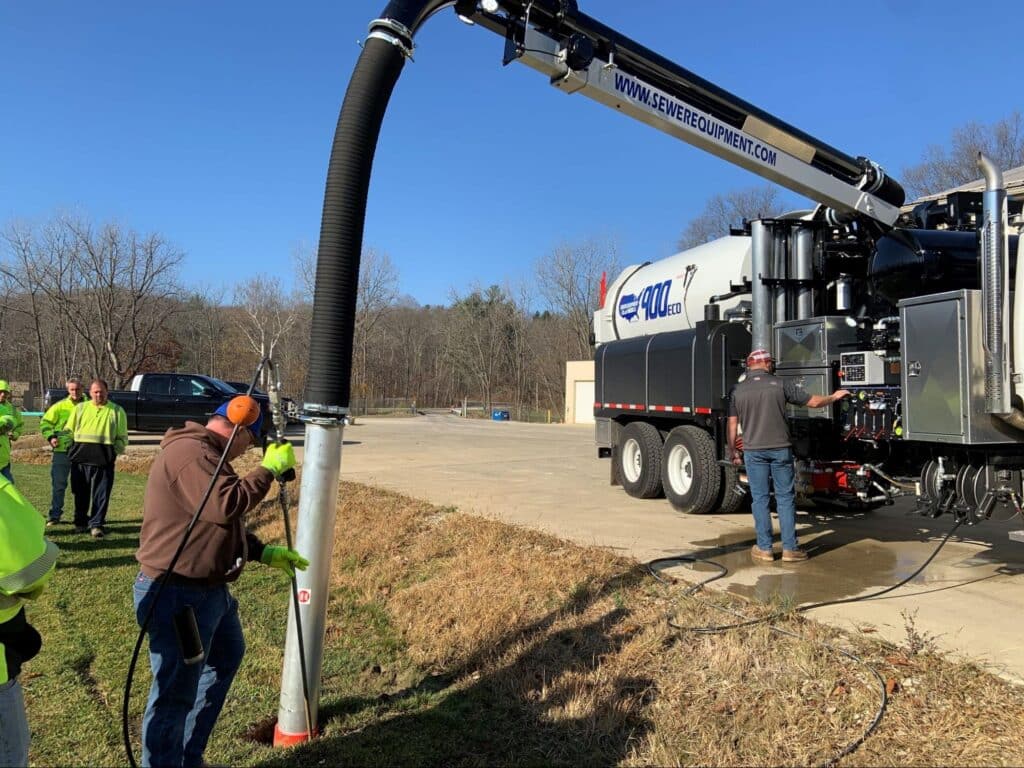
- The Sewer Equipment 900 ECO series, available through Brown Equipment Company, comes in multiple tank configurations and two pump options — single piston and triplex — so you can match the truck to the specific demands of your operation.
- Chassis configuration determines weight distribution, axle load, and whether tandem or single axle better fits your job site conditions and DOT compliance requirements.
What a Combination Sewer Truck Does
A combination sewer truck consolidates into a single unit the work that most fleets once required two or more vehicles to perform. Three integrated systems make that possible:
- High-pressure water jetting: Breaks up grease, roots, and debris inside sewer lines using precision water pressure, clearing blockages in a single pass.
- Vacuum suction: Removes dislodged debris, sludge, and liquids from the pipe and loads them into the truck’s debris tank for transport and disposal.
- Hydro excavation: Uses pressurized water to break up soil while a vacuum simultaneously removes it, allowing crews to safely expose buried utilities without mechanical digging.
Together, those systems give one truck the ability to handle:
- Sewer and stormwater line cleaning from 4 to 60 inches in diameter
- Catch basin maintenance and cleanout
- Emergency blockage clearing
- Utility locate support through hydro excavation
Whether you’re maintaining a municipal sanitary sewer system or contracting for multiple jurisdictions, the same core question applies: which configuration best fits the work you actually do?
Understanding the infrastructure context helps frame the decision. The EPA’s 2024 Clean Watersheds Needs Survey identified $630 billion in wastewater and stormwater infrastructure needs over the next 20 years. Crews managing aging systems under budget pressure need equipment that can handle multiple functions per shift without compromising reliability.
Keeping sewer systems on a regular maintenance schedule works on the same principle as maintaining a vehicle, according to NASSCO: it “extends the useful life of the buried asset, minimizes disruption to communities, and prevents costly, reactive, emergency situations from occurring.” The right equipment makes that maintenance achievable within the constraints of real-world operations.
Match the Configuration to Your Use Case
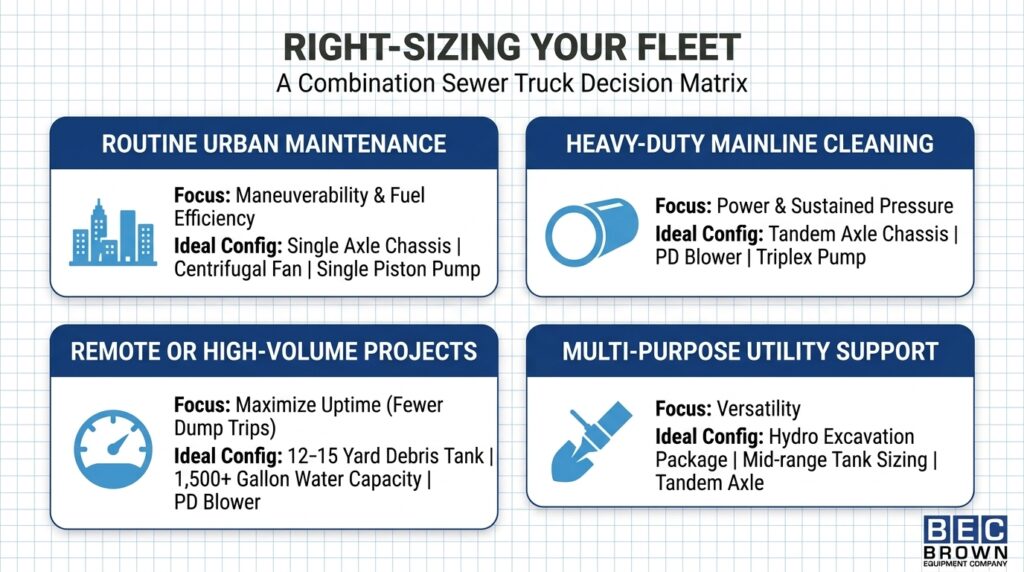
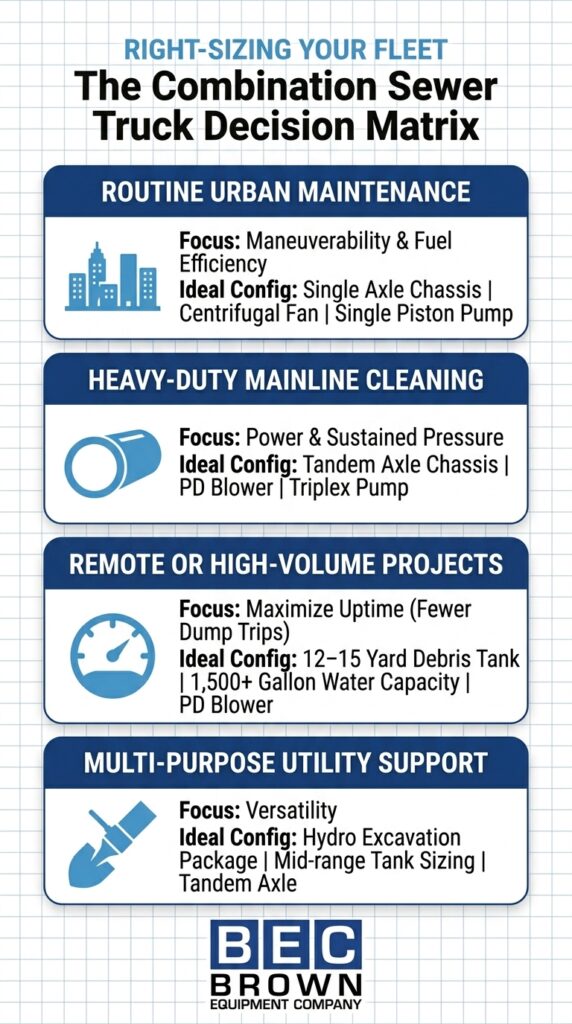
Combination trucks serve different operations in meaningfully different ways. Before working through spec decisions, identify which of these categories best describes the majority of your workload:
- Routine line maintenance: Regularly scheduled cleaning of sanitary sewer mains to prevent buildup. Moderate jetting pressure and mid-range tank capacity are typically sufficient. The priority is uptime and cycle efficiency between disposal runs.
- Heavy-duty municipal operations: High-volume cleaning of large-diameter mains, heavy grease deposits, or root intrusion in aging infrastructure. These applications benefit from higher vacuum capacity, larger debris tanks, and more robust pump systems.
- Emergency response: Clearing blockages quickly with minimal setup time. Versatility and crew training matter more than brute force; truck reliability and fast mobilization are the key variables.
- Hydro excavation support: Using pressurized water and vacuum to expose utilities for repair or inspection. Requires adequate water volume and debris tank capacity for the depth and volume of material being moved.
Understanding your primary use case before comparing spec sheets helps prevent both over-specifying (paying for capacity you won’t regularly use) and under-specifying (buying a truck that falls short when demand peaks).
The Specification Decisions That Matter Most
Most specification decisions on a combination truck involve tradeoffs between capability, cost, and the operational profile of the fleet buying it. The four decisions below have the largest impact on how well a truck fits your specific service environment.
Sizing the Tanks: Water Capacity and Debris Volume
Tank sizing is one of the most consequential spec decisions and the one most often undersized in the field. Water tanks on combination trucks typically range from 800 to 2,100 gallons, and debris tanks can hold 6 to 15 cubic yards. The 900 ECO series is available in 6, 9, 12, and 15 cubic yard configurations.
The practical sizing question is how far your crews can run on a single load. If your routes require a 45-minute drive to the nearest disposal site, a smaller debris tank means more trips per shift and lower productivity. If you’re cleaning lines with heavy deposit loads, you need more debris capacity per linear foot of pipe cleaned. Consider these factors before choosing a tank configuration:
- Distance to the nearest legal disposal or dump site
- Typical deposit volume in the lines you maintain most frequently
- Average run length between access points on your service routes
- Water supply availability on job sites vs. how often refilling is practical
If you’re new to specifying combination trucks or expanding into a different service area, reviewing the infrastructure profile of the lines you’ll be maintaining can help frame realistic capacity requirements. Older systems, particularly those built in the 1970s following the Clean Water Act, are approaching or exceeding their designed service life and may require more frequent cleaning with higher material volumes per run.
Vacuum System: PD Blower vs. Fan
Vacuum systems on combination trucks generally use one of two technologies: a positive displacement (PD) blower or a centrifugal fan system. Each performs differently depending on the type of material being moved.
A PD blower uses a rotary mechanism to create consistent, high-vacuum pressure regardless of material density. It performs well with heavy debris, packed silt, grit, and slurried solids that require sustained lift to move effectively. A centrifugal fan design uses high rotational speed to generate suction and works efficiently for lighter solids and liquid-heavy material.
If your service area includes significant industrial drainage, older sewer mains with known sediment accumulation, or lines with recurring heavy deposit problems, a PD blower system is usually the stronger choice for those conditions. For lighter, mixed residential and commercial work, either system can be a viable option.
Pump Type: Single Piston vs. Triplex Pump
The 900 ECO series is available with both a single piston pump and a triplex pump. Your BEC Equipment Consultant can walk you through how each option performs relative to your specific application and help you determine which is the right fit.
Chassis Configuration and CDL Requirements
Brown Equipment offers the 900 ECO on both single axle and tandem axle chassis configurations. Tandem axle trucks distribute load weight more evenly, handle higher loaded capacities, and perform better on unpaved or soft surface job sites. Single axle trucks are lighter, more maneuverable, and better suited for congested urban environments where tight turns and residential street access are common considerations.
Most combination trucks at or above full load weight fall within the Class B commercial driver’s license (CDL) requirement threshold. Tandem axle configurations with larger debris tanks will typically exceed that threshold loaded. Verify CDL requirements with your state DOT before finalizing specs, and factor operator licensing into your total cost of operation estimate.
Hydro Excavation Capability: When the Combo Truck Is Enough
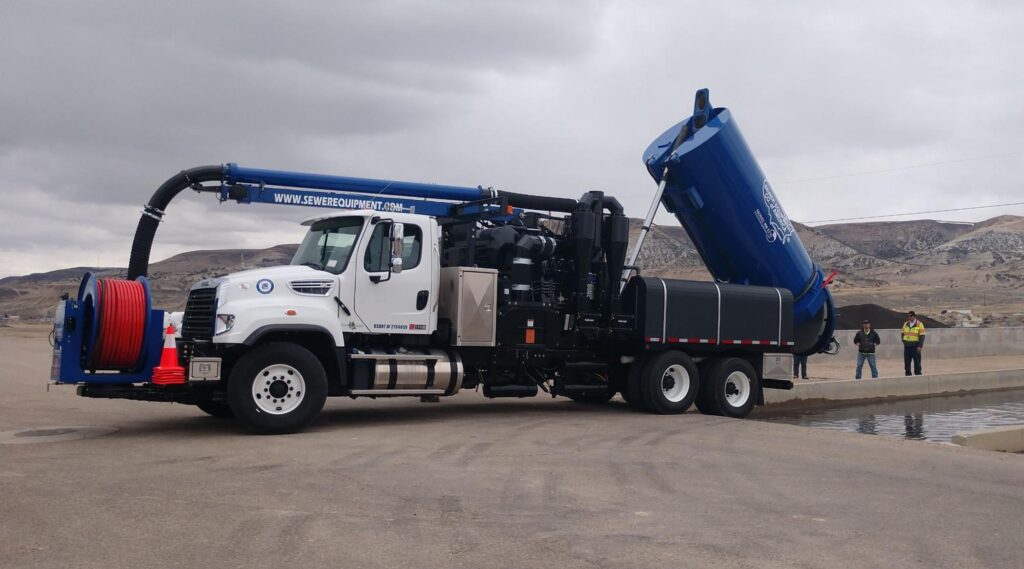
Many combination trucks include hydro excavation capability that lets the crew use the truck’s jetting water and vacuum system to safely expose buried utilities without mechanical digging. For municipalities and contractors that frequently support utility locate work or shallow dig operations alongside their cleaning duties, this capability can reduce the number of specialized units needed in the fleet. Learn more about dedicated hydro excavation equipment for operations where excavation is a primary, high-volume activity rather than occasional support work.
If your crews regularly perform narrow trench excavation or work in areas with dense buried utility networks, it is worth evaluating whether the combo truck’s hydro excavation capability covers your typical scope, or whether a purpose-built unit better fits the volume and precision requirements of the work.
Should You Rent Before You Buy?
If your organization is adding a combination sewer truck to its fleet for the first time, or evaluating whether a different configuration better fits current operations, renting can be a practical way to test the equipment under real job conditions before committing to a purchase. Brown Equipment Company offers rental options that allow crews to operate the equipment on their own service routes. For fleets dealing with seasonal demand peaks or temporary project needs, renting can also be more cost-effective than purchasing additional dedicated units.
For ongoing maintenance programs where a combination truck will be a core operational asset, owning the unit and maintaining it through a consistent preventive maintenance and repair schedule typically delivers better long-term value than rental across the full service life of the equipment.
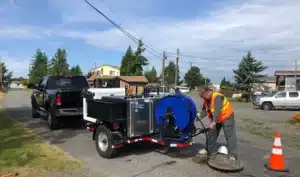
If your operation handles a mix of larger municipal work and smaller residential service calls, it may also be worth evaluating whether a trailer jetter unit can handle the lighter end of the workload while your combination truck is dedicated to higher-demand jobs. Understanding how cleaning methods and equipment types complement each other is covered in more depth in the post on hydro-jetting vs. traditional sewer cleaning methods.
Frequently Asked Questions About Combination Sewer Trucks
How does a combination sewer truck differ from a dedicated jetter or vacuum truck?
A combination truck handles both jetting and vacuuming in a single unit, so one crew can clean a line and remove debris without bringing two separate pieces of equipment to the job. Dedicated jetter trucks and trailer jetter units handle jetting only and work well for smaller operations or lighter maintenance loads that don’t require simultaneous debris removal. If your crews regularly need both functions at the same job site, a combination unit eliminates the logistics of coordinating separate equipment and can reduce both vehicle costs and crew time per job.
What size sewer lines can a combination truck clean?
Most combination trucks can clean sewer lines ranging from 4 inches to 60 inches in diameter, depending on the model and nozzle accessories used. The specific range supported by a given configuration depends on the pump output and the nozzle set available for the unit. Verify line size requirements with your equipment consultant when evaluating specific models.
How do I choose between a tandem axle and single axle chassis?
Tandem axle trucks carry heavier payloads, distribute loaded weight more evenly across the axle set, and handle soft or unpaved terrain better than single axle units. Single axle trucks are lighter, easier to maneuver in tight urban environments, and have a shorter overall wheelbase that helps with access in areas where turning radius is a constraint. The right choice depends on your most common job site conditions, the loaded weights you’ll be operating at, and any route restrictions your fleet faces.
Can combination sewer trucks operate in cold weather?
Yes. Many models include heated components, water recirculation systems, and insulation to support year-round operation in freezing conditions. Cold-weather capability varies by model and configuration, so if your operation runs crews through winter, confirm the cold-weather package is included in the configuration you are evaluating. This is particularly relevant for operations across Indiana, Ohio, Michigan, Wisconsin, and other northern states where freeze conditions affect crew schedules and equipment reliability.
Why should I include proactive sewer line cleaning in my maintenance program rather than responding only to failures?
Reactive maintenance consistently costs more than proactive maintenance, both in direct repair costs and in community disruption. Approximately 38% of wastewater pipeline maintenance is completed as a reactive response to failures, according to ASCE’s 2021 infrastructure data, with each failure representing an emergency mobilization rather than a planned maintenance run. Fleets with the right combination equipment on hand are positioned to shift that ratio toward the 62% proactive end, which reduces total cost per mile of pipe maintained over time. Pairing combination truck cleaning with proactive CCTV sewer inspection creates a full preventive maintenance cycle.
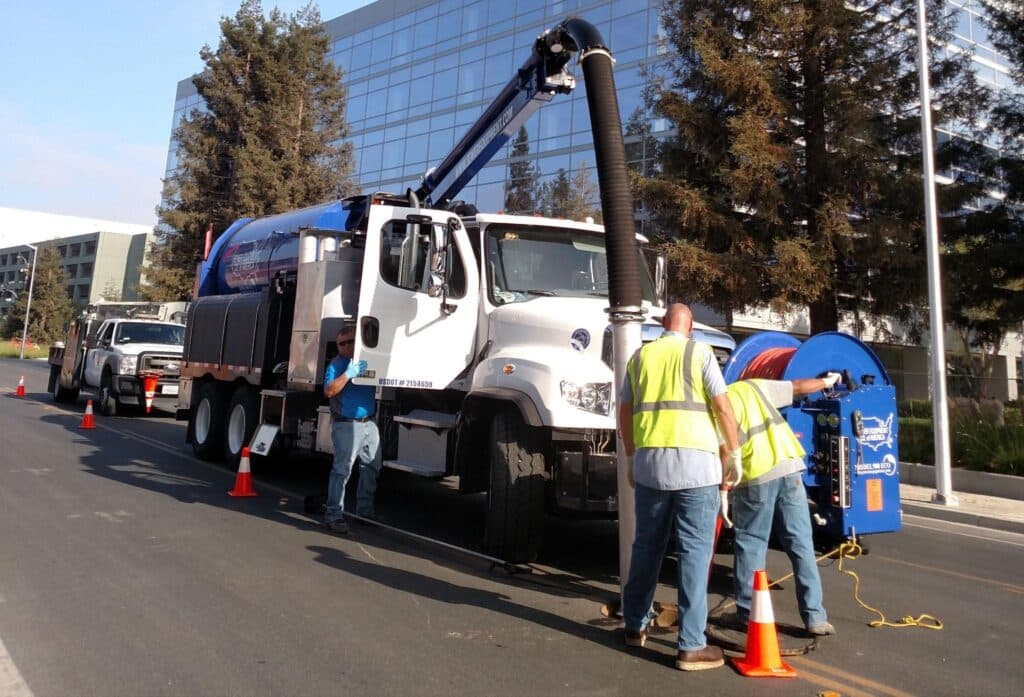
Ready to Find the Right Combination Truck for Your Fleet?
Combination sewer trucks are long-term fleet assets, and the right spec decision at purchase makes a measurable difference in operational efficiency and total cost of ownership over the life of the unit. Brown Equipment Company works with fleet managers and public works directors across Indiana, Kentucky, Ohio, Illinois, Michigan, and Wisconsin to match equipment to operational needs, not just catalog specs. Explore the full sewer and water equipment line to see what options are available across the range.
If you’re evaluating combination sewer trucks or want to see the 900 ECO series in action, contact the Brown Equipment Company team to discuss your requirements or schedule a free on-site demonstration.