Every time a sewer cleaning crew stops to refill the water tank, the job stops with it. A water recycling sewer cleaning truck is built to break that cycle by reusing the water already in the line, so a crew can keep working instead of shuttling back to a hydrant. For many Midwest operations the real question is not whether it works but whether it pays off across a fleet, so this guide does the operating math that product brochures tend to skip.
Key Takeaways
- A water recycling sewer cleaning truck reuses captured water: it filters the water it vacuums out of the line and feeds it back to the jets, so a crew can clean for a full shift without leaving the job to refill.
- Refill trips are the hidden cost of conventional cleaning: a combination truck burns thousands of gallons of fresh water a day and keeps returning to a hydrant, turning paid crew hours into travel and wait time.
- Potable water carries a double cost: a community pays to buy treated drinking water and pays again to handle it after it runs down the line.
- Start with one truck, not a fleet: the most cost effective first move is usually a single recycler on the longest or most remote routes, where refill trips hurt most.
- Maintenance is part of the payback: recycling adds filtration stages that need regular cleaning and service, so a dependable maintenance plan protects the productivity gain.
- Water scarcity strengthens the long-term case: treated drinking water is getting harder to justify for line cleaning, which adds urgency to the recycling decision.
What Is a Water Recycling Sewer Cleaning Truck?
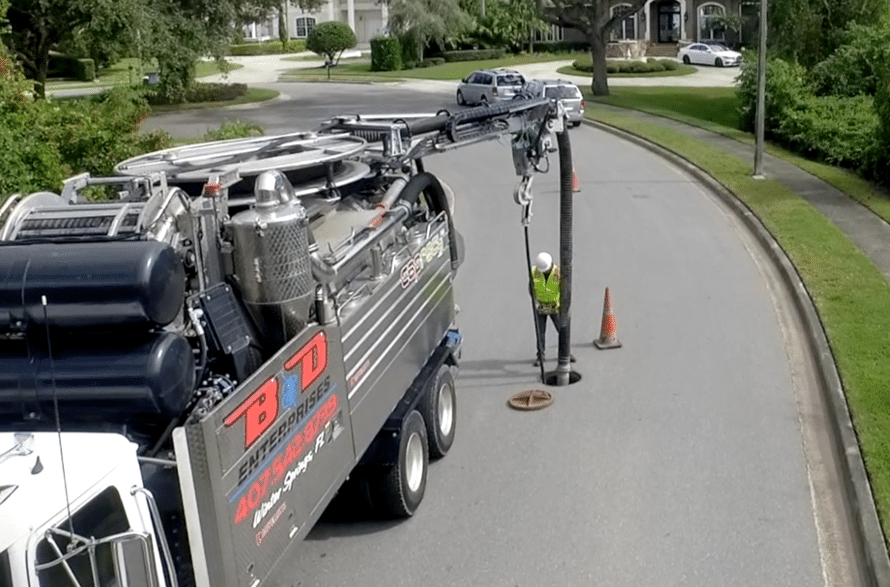
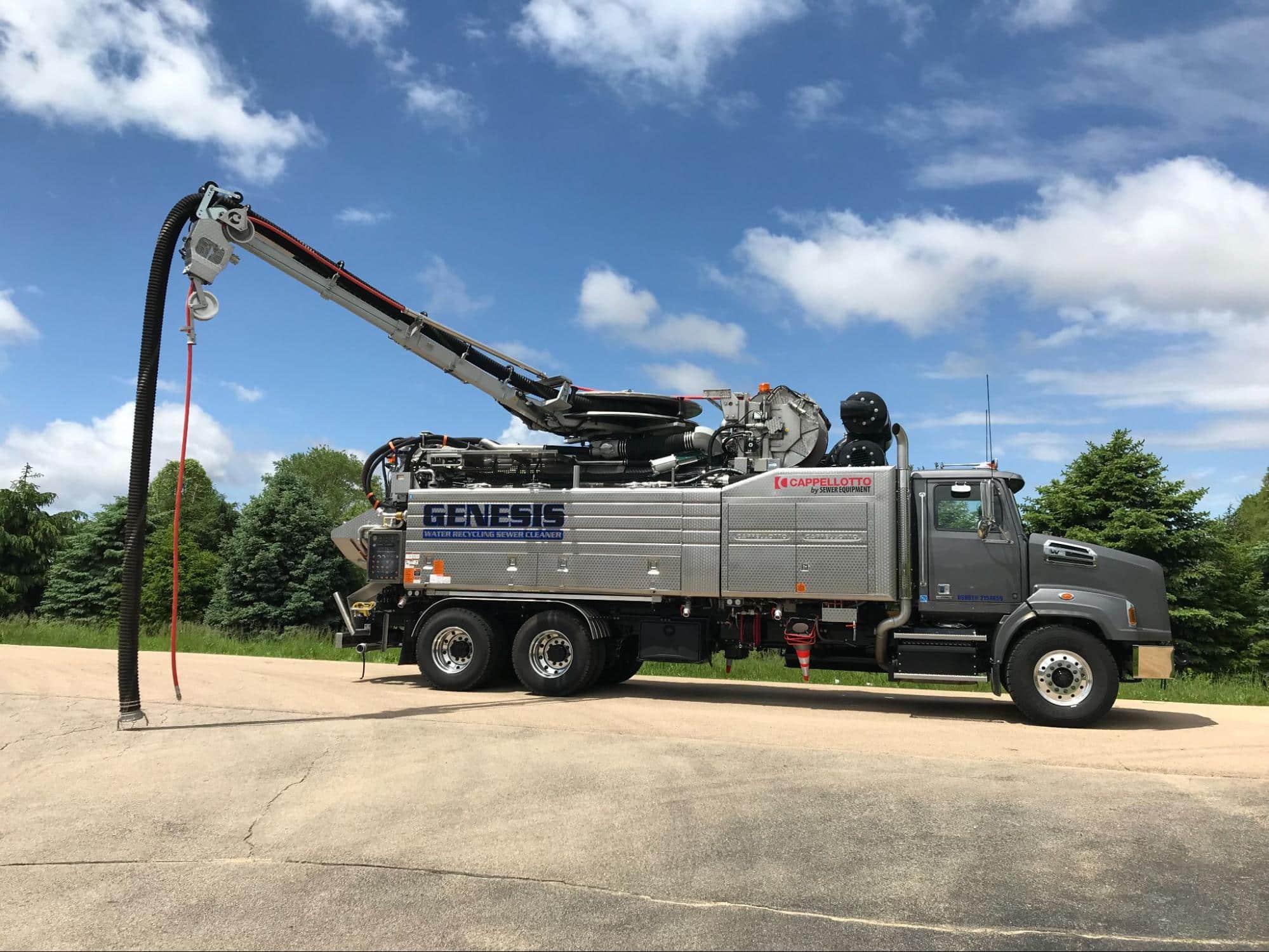
A water recycling sewer cleaning truck is a combination sewer cleaner that captures the water and debris it vacuums from a line, filters that water on board, and feeds it back to the high pressure jetting system. Instead of relying on a fresh tank of potable water, it cleans the pipe with water it reuses as it works.
The recycling happens in a continuous loop. As the vacuum pulls slurry out of the sewer, multiple filtration stages separate out solids, grit, and fine sediment, leaving water clean enough to send back to the jet pump. The crew keeps cleaning while the system keeps recycling, which is why it is often called continuous water recycling sewer cleaning.
Configuration still matters. Tank size, pump capacity, and boom reach all shape how a recycler performs, and our combination sewer truck buyer’s guide covers how to match a build to your work. This post stays focused on the recycling decision itself.
What Refill Trips Actually Cost Your Crew
The biggest cost of conventional sewer cleaning is not the water itself. It is the downtime that starts the moment the tank runs dry. A single refill trip charges the operation in several ways:
- Stopped cleaning: the job halts the moment the water runs low, with line still left to clear.
- Drive time and fuel: the truck leaves the site for a hydrant or fill point and returns, sometimes more than once a shift.
- Idle crew hours: operators stand by while the tank refills, on the clock the entire time.
- Repeated setup: traffic control and hoses often have to be reset each time the crew returns.
The arithmetic behind that is simple. A common industry rule of thumb is that it takes roughly 2 gallons of water to clean a foot of pipe. At that rate, a standard 1,500 gallon onboard tank clears only about 750 feet, which on a long collection line can be well before the shift is half over.
There is also a cost that never shows up on the fuel log. Potable water is treated drinking water. A community pays to produce it, and once it has rinsed a sewer line it becomes wastewater the same community pays to handle again. Spending drinking water to clean a sewer is getting harder to defend as supplies tighten: water managers in at least 40 states expect local, statewide, or regional shortages over the next several years, and the average American already uses about 82 gallons of water a day at home.
The same refill-and-downtime math drives the cost of any water-hungry truck. If you are building a total cost of ownership case for a recycler, our breakdown of hydrovac truck costs runs the same operating-expense numbers for excavation work.
Recycling vs. a Standard Combination Truck: The Daily Math
Side by side, the difference shows up in how a shift actually unfolds. A recycler combination sewer truck is designed to keep cleaning while a standard truck spends part of every day going after more water.
| Factor | Standard combination truck | Water recycling truck |
| Fresh water per shift | High. A full tank is consumed and refilled repeatedly. | Minimal. One tank is reused throughout the shift. |
| Refill trips per shift | Several, each pulling the crew off the job. | Few to none on most routes. |
| Productive cleaning time | Reduced by travel and wait time. | Designed to run the full shift on one tank. |
| Potable water cost | Pays to buy the water and again to treat it. | Sharply reduced freshwater purchase. |
If you are still deciding between a combination unit and a standalone jetter before you weigh recycling at all, our comparison of combination sewer cleaning units and standalone jetters covers that earlier fork in the decision.
How Much Water Does a Water Recycling Truck Save?
A water recycling truck can keep cleaning through most of a shift on a single tank, reusing the water it pulls from the line instead of returning to a hydrant each time the level runs low. That spares a crew the thousands of gallons and the repeated refills a conventional truck runs through in a day. How much it saves depends on your routes and how the crew runs the work, which is best measured on your own lines rather than from a headline number.
For many crews the bigger payoff is time, not just water. Working a full day on one tank removes the stop and start rhythm of refilling and is designed to let a crew clean more line per shift. One product specialist with more than a decade in sewer cleaning and a seat on the NASSCO board has put the productivity case plainly: water recycling “vastly improves productivity and, in many cases, increases profit.”
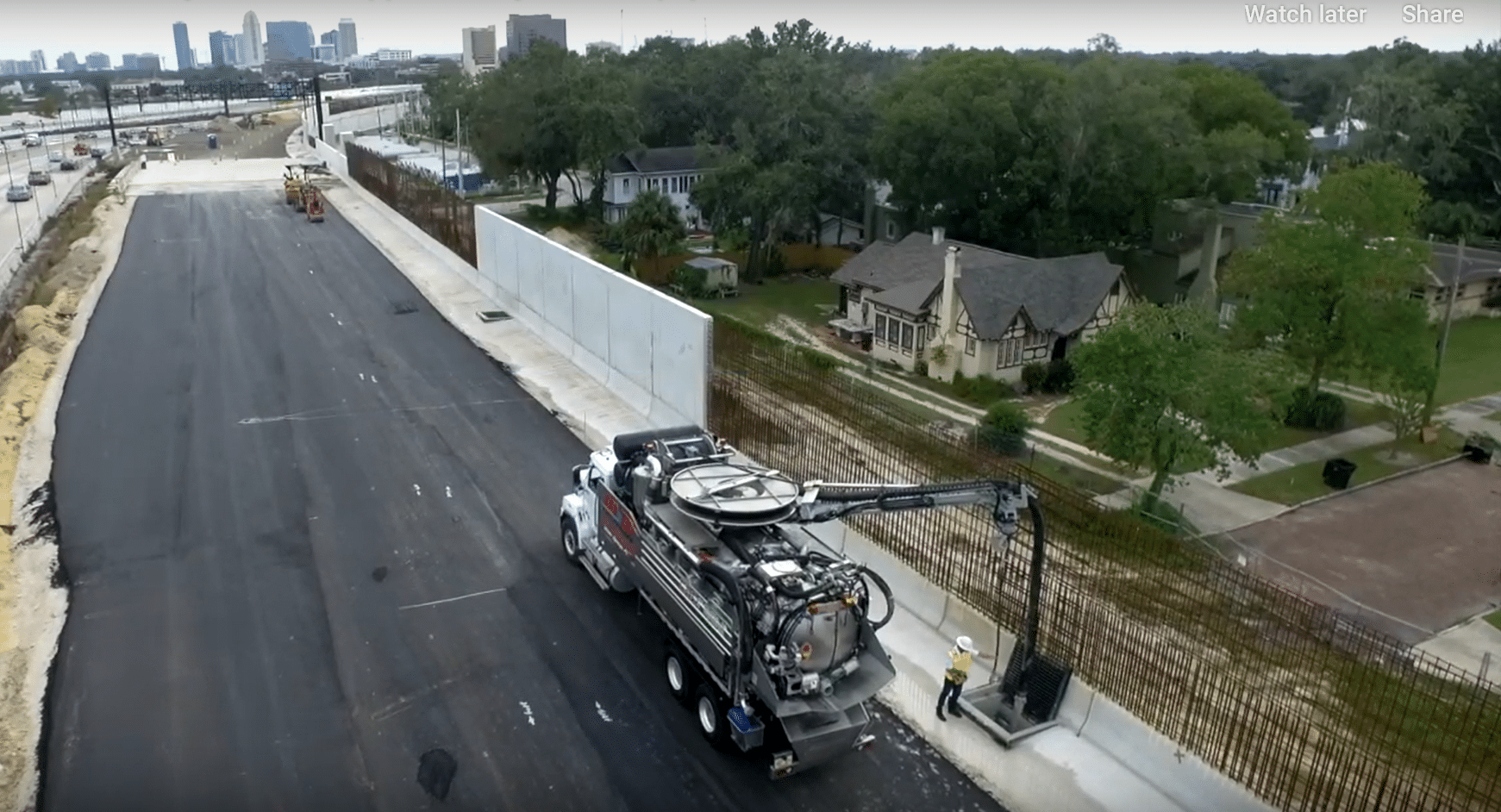
A Smarter Way to Add Recycling: Start With One Truck
You do not have to replace an entire fleet to benefit from water recycling. The most cost effective way to start is to put one recycler where refill trips hurt most, then measure the result before committing the rest of the fleet.
A single recycler tends to earn its keep first in these conditions:
- Long collection routes: lines far from the nearest fill point, where every refill means a long round trip.
- Remote or rural service areas: job sites where hydrants are scarce and water hauling is built into the day.
- Refill restricted zones: communities that limit where or when trucks can draw from hydrants.
- Conservation or drought conditions: areas under water use limits, where freshwater for cleaning is hard to justify.
Running one recycler on these routes lets you prove the gain with your own water rates and labor costs before you scale up. Once the numbers are clear, you can phase in additional units as trucks come up for replacement. Brown Equipment Company plans this kind of route by route fit across sewer and water applications rather than pushing a one size fits all build.
The Maintenance Reality of a Water Recycling System
Recycling is not free of upkeep. The same filtration that lets a truck reuse water adds stages that must be cleaned and serviced on a schedule, and a neglected system will lose performance over time. Treating maintenance as part of the investment, not a surprise, is what protects the productivity gain.
For a recycling system, plan for a few recurring tasks:
- Routine cleaning of filters and screens so the recycled water stays within spec for the jets.
- Periodic inspection of the separation stages that pull grit and solids out of the loop.
- Operator training so the crew runs and maintains the system the way it was designed to run.
High grease lines are the common worry. Recyclers can handle grease heavy work, but those conditions load the filtration harder, which makes consistent servicing more important, not less. This is where an in house service department earns its place. Brown Equipment Company has serviced sewer and water equipment since 1968 and supports any make or model through full maintenance and repair service, so the recycling stages stay in working order long after the sale.
Frequently Asked Questions About Water Recycling Sewer Cleaning Trucks
What is the ROI timeline for a water recycling sewer truck?
The payback period depends on route length, water costs, labor rates, and how many refill trips a recycler eliminates each shift. Operations with long routes, expensive water, or limited hydrant access tend to see the fastest return. The honest answer is that it varies, which is why running one unit and measuring your own numbers is the surest way to project ROI.
What is the difference between purpose-built and bolt-on water recycling?
A purpose-built recycler is engineered around the recycling system from the start, while a bolt-on adds a recycling component to a conventional combination truck. A common misconception is that any combination truck can simply have recycling added and perform like a purpose-built unit. Bolt-on systems can be a lower cost entry point, but they may have capacity or continuity limits that a purpose-built design avoids, so it is worth setting expectations before you buy.
How do I choose the right water recycling system for my operation?
Start with your routes and conditions rather than a brand. The factors that matter most are filtration design and how easy it is to service, the water quality the system produces for the jets, how often your routes force refills today, and the local support you can count on for parts and service. A dealer who works through those factors with you will get you a better fit than a spec sheet alone.
Are there non-CDL sewer cleaning trucks with water recycling?
Water recycling is generally found on full-size combination trucks, which are heavy enough to require a commercial driver’s license. Compact, non-CDL combination units do exist, but they typically run on a fresh water tank rather than a recycling system. If operating without a CDL is a priority for your crew, the practical tradeoff today is usually between a smaller non-CDL fresh water unit and a larger CDL class recycling truck. Confirm the gross vehicle weight rating and your state’s licensing rules before assuming any specific unit is non-CDL.
Find Out Whether a Recycler Fits Your Operation
The case for a water recycling sewer cleaning truck comes down to your routes, your water costs, and the crew hours you lose to refilling. The right answer is rarely all or nothing, and it is easiest to find with someone who will do the operating math with you rather than hand you a brochure. Brown Equipment Company supports municipal and contractor crews from seven service centers across the Midwest. Contact the Brown Equipment Company team to talk through your routes or to schedule an on site demonstration.