If your operation is ready to invest in a sewer cleaning machine, the question isn’t just which model to buy. It’s which configuration fits the work your crew actually does. A Mongoose jetter is available in trailer, van pack, and truck-mounted setups, and the right choice depends on job-site access, water capacity needs, crew workflow, and how often you operate in cold weather.
Key Takeaways
- Trailer configurations offer the broadest model range (12 to 25 GPM) and the largest water tanks (up to roughly 600 gallons), making them the most versatile choice for municipal and contractor crews handling a mix of job types.
- Van pack configurations integrate the jetter into a service van, eliminating the towing requirement and enabling quick deployment in dense urban environments.
- Truck-mounted configurations integrate the jetter into a dedicated chassis with the largest tanks and longest continuous operating time, fitting high-volume municipal sewer maintenance routes.
- All three configurations share the same Mongoose Model 123, 184, and 254 platforms (12, 18, and 25 GPM at up to 4,000 PSI), so the configuration choice is about logistics and crew workflow more than core cleaning power.
- EPA estimates at least 23,000 to 75,000 sanitary sewer overflows per year in the United States, which makes a properly-sized jetter program central to municipal compliance and public health.
- Total cost of ownership, year-round usability, and access to local service support should weigh as heavily as upfront price in the decision.
Why Mongoose Jetter Configuration Matters as Much as Model Selection
Configuration determines how the jetter gets to the job, how long it can run between refills, and how cleanly it fits into your existing fleet and crew workflow. Two crews running the same Mongoose Model 184 in different configurations will have very different daily productivity if the configuration is mismatched to the work.
The municipal context makes the decision more consequential. The 2025 ASCE Report Card for America’s Infrastructure gave U.S. infrastructure an overall C grade, its highest ever. Wastewater infrastructure specifically earned a D+ grade. The renewal and replacement rate for large capital projects dropped from 3% to 2%, and collection system failures rose from 2 to 3.3 per 100 miles of pipe. As Darren Olson, 2025 Report Card Chair for ASCE, said at the March 2025 release: “Every American household or business immediately feels the impact of just one inefficiency or failure in our built environment. However, if we maintain investments, each American household can save $700 per year.”
The right jetter configuration helps a crew stay ahead of preventive maintenance rather than running it as emergency response, which is where unit cost per cleaned foot quietly explodes.
What’s Inside the Mongoose Jetter Lineup
The Mongoose lineup from Sewer Equipment Company centers on three production models: the Model 123 at 12 GPM and 3,000 PSI, the Model 184 at 18 GPM and 4,000 PSI, and the Model 254 at 25 GPM and 4,000 PSI. All three are offered in trailer, van pack, and truck-mounted configurations, with line-cleaning capability from 1.5-inch to 36-inch diameters.
A few common platform features carry across every model and configuration:
- Run Dry pump technology: Protects the water pump if the supply is interrupted, reducing the risk of expensive damage from operator error or supply-side failure.
- Common factory options: Wireless remote control, hot water boilers for winter and grease work, drain kits, and application-specific nozzle packages.
- Water capacity range: Roughly 150 to 600 gallons across the line. This single spec drives a large share of the configuration decision.
Because cleaning power is consistent across configurations of the same model, the choice between trailer, van pack, and truck-mounted comes down to access, capacity, mobility, and total cost. For a deeper look at how flow and pressure interact, see this overview of GPM and PSI selection for sewer jetters.
Trailer-Mounted Mongoose Jetters: The Most Versatile Choice
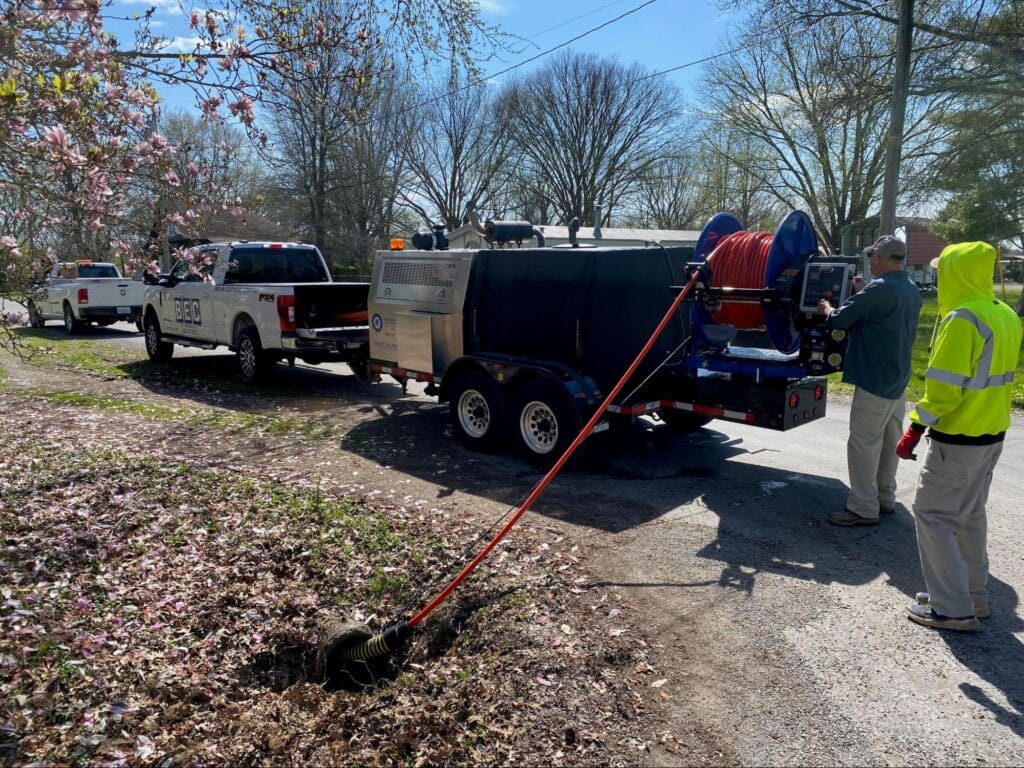
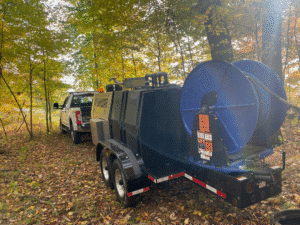
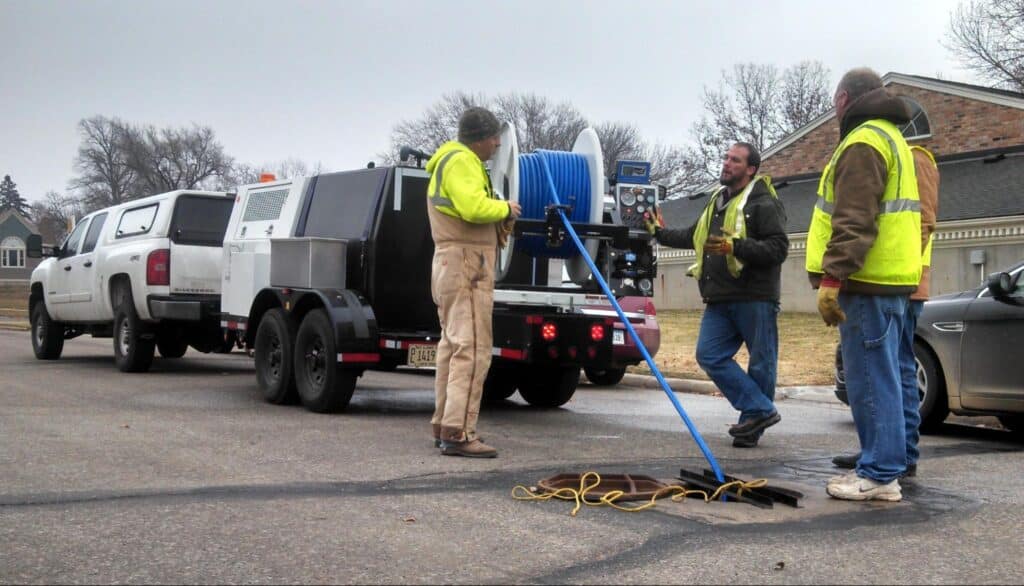
A trailer-mounted Mongoose pairs the jetter with a dedicated trailer that’s towed to the job site, then drops anchor while the tow vehicle handles other tasks. It’s the most common configuration in the field because it combines large water capacity with the flexibility to swap tow vehicles.
What it does best, and where it falls short:
- Strong fit for: Mid-to-large mainline cleaning, contractor work with frequent moves between job sites, and municipalities that want to share one jetter across a varied fleet.
- Capacity advantage: Largest water tanks across the lineup, which can help reduce refill trips and extend cleaning time per setup. The full model range (123, 184, 254) is available.
- Main limitation: Towing rig required at every job. Maneuvering and turning radius become real considerations on tight residential or downtown work.
- Plan ahead: CDL requirements may apply depending on combined vehicle and trailer weight; verify with your state DOT before assigning operators.
Van Pack Mongoose Jetters: Built for Tight Access and Quick Deployment
A van pack Mongoose is mounted inside the cargo area of a service van. The jetter, water tank, pump, and hose reel all integrate into the vehicle, so the entire rig moves as one unit. No trailer to hitch, no staging area to clear, no separate tow vehicle.
What it does best, and where it falls short:
- Strong fit for: Municipal lateral cleaning, contractor crews responding to high-volume service calls, and any operation where speed of arrival and tight-space maneuverability win the day.
- Access advantage: Works alleys, narrow residential streets, parking garages, and apartment-complex setbacks where a trailer won’t fit. Operator parks, opens the rear doors, and begins work.
- Main limitation: Onboard water capacity is the smallest of the three configurations, which typically means more refill stops on sustained mainline runs.
- Plan ahead: The van is the jetter. If the van is in the shop, the jetter is too. Trailer configurations decouple those two assets. For a plumbing-specific look at the trade-offs, this comparison of van pack and trailer-mounted jetters for plumbing businesses goes deeper on that audience.
Truck-Mounted Mongoose Jetters: Built for Heavy Routes and Long Runs
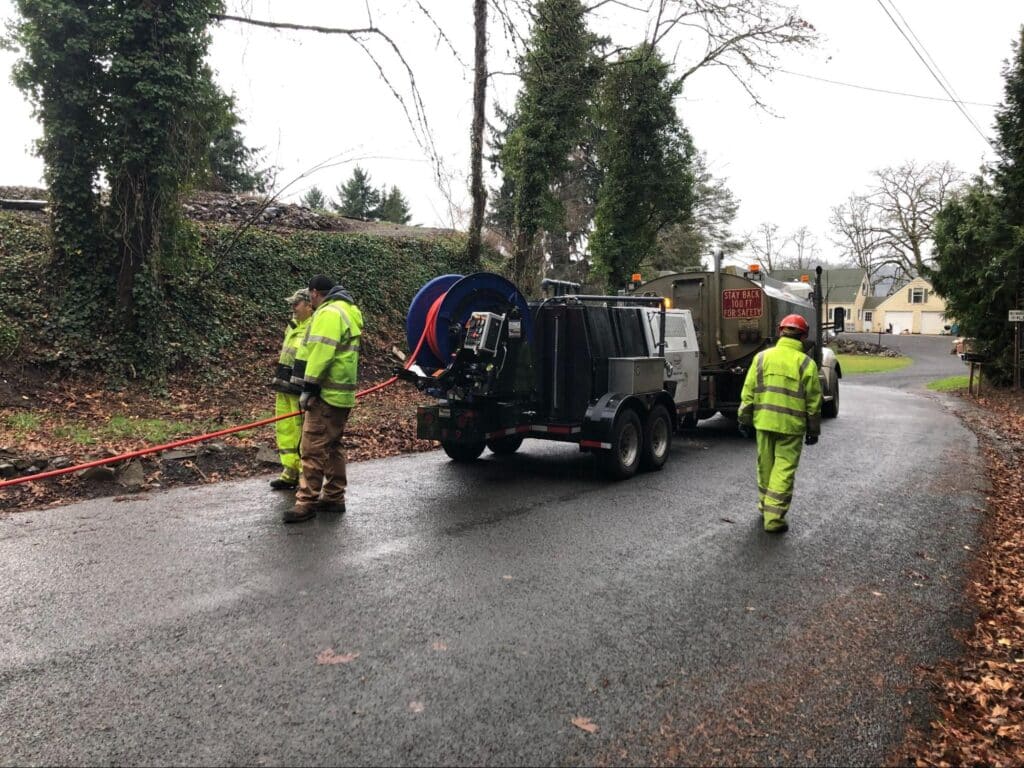
A truck-mounted Mongoose is integrated into a dedicated truck chassis. The water tank, pump, engine, hose reel, and operator controls all build onto a single platform. Municipalities reach for this configuration when the daily route is long, the pipes are large, and the crew needs maximum continuous operating time between refills.
What it does best, and where it falls short:
- Strong fit for: High-volume municipal sewer maintenance, large-diameter mainline work, and crews that operate the same predictable route day after day.
- Capacity advantage: Largest continuous water capacity in the lineup. Purpose-built chassis allows for ergonomic operator controls, integrated storage, and clean hose routing.
- Main limitation: Highest acquisition cost of the three configurations, with CDL requirements for most operators. Less efficient when the work pattern requires moving the jetter across multiple distant job sites in a day.
- Plan ahead: Single-asset risk. If the truck goes down for service, the entire jetting program pauses unless a backup is available. A rental Mongoose can bridge service gaps when planned in advance.
How to Choose Between Trailer, Van Pack, and Truck-Mounted
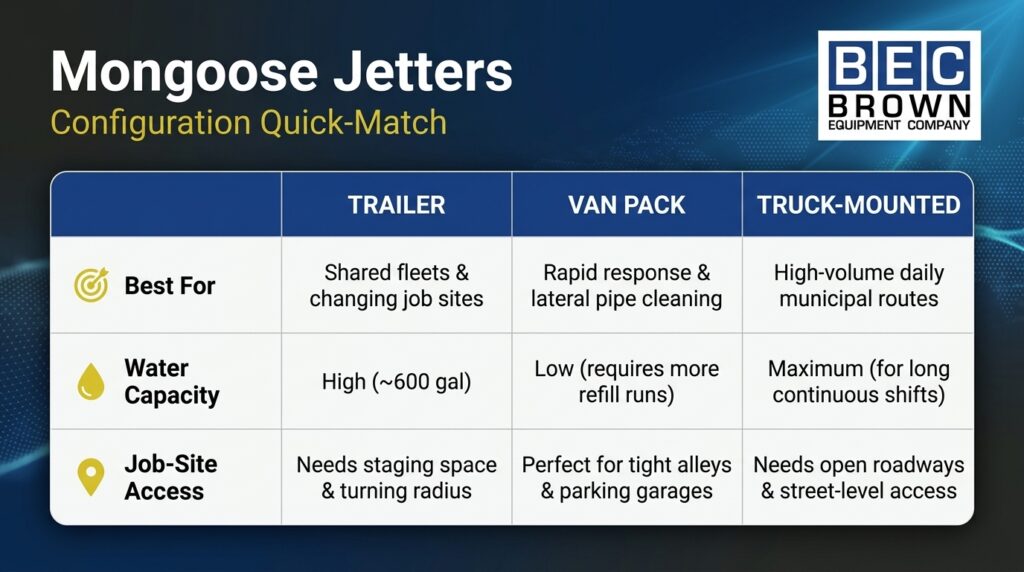
Score your operation against four factors before you talk price: job-site access, water demand, crew and fleet workflow, and year-round operating conditions.
1. Job-Site Access
Where does your crew actually work most days? Tight alleys, residential setbacks, and dense downtown grids favor van pack. Open municipal mainline runs and rotating job sites favor trailers. Predictable, high-volume city routes favor truck-mounted.
2. Water Demand and Refill Logistics
Estimate the gallons your crew burns on a typical day and how far the nearest reliable fill point sits from your work zones. If a crew is making three or four refill runs a day, the configuration is undersized for the work.
3. Crew and Fleet Workflow
A crew with a dedicated jetter operator and a stable tow vehicle gets full value from a trailer. A rapid-response team benefits from a van pack. A municipal sewer division running a fixed weekly route benefits from a truck-mounted unit. For confined-access work where even a van can’t get close, an easement machine handles what a jetter alone can’t reach.
4. Year-Round Operating Conditions
Midwest winters change the calculation. Hot water boiler options are available across all three configurations, but the integrated water management on truck-mounted units tends to simplify cold-weather operation. Spec freeze protection, antifreeze kits, and any heated enclosures into the order before winter arrives.
Total Cost of Ownership and Dealer Support
Acquisition price is one line in the spreadsheet. Total cost of ownership for a Mongoose jetter spans fuel, water, operator labor, parts, scheduled maintenance, unscheduled repairs, and resale value. The configuration with the lowest sticker price is not automatically the lowest cost over a five-year life.
A few practical TCO considerations:
- Operating efficiency: A correctly sized configuration finishes the day’s route on schedule. An undersized one runs into overtime and additional water refills, both of which compound across a year.
- Scheduled service: Mongoose jetters share a common service profile across configurations, which keeps maintenance and repair predictable when handled by an experienced dealer.
- Lifecycle planning: Aging units don’t always need replacement. Reconditioning can extend service life on a trailer or truck-mounted unit that’s mechanically sound but cosmetically worn.
- Local service radius: Downtime on a jetter waiting for parts from a distant service center is the most expensive line item in TCO. Brown Equipment Company serves customers across Indiana, Kentucky, Illinois, Ohio, Michigan, and Wisconsin to keep that turnaround short.
For crews still weighing dedicated jetters against larger combo units, this comparison of combination sewer cleaning units and standalone jetters lays out the trade-offs, and a deeper combination sewer truck buyer’s guide covers what a combo program looks like in operation.
Frequently Asked Questions About Mongoose Jetter Configurations
What size Mongoose jetter does a municipal sewer crew typically need?
Most municipal sewer crews specify the Mongoose Model 184 at 18 GPM and 4,000 PSI, because that combination handles the majority of 6 to 18 inch mainline work without being overkill. Smaller line maintenance or budget-constrained operations may select the Model 123 at 12 GPM. Large diameter or heavy-duty municipal work often justifies the Model 254 at 25 GPM.
Are trailer jetters better than van packs?
Neither is universally better. Trailer jetters offer larger water capacity and decouple the jetter from any single vehicle. Van packs offer faster deployment and easier access in tight urban environments. The right choice depends on the access conditions and water demand of the work the crew does most often.
Can a van pack Mongoose jetter handle main sewer lines?
Yes, within limits. Van pack Mongoose configurations can be specified with the same Model 184 platform that’s common on trailers, which gives them the pressure and flow to clean many mainline pipes. The practical limit is water capacity. On long mainline runs, a van pack will require more refill stops than a trailer or truck-mounted unit, which can extend the workday.
What is the difference between a truck-mounted sewer jetter and a combination sewer truck?
A truck-mounted sewer jetter is a dedicated jetting platform. It cleans pipes with high-pressure water but does not vacuum debris out of the line. A combination sewer truck integrates jetting with a vacuum system that pulls dislodged material back into a debris tank. Combo trucks cost more and weigh more, but they remove what the jetter loosens in the same pass.
Is a hot water Mongoose jetter worth the extra cost?
Hot water is worth specifying for crews that regularly clear grease blockages or operate in cold-weather conditions. The hot water boiler option is available on all three Mongoose configurations. For crews that work primarily warm-weather mainline cleaning in stormwater or sanitary sewer lines without heavy grease, cold water is usually sufficient.
Find the Right Mongoose Jetter Configuration for Your Operation
Choosing between trailer, van pack, and truck-mounted comes down to how your crew actually works. The right configuration shortens your route, reduces refill trips, and keeps your operators productive across every season. Brown Equipment Company sells, services, and supports the full Mongoose sewer jetter lineup across the Midwest, with dealer expertise to match configuration to operation.
Ready to find the right jetter configuration for your operation? Contact Brown Equipment Company to discuss your needs or schedule a free on-site demonstration with your BEC Equipment Consultant.