
Street sweepers are essential for keeping municipal roadways clean, safe, and visually appealing. Over time, however, even reliable equipment begins to show signs of age. Issues such as escalating maintenance costs, reduced cleaning performance, regulatory non-compliance, difficulties in obtaining parts, and safety concerns can compromise operational efficiency and public perception. This guide provides municipal leaders and fleet managers with clear indicators that it may be time to upgrade and improve their street sweeper fleet.
The Fundamental Role of Street Sweepers in Municipal Operations
Street sweepers serve critical functions in urban environments by:
- Preventing debris buildup in storm drains, reducing flood risks.
- Enhancing roadway safety by removing obstacles and hazardous materials.
- Improving the city’s overall appearance and community satisfaction.
- Supporting compliance with environmental standards.
As equipment ages, its ability to fulfill these roles efficiently diminishes, leading to increased operational disruptions and higher long-term costs. In many cities, street sweeping is considered not just a necessity but part of the infrastructure that supports economic activity and quality of life. According to the EPA’s discussion on the impact of street sweeping on stormwater management, routine and effective sweeping significantly helps prevent pollutants from entering water systems.
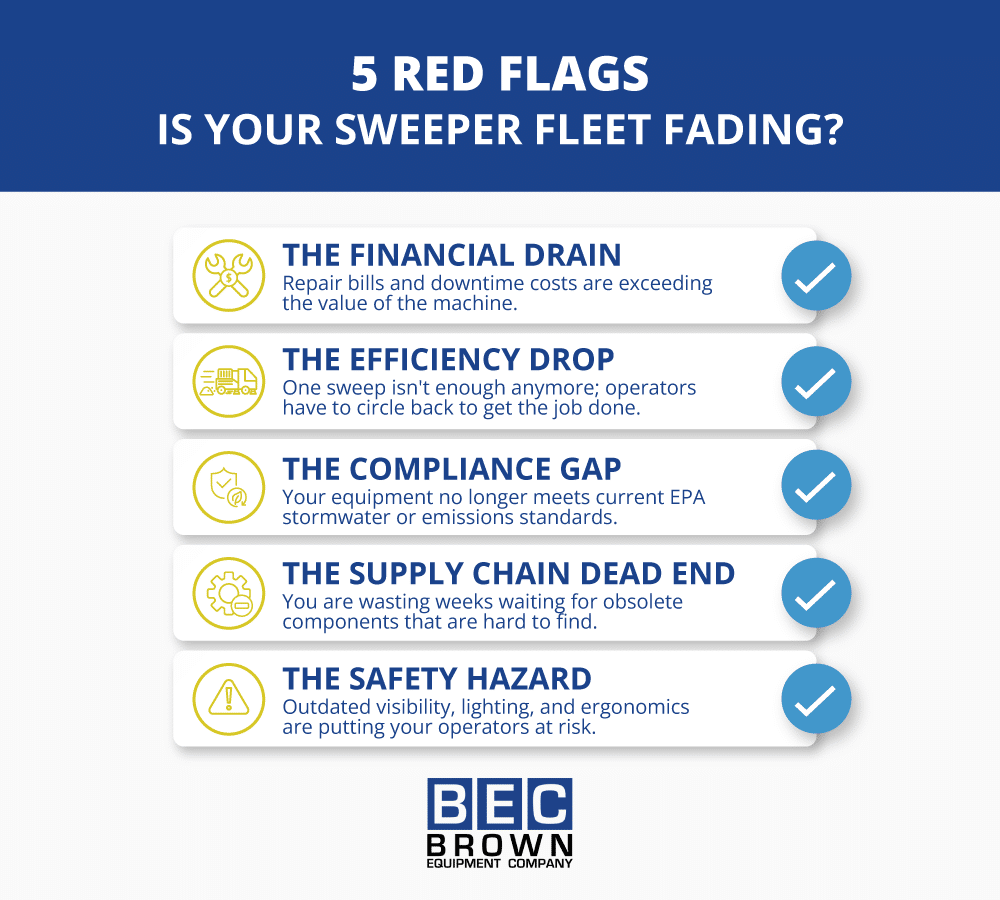
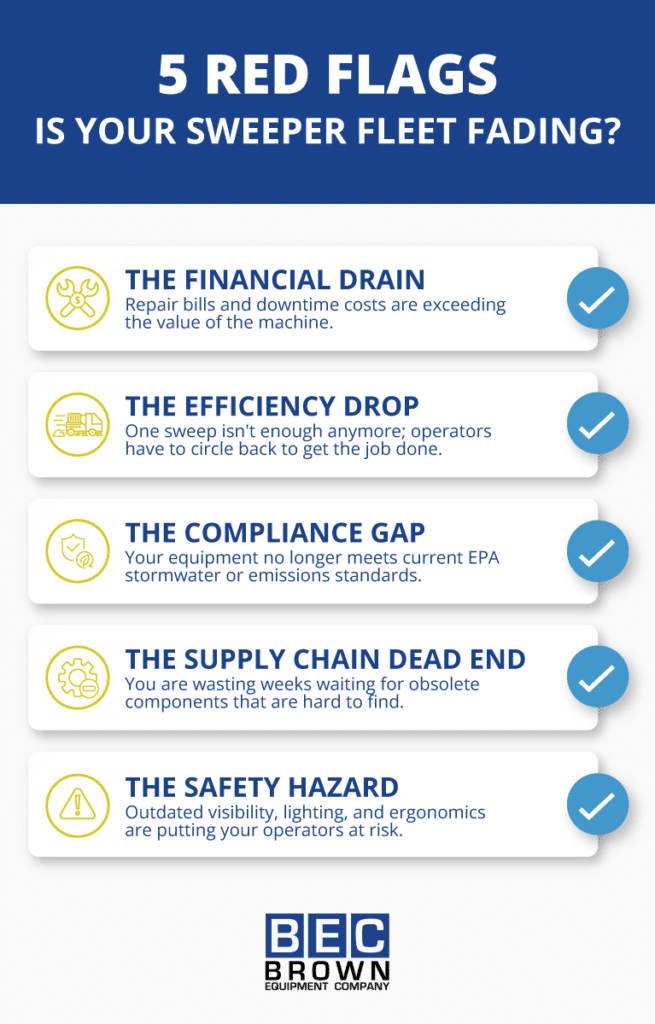
Sign #1: Maintenance Costs and Downtime Keep Rising
Older sweepers tend to incur more frequent repairs and growing maintenance expenses. Key signals include:
- Frequent Mechanical Failures: Regular breakdowns interrupt scheduled cleaning and cause extended downtime. Studies on mechanical failures that sideline fleet vehicles show a direct correlation between aging machines and mounting repair disruptions.
- Rising Repair Bills: When repair costs increase year over year, they can place additional pressure on maintenance budgets. Although the financial impact on municipal budgets is influenced by various factors, continually escalating repair expenses are a sign that investing in newer equipment might be more cost-effective over the long term.
- Extended Downtime: Lengthy repairs and waiting periods for parts reduce the machine’s availability, impacting overall municipal operations.
When the expense of maintaining aging sweepers approaches or exceeds the cost of replacing them, it is a strong indicator that an upgrade may be more economical in the long term. Instead of continually diverting funds to repairs, investing in modern equipment can reduce cumulative costs by improving fuel efficiency, reliability, and overall performance. A detailed analysis of annual maintenance records—bolstered by insights into vehicle lifecycle costs in fleet management—often reveals trends indicating diminishing returns with outdated machines.
Sign #2: Declining Cleaning Performance
A reduction in a street sweeper’s performance affects more than operational speed—it has tangible impacts on city cleanliness and public satisfaction. Signs of declining performance include:
- Missed Debris and Multiple Cleaning Passes: Older sweepers may require additional passes to achieve the desired level of cleanliness, leading to inefficiencies.
- Reduced Suction and Broom Effectiveness: As key systems degrade over time, the machine struggles to clear daily debris thoroughly.
- Slower Operations: Declining mechanical efficiency can lengthen cleaning routes, thereby increasing labor and fuel expenses.
These performance issues directly influence resident satisfaction and the public’s perception of municipal services. Upgrading to newer models with enhanced broom systems, optimized airflow, and advanced technology can result in more precise and efficient cleaning. Additionally, municipalities that adopt modern performance-monitoring features may fine-tune cleaning routes to balance coverage between low- and high-traffic zones.
Sign #3: Struggling to Meet New Environmental and Safety Regulations
Municipalities face increasingly strict safety, environmental, and operational standards. Older street sweepers often struggle to meet these regulations, primarily due to outdated emission controls and a lack of modern safety features. Resources on street sweeping compliance illustrate that falling behind on regulatory requirements can lead to challenges such as fines and public complaints. Upgrading to regulatory-compliant sweepers reduces these risks and underscores a municipality’s commitment to sustainable and safe operations.
Sign #4: Difficulty in Obtaining Parts and Support for Aging Equipment
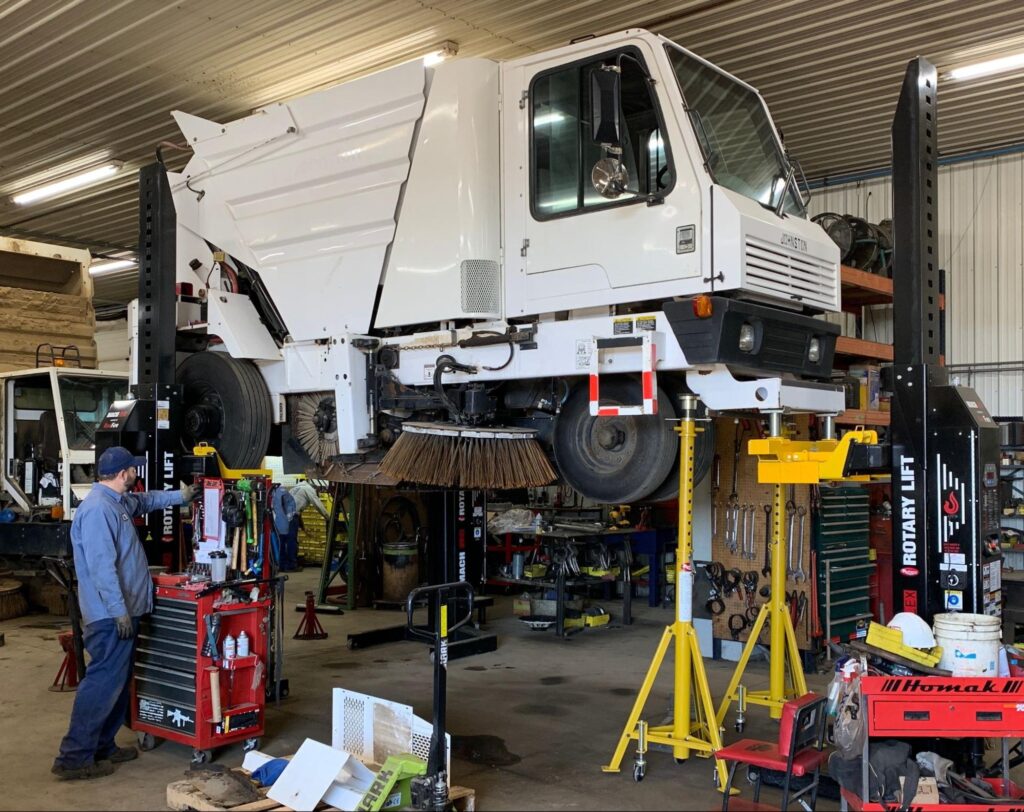
Another significant challenge with older sweepers is the increasing difficulty in sourcing replacement parts and specialized support:
- Scarce Components: As models become obsolete, original parts become harder to find, sometimes forcing municipalities to use aftermarket replacements that may not fully align with OEM standards.
- Prolonged Repair Times: Delays in obtaining the right parts can lead to extended downtime.
- Rising Costs: Often, the scarcity of parts can drive up prices, compounding repair expenses.
When your current suppliers struggle to source critical components, partnering with a full-service dealer like Brown Equipment Company can help close that gap. Their extensive OEM parts inventory and experienced service team support most major sweeper brands, helping reduce downtime and keep aging units operating safely and reliably while you plan your long-term fleet upgrade strategy.
Sign #5: Increasing Safety Concerns and Operator Well-Being
Aging street sweepers often lack the advanced safety features and ergonomic designs found in modern models, which can increase safety risks for both operators and the public:
- Compromised Braking and Hydraulic Systems: Delays in responsiveness increase the potential for mishaps.
- Poor Visibility and Lighting: Outdated cabin designs might not offer sufficient visibility, making it harder to navigate busy streets safely.
- Operator Fatigue: Limited ergonomic considerations can lead to fatigue, reducing overall productivity and attention to detail.
- Limited Emergency Response Features: Modern systems, such as enhanced emergency-stop functions, are often missing in older machines.
Upgrading to newer equipment not only enhances operational performance but also improves safety with ergonomic seating, improved braking, rearview cameras, better lighting, and additional emergency-response features. These improvements boost operator morale and reinforce essential public safety standards.
Benefits of Upgrading Your City’s Street Sweeper Fleet
Modernizing your street sweeper fleet can yield multiple tangible benefits:
Reduced Maintenance Costs and Downtime
Newer models are engineered for durability, leading to fewer repairs. This not only lowers repair expenses but also ensures reliable scheduling for crucial city operations.
Enhanced Cleaning Precision and Efficiency
Upgraded sweepers often combine advanced broom and suction systems to remove debris more effectively with fewer passes, saving both time and resources. Cleaner streets improve community satisfaction and the municipal image.
Improved Regulatory Compliance
Investing in modern street sweepers helps meet current environmental and safety standards, minimizing the risk of fines or negative public opinion. Compliance also supports proactive, forward-thinking leadership.
Enhanced Operator Safety and Workforce Morale
State-of-the-art safety features and ergonomic cabin designs create a safer work environment. This reduces injuries and operator fatigue, allowing municipal teams to function more effectively.
Long-Term Cost Efficiency
Though the upfront costs may appear higher, the overall cost of ownership over the equipment’s lifecycle is often lower. Reduced downtime, better fuel efficiency, and extended component life contribute to long-term financial advantages, making a compelling case for municipal investment.
Proactive Steps for Evaluating and Upgrading Your Fleet
A systematic approach helps ensure a smooth transition:
- Regular Fleet Assessments: Schedule periodic evaluations of mechanical and operational conditions. Gather operator feedback to uncover real-world performance gaps.
- Maintenance Data Analysis: Review repair logs and maintenance best practices for municipal fleets to spot rising costs or recurring part failures.
- Test and Compare New Models: Request on-site demonstrations of modern street sweepers to gauge performance improvements.
- Evaluate Financial Options: Explore financing, leasing, or phased procurement to align equipment investments with budgetary constraints.
- Consult Expert Providers: Engage with experienced vendors for tailored recommendations. Providers with full-service dealership offerings can also help you map out upgrade schedules that minimize downtime.
How to Decide Whether to Repair, Recondition, or Replace Your Street Sweeper
Knowing the signs is only helpful if you know how to respond to them. Use the number and severity of issues you’re seeing as a simple decision filter:
If you’re seeing just one sign
For example, a modest uptick in repairs or slightly slower cleaning performance on one unit, focus on tightening your maintenance program and securing reliable parts. Review PM schedules, address known wear points proactively, and consider targeted reconditioning to extend useful life without a major capital outlay.
If you’re seeing two or more signs across one or multiple sweepers
When rising maintenance costs combine with issues like missed debris, operator safety concerns, or recurring compliance challenges, it’s a strong indication that repairs are no longer the most economical path. At this stage, you should begin budgeting and planning for replacement or a phased fleet upgrade, evaluating options such as new units, quality used machines, or a mix of replacement and reconditioning based on age, utilization, and risk.
Framing your decisions this way helps you avoid over-investing in equipment that’s past its prime, while still getting maximum value from units that can be safely and reliably kept in service.
Leverage Brown Equipment Company’s Full-Service Approach to Street Sweeper Upgrades
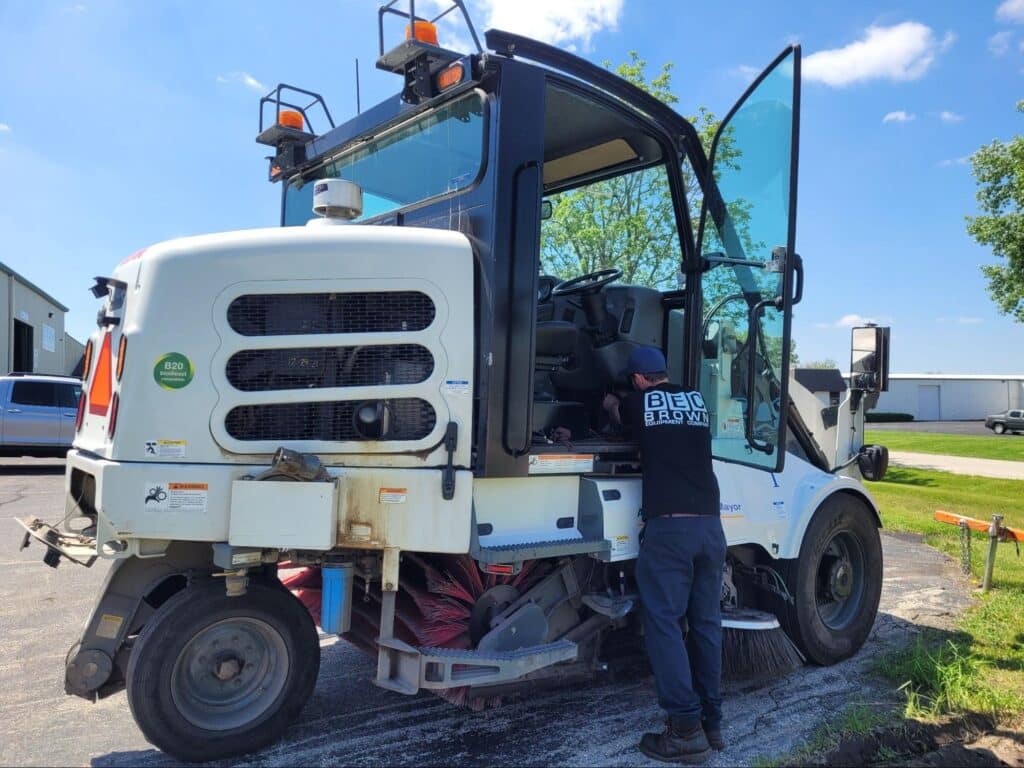
When it comes to ensuring a smooth upgrade process, Brown Equipment Company offers a comprehensive range of resources ideally suited for municipalities looking to modernize. With a legacy of serving customers involved in roadway and highway maintenance, we understand the unique demands of street sweeping operations and can provide:
- New and Used Street Sweeper Options: Whether you’re replacing a single unit or upgrading your entire fleet, Brown Equipment Company provides a wide selection of new and used sweepers. Options are matched to municipal budgets and performance needs, from the latest technology to well-maintained, cost-effective units.
- Rental and Demonstration Programs: If you need temporary coverage or want to test new technology, our rental program lets you try advanced sweepers in real conditions. Free on-site demonstrations show exactly how newer models compare to your existing equipment.
- OEM Parts and Maintenance: Parts shortages can keep older sweepers sidelined. Our extensive OEM parts inventory helps minimize downtime and ensures repairs meet factory specifications. Our technicians service all major brands, providing fast, reliable maintenance support.
- Customized Solutions and Reconditioning: A full replacement isn’t always necessary. We offer custom builds, fabrication, and reconditioning— including sandblasting, painting, and subassembly rebuilds—to extend the useful life of select units and support phased upgrade plans.
- Long-Term After-Sales Support: We emphasize ongoing support, from manufacturer partnerships that bring new solutions to operator and technician training across Indiana, Kentucky, Ohio, Michigan, Wisconsin, and Illinois. This helps municipalities keep projects on schedule, protect budgets, and stay compliant.
Every city’s needs are different. By partnering with a full-service provider focused on long-term relationships, municipal leaders can make confident decisions that balance reliability, compliance, and cost. Whether you’re planning a targeted upgrade or a full fleet replacement, Brown Equipment Company helps ensure your sweepers stay safe, effective, and ready for the future.
Check out this video to see a walkaround of the Global M3 Street Sweeper. This street sweeper is built in the USA and designed for challenging sweeping conditions.
Making Informed Decisions for Street Sweeper Fleet Upgrades
Municipalities must stay ahead of rising challenges by recognizing when their street sweepers have reached the end of their optimal service life. Signs such as escalating maintenance costs, reduced cleaning efficiency, regulatory challenges, difficulties in sourcing parts, and safety concerns all signal that an upgrade may be necessary.
While many factors contribute to the decision-making process—including a careful analysis of total ownership costs—modern, efficient street sweepers can deliver substantial operational, safety, and fiscal benefits over older models. A safer, more reliable fleet not only maintains compliance but also fosters an enhanced work environment for operators.
Take the next step toward streamlined operations, enhanced safety, and improved public service. Contact Brown Equipment Company today for expert consultations and tailored solutions designed for municipal fleets. Discover how we can guide your city in building a street sweeper fleet that meets current and future needs, ensuring your community continues to thrive.