Regulatory compliance is not just a bureaucratic requirement—it’s essential for safe and efficient pipeline and sewer operations. For municipalities and contractors, following pipeline inspection regulations protects workers, public health, and the environment, while ensuring that inspection data is accurate and defensible. This guide explains the key frameworks governing pipeline and sewer inspections, offering practical strategies to meet safety and environmental standards while reducing risks and enhancing efficiency.
Why Regulations Are Crucial in Inspection Work: Beyond “Avoiding Fines”
Regulations are the backbone of responsible pipeline and sewer operations. Compliance not only prevents fines and legal issues but also builds trust with the public and reinforces data reliability for planning and accountability.
Safeguarding Safety, Minimizing Liability, and Building Trust
Adhering to safety standards—such as OSHA’s Confined Spaces overview—ensures that workers are trained, equipped with proper personal protective equipment (PPE), and follow established risk management practices. These measures lower the chances of accidents and reduce subsequent liability in case of an incident. In addition, maintaining transparent safety records demonstrates your organization’s commitment to protecting public health and bolsters community confidence.
Generating “Defensible Data” for Planning and Accountability
Accurate inspection data is critical for justifying repair decisions, planning upgrades, and securing funding. Detailed records, including video evidence and defect codes, support audits and can provide legal protection. By treating regulatory compliance as part of proactive risk management, you create reliable reports that underpin sound decision-making.
The Regulatory Landscape at a Glance
Sewer and pipeline inspections must satisfy multiple requirements spanning worker safety, traffic management, environmental protection, and standardized reporting.
Worker Safety: OSHA and Confined Space Entry
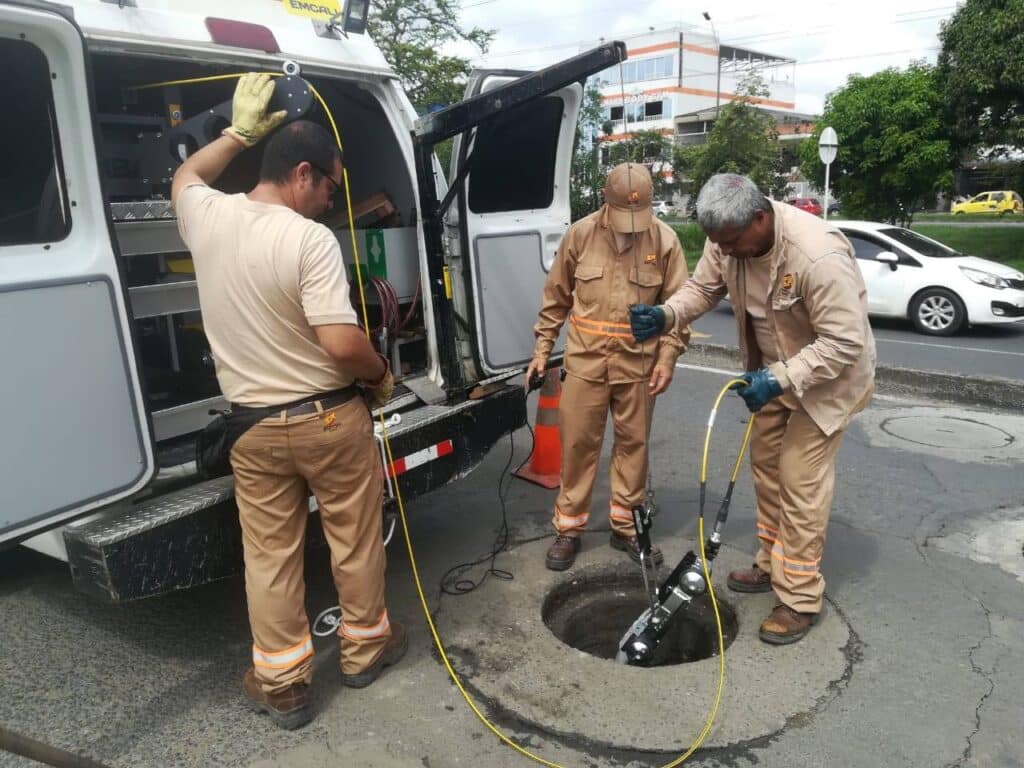
Worker safety is paramount. OSHA’s 29 CFR 1910.146 requires strict protocols for confined space entry in manholes, tanks, and vaults. Compliance mandates continuous atmospheric monitoring, proper ventilation, and the use of rescue equipment. Detailed documentation of safety measures, including test results and rescue plans, is essential to demonstrate adherence.
Traffic Control and Work Zones: MUTCD and Local DOT Rules
Inspection work near roadways must address public safety through effective traffic control. The Manual on Uniform Traffic Control Devices (MUTCD) and local DOT requirements guide the use of proper signage, physical barriers, and flaggers. A well-developed traffic control plan minimizes safety risks and project delays.
Environmental Protection: Clean Water Act, NPDES, and Discharge Rules
Environmental mandates from the Clean Water Act and NPDES regulate how wastewater and debris are managed. During inspections, teams must ensure that wastewater is contained, treated, or disposed of at approved facilities. Strict adherence to local and federal discharge rules prevents environmental damage and costly penalties.
Industry Standards for Condition Assessments and Deliverables
Standardized inspection methodologies, such as those from NASSCO (PACP, LACP, MACP), ensure uniform defect coding and reporting. Following these frameworks produces reliable records that meet client and regulatory expectations, reducing ambiguity in defect assessment and supporting long-term infrastructure planning.
Safety Regulations That Directly Impact Sewer & Pipeline Inspections
It is critical to integrate safety measures into every phase of inspection to protect workers and meet legal mandates.
Confined Space Entry: Understanding the Basics
OSHA classifies confined spaces such as manholes and underground vaults as high-risk if they possess hazardous conditions. Key safety requirements include:
- Atmospheric Testing: Monitor for toxic gases (e.g., H2S, methane) and ensure sufficient oxygen levels.
- Mechanical Ventilation: Utilize fans or ventilation systems to maintain air quality.
- Rescue Plans: Develop clear, documented rescue procedures and ensure rescue equipment is ready. See OSHA’s official rescue plan guidelines for more details.
- Signage and Access Control: Label hazardous areas and control access to secure both workers and the public.
Thorough documentation of these protocols is essential for audits and legal protection.
Identifying and Mitigating Common Inspection Hazards
Workers may encounter toxic gases, depleted oxygen levels, and biological hazards during inspections. Measures to reduce these risks include continuous atmospheric monitoring, use of PPE, and improved crew training, which together ensure safe working conditions.
Training, Competency, and Documentation Standards
Employees must receive comprehensive training on hazard recognition, equipment use, and emergency procedures. Detailed records of all training, safety assessments, and equipment calibrations not only promote worker safety but also serve as evidence of compliance during audits.
Work-Zone Compliance: Ensuring Traffic Control and Public Safety
Inspections in active work zones pose additional risks. Adhering to traffic control standards minimizes hazards for both workers and the public.
Developing Effective Traffic Control Plans
A robust traffic control plan involves:
- Clear Signage: Use warning signs like “Road Work Ahead” to alert drivers.
- Barriers and Cones: Physically separate workers from moving traffic with proper safety equipment
- Flaggers: Employ trained personnel to guide vehicles in dynamic environments.
- Lighting: Ensure high visibility with reflective signs and portable lighting during low-light conditions.
Minimizing Time in High-Traffic Areas
Efficient operations reduce exposure in hazardous zones. Strategies include organizing equipment placement, using multi-function inspection tools, and pre-staging all necessary supplies to avoid extended periods in active lanes.
Enhancing Public Safety Measures
To protect unintentional pedestrians and drivers:
- Pedestrian Detours: Provide clearly marked alternate routes.
- Vehicle Warning Systems: Use variable message boards and timely alerts.
- Local Coordination: Collaborate with law enforcement to enforce temporary speed limits and traffic rerouting.
Environmental Compliance During Cleaning and Inspection
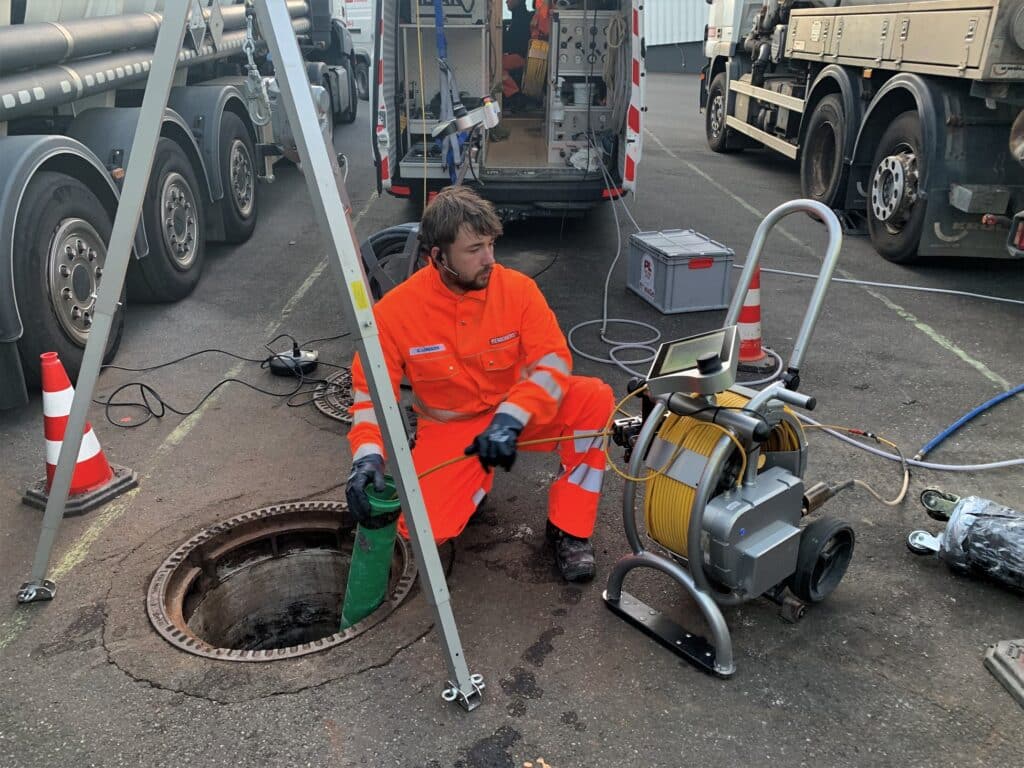
Managing wastewater and debris responsibly is vital to prevent environmental violations.
Proper Handling and Disposal of Wastewater and Debris
During cleaning, dewater solid waste and store wastewater in approved containment tanks or vacuum trucks. Ensure that all waste is transported and disposed of at facilities that meet federal and local standards. Thorough site cleanup after operations reduces the risk of accidental contamination.
Understanding NPDES and Local Discharge Regulations
Compliance with the Clean Water Act requires that teams verify local discharge rules before mobilizing. Securing NPDES permits when discharges are allowed is critical. Pre-inspection consultations with local authorities help clarify whether waste can be contained on-site or must be treated off-site.
Contributing to SSO/CSO Reduction Through Regular Inspections
Regular inspections help identify issues that may lead to Combined Sewer Overflows (CSOs) or Sanitary Sewer Overflows (SSOs). High-resolution inspections can pinpoint defects, enabling timely interventions that decrease the risk of overflows and support municipal efforts to reduce environmental impact.
Standards That Shape Inspection Deliverables
Accurate and standardized deliverables are critical to ensuring that inspection data meets regulatory requirements.
Establishing Consistency with Condition Assessment Standards
Adopt recognized frameworks, such as NASSCO’s PACP, LACP, and MACP programs, to ensure consistency in defect coding and data reporting. This consistency eases the integration of your data with asset management systems and builds stakeholder confidence.
Meeting QA/QC Expectations for Accurate Results
Implement rigorous QA/QC measures by:
- Testing and calibrating equipment before every inspection.
- Conducting spot reviews of captured footage.
- Using standardized coding practices to minimize errors.
Such measures ensure that the data provided is both accurate and defensible.
Delivering Stakeholder-Ready Inspection Data
Final deliverables should include a clear summary of findings, detailed defect codes, timestamps, and recommendations, formatted for easy integration into digital asset management systems. Well-structured reports not only facilitate immediate repairs but also support long-term planning and budget justification.
How Regulations Shape Technology Choices
The right technology is key to achieving compliance while enhancing overall efficiency.
Enhancing Worker Safety with Advanced Tools
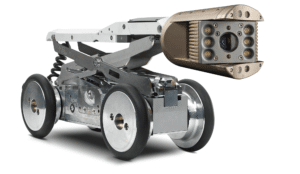
Invest in remote-operated systems such as robotic crawlers and zoom cameras to reduce direct human exposure in confined spaces. Wireless gas detection systems provide real-time alerts for hazardous conditions, aligning with OSHA’s requirements and significantly enhancing worker safety.
Strengthening Compliance with High-Precision Inspection Tools
High-definition cameras and laser or sonar-based profiling tools improve the accuracy of defect detection. When paired with regulatory-compliant software that aligns with NASSCO standards, these tools reduce manual errors and produce measurable data that stands up to regulatory scrutiny.
Adopting Emerging Tools for Streamlined Operations
Modern inspection technologies like AI-powered defect recognition and cloud-based reporting platforms not only accelerate the review process but also enhance data accuracy. These tools help reduce human error, enable rapid reporting, and ensure that deliverables quickly meet compliance standards.
Compliance Workflow: From Planning to Delivery
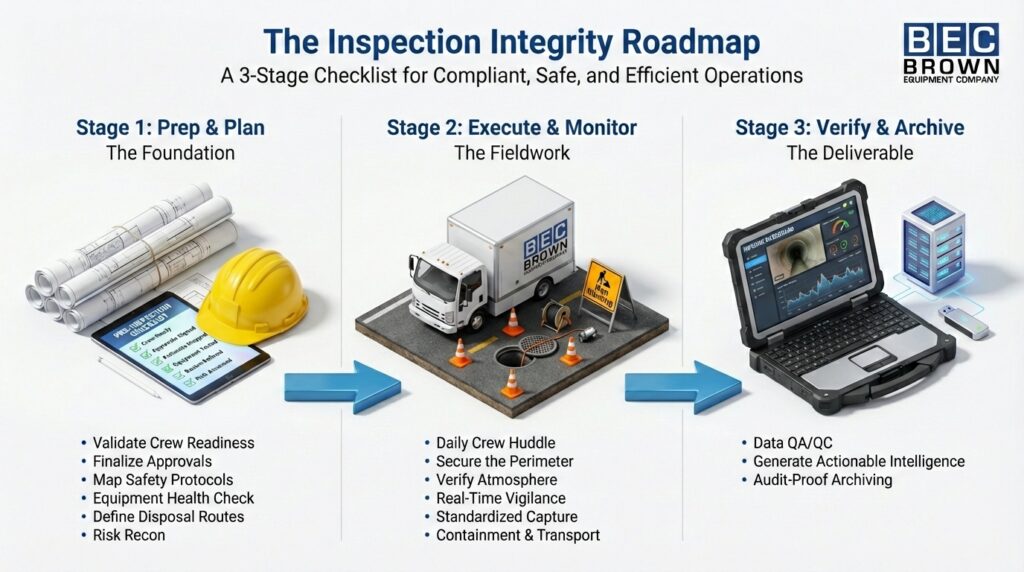
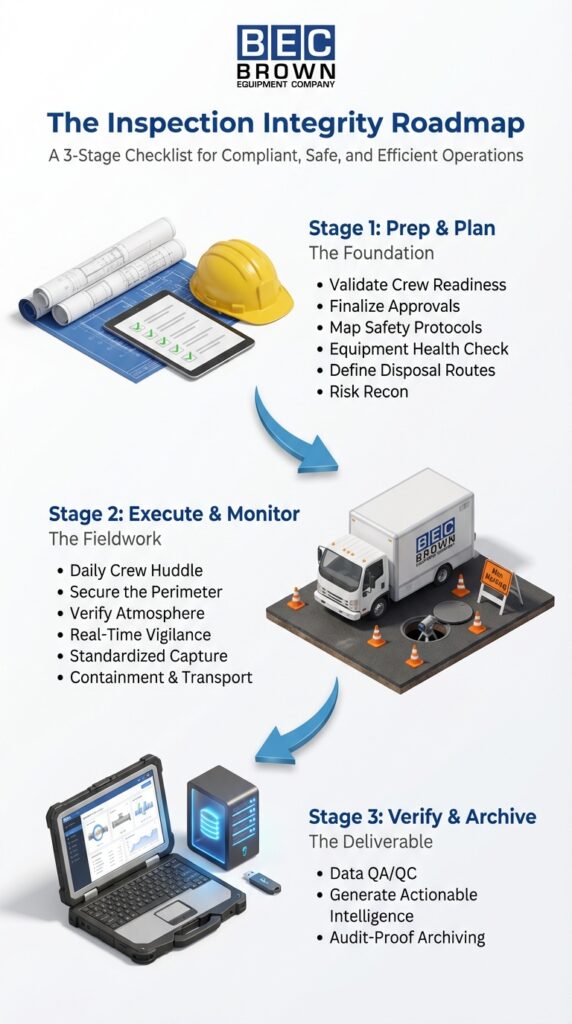
A systematic approach is essential to meet regulatory requirements while ensuring safe, efficient operations. Use this workflow to guide every phase of your inspection project.
Pre-Inspection Planning and Coordination
Before mobilization, thorough planning sets the foundation for compliance and safety:
- Verify worker training and certifications: Ensure all personnel have current certifications for confined space entry, traffic control, and hazard recognition.
- Secure all required permits: Obtain permits for work zones, traffic management, and environmental discharge before arriving on-site.
- Develop site-specific safety and traffic control plans: Create detailed plans that include rescue procedures, atmospheric monitoring protocols, signage placement, and barrier configurations.
- Calibrate and inspect all equipment: Test and calibrate gas detectors, cameras, ventilation systems, and PPE to ensure proper function.
- Plan waste logistics: Confirm approved disposal methods and facilities for wastewater and debris management.
- Conduct hazard assessments: Identify potential risks and coordinate with local authorities to address site-specific concerns.
Field Operations: Safety and Accountability
On inspection day, prioritize safety, organization, and real-time documentation:
- Conduct a crew briefing: Review the day’s scope, assign roles, discuss identified hazards, and review emergency procedures with all team members.
- Set up the work zone: Install proper signage, physical barriers, cones, and lighting to protect workers and the public.
- Perform atmospheric testing: Test for toxic gases (H2S, methane) and oxygen levels before entry, and document all readings.
- Continuously monitor safety conditions: Maintain ongoing atmospheric monitoring and log all activities throughout the inspection.
- Execute inspections using standardized protocols: Follow NASSCO standards (PACP, LACP, MACP) for defect coding and ensure complete video footage capture.
- Manage waste disposal: Contain wastewater in approved tanks or vacuum trucks and transport to facilities that meet federal and local standards.
Post-Inspection Review and Documentation
After completing field work, ensure data quality and compliance documentation:
- Perform QA/QC review: Review all recorded footage, verify defect coding accuracy, and conduct spot checks for consistency.
- Compile standardized reports: Generate reports with clear summaries, detailed defect codes, timestamps, and actionable recommendations formatted for integration into asset management systems.
- Retain all documentation: Organize and store permits, safety logs, atmospheric test results, calibration records, and inspection data for future audits or legal review. Most regulations require retention periods of 3-7 years, though specific requirements vary by jurisdiction—consult your legal advisor or regulatory agency to confirm applicable timeframes.
By following this structured workflow from pre-planning through post-inspection review, your team will maintain compliance, minimize risks, ensure accurate reporting, and build stakeholder confidence in every project.
Confirming Local Requirements and Compliance Resources
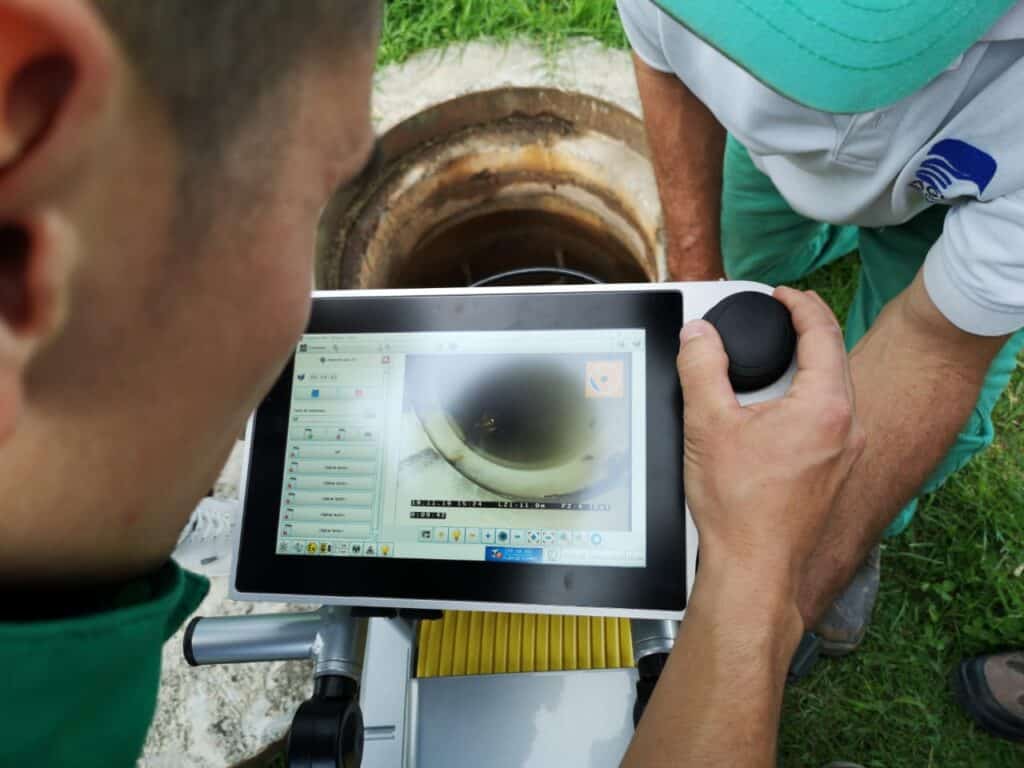
Regulatory requirements vary by location. Federal standards such as OSHA, MUTCD, the Clean Water Act, and NPDES provide a framework, but state and local mandates may impose additional protocols. Always verify the most current and site-specific requirements before starting your inspection projects to ensure full compliance.
State and Local Rules Vary—Who to Consult
Because compliance requirements differ across jurisdictions, consult the following authorities to confirm applicable regulations:
- Municipality or asset owner: Contact the local public works department, wastewater utility, or infrastructure owner to understand their specific inspection standards, reporting requirements, and operational protocols.
- Engineer of record: Review project specifications with the consulting engineer or designer who may have established particular testing methods, deliverable formats, or quality standards for the project.
- Regulatory agencies: Verify requirements with state environmental agencies, local departments of transportation, and regional water quality control boards to ensure compliance with discharge permits, work zone regulations, and environmental protection rules.
Where Brown Equipment Fits
Brown Equipment Company supports your compliance efforts through:
- Training and certification programs: We provide hands-on training for inspection equipment operation, safety protocols, and industry-standard reporting methods to ensure your team meets competency requirements.
- Advanced inspection systems: Our technology solutions include NASSCO-compliant inspection equipment, remote-operated crawlers, HD camera systems, and integrated reporting software designed to meet regulatory standards.
- Ongoing service and support: From equipment calibration and maintenance to technical consultation and troubleshooting, we help you maintain compliance throughout the life of your inspection program.
Taking the Next Step Toward Compliant, Efficient Inspections
Navigating the complex landscape of pipeline and sewer inspection regulations doesn’t have to be overwhelming. By implementing systematic workflows, investing in the right technology, and partnering with experienced equipment providers, you can transform compliance from a burden into a competitive advantage—protecting your workers, satisfying regulatory requirements, and delivering defensible data that stakeholders trust.
Brown Equipment Company is committed to helping municipalities and contractors achieve safer, more efficient, and fully compliant inspection operations. Whether you’re upgrading your equipment, training your team, or seeking expert guidance on regulatory requirements, we’re here to support you every step of the way.
Ready to simplify your compliance challenges? Contact Brown Equipment Company today to schedule a personalized consultation or request an on-site demonstration of our advanced inspection technology. Let’s work together to elevate your inspection program and ensure your operations meet the highest standards of safety and regulatory excellence.