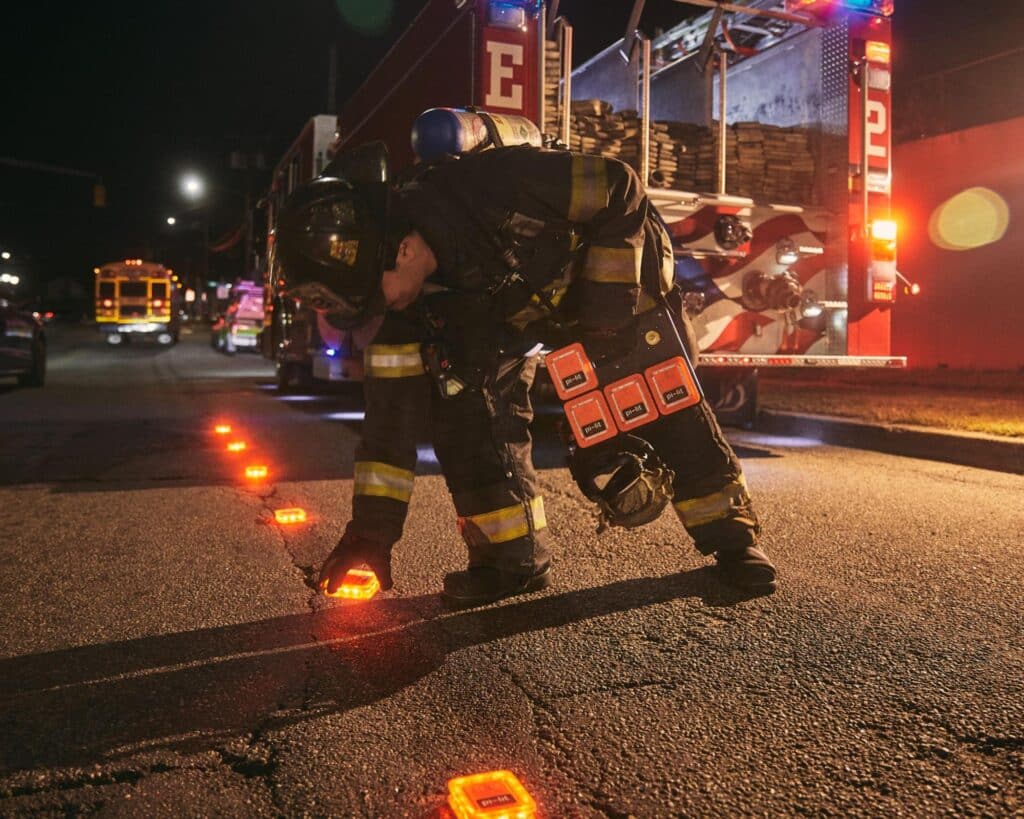
Municipalities, utility companies, and large contractors play essential roles in maintaining critical infrastructure, but their work environments—ranging from busy highways to underground utilities—pose significant safety challenges. Hazards such as moving traffic, unstable structures, toxic gases, and loud work settings demand more than standard personal protective equipment (PPE). Effective municipal safety solutions now center on environmental safety controls: systems that proactively shape the work environment to reduce risks before they reach workers.
That’s where Brown Equipment Company focuses. We help municipalities and utilities deploy municipal safety solutions such as advanced work-zone traffic management, confined space and manhole protection, and wireless communication systems that keep crews connected in real time. This article explores three key pillars of these environmental safety controls and how they work together to create safer, more efficient municipal operations.
Why Environmental Safety Controls Matter (vs. PPE Alone)
Personal protective equipment is essential—but it’s also the last line of defense. Hard hats, vests, gloves, and respirators help protect workers once a hazard is already present. In high-risk municipal and utility environments, relying on PPE alone leaves too much to chance.
Safety solutions—such as smart work-zone traffic systems, confined space protection, gas monitoring, and wireless communications—work differently. They modify or eliminate hazards at their source, shaping the job site so workers are less exposed in the first place. Instead of reacting to danger, crews operate in an environment where many risks are already reduced or actively managed.
When municipalities and utilities prioritize environmental controls alongside PPE, they gain:
- Fewer accidents and injuries: Automated traffic control, fall protection, and continuous gas monitoring reduce direct exposure to high-risk conditions.
- Reduced delays and shutdowns: Proactively controlled hazards mean fewer emergency stops, incident investigations, and unplanned downtime.
- Stronger regulatory compliance: Systems designed around OSHA and FHWA best practices make it easier to meet—and document—safety requirements.
- Greater public trust and workforce confidence: Visible, engineered safety measures reassure both the community and crews that risks are being managed professionally and proactively.
By neutralizing hazards before they reach workers, environmental safety controls create safer, more stable, and more efficient job sites than PPE alone can deliver.
Advanced Work-Zone Traffic Safety Systems
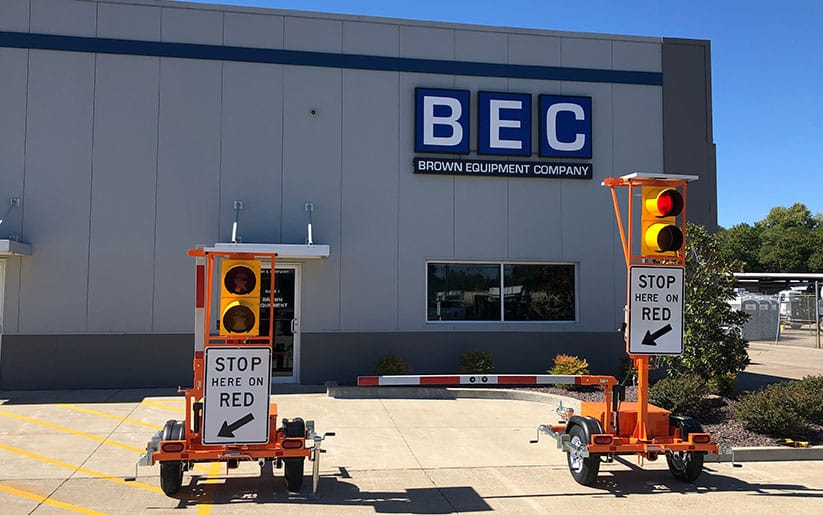
Work zones are dynamic, high-risk settings where fast-moving vehicles, heavy machinery, and on-foot workers coexist. Traditional measures such as static signage and cones provide basic warnings but often fail to adapt to rapidly changing conditions. Advanced work-zone traffic safety systems employ technology to actively manage traffic and alert drivers in real time, reducing accidents and protecting crews. According to FHWA, implementing smart solutions in work-zone management can significantly lower the risk of collisions and project delays.
Key Features
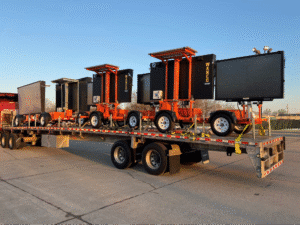
Advanced systems incorporate smart traffic signals, queue detection, automated flagger devices, and portable variable speed limit signs. These features work together to:
- Adjust traffic flow based on real-time data
- Warn drivers of sudden congestion or stopping
- Replace manual flaggers to reduce worker exposure
- Dynamically manage speed limits in response to weather and traffic density
By coordinating these tools, municipalities can better control traffic near work zones, reducing risks and keeping crews safer.
Enhanced Safety and Compliance
Such systems not only safeguard workers but also help meet strict roadway safety standards. By reducing accidents and disruptions, they ensure smoother project execution and build public confidence in municipal operations. The measurable reduction in traffic accidents and improved compliance lowers the potential for costly liabilities and delays.
Confined Space and Manhole Safety Equipment
Confined spaces like manholes and vaults present risks such as restricted entry, poor ventilation, and toxic gases. These environments require specialized safety measures that go beyond standard PPE. Effective protection in these areas addresses inherent dangers and ensures rapid rescue capabilities in emergencies. Following OSHA guidelines for confined spaces is crucial for creating and maintaining a robust confined space safety program.
Essential Equipment
Key safety tools for confined spaces include:
- Manhole Entry Systems: Secure entry barriers and covers to prevent accidental falls.
- Fall Protection: Harnesses, retractable lifelines, and anchor systems that mitigate fall risks.
- Gas Detection and Ventilation: Continuous air quality monitors and portable ventilators that provide real-time data and maintain safe oxygen levels.
- Explosion-Proof Lighting: Intrinsically safe lights that ensure visibility without igniting hazardous vapors.
- Rescue Systems: Davit arms and winch systems that assist in safely retrieving workers during emergencies.
Building a Confined Space Safety Program
Equipment is most effective when it’s backed by a simple, consistent safety program. Municipalities and utilities should align confined space work with OSHA requirements and make every entry controlled and repeatable by focusing on:
- OSHA-aligned procedures: Define permit-required spaces, entry roles, and permit steps that follow OSHA 29 CFR 1910.146.
- Training and drills: Regularly train crews on gas detection, ventilation, PPE, and communication—and practice real-world rescue scenarios.
- Rescue and monitoring: Establish clear rescue plans in advance and use gas detectors, ventilation, and communication systems to monitor conditions for the entire entry.
Wireless Communication Systems for Safer Crews
Effective communication is vital where quick dissemination of information can prevent accidents. Traditional methods such as shouting or hand signals can be insufficient in noisy, hectic surroundings. Wireless communication systems enable seamless, real-time interaction among team members. They also integrate well with camera inspection systems, allowing crews to share critical visual data instantly.
Essential Communication Tools
Modern wireless systems designed for municipal and utility crews include:
- Hands-Free Headsets: Noise-canceling technology ensures clear communication even in loud conditions.
- Long-Range Radios: Maintain connectivity over large areas, keeping remote team members in contact.
- Wearable Alerts: Haptic feedback and alerts inform crews of changing conditions or emergencies.
- Real-Time Visual Sharing: Rugged mobile devices capture and share images for on-the-spot hazard evaluation and response.
Advantages and Efficiency
Wireless communication systems minimize delays and misunderstandings that can lead to accidents. By enabling rapid responses to hazards—such as adjusting traffic patterns or initiating a rescue procedure—these tools streamline operations while boosting overall safety. A well-coordinated team can handle challenges with greater confidence, reducing downtime and preventing incidents before they occur.
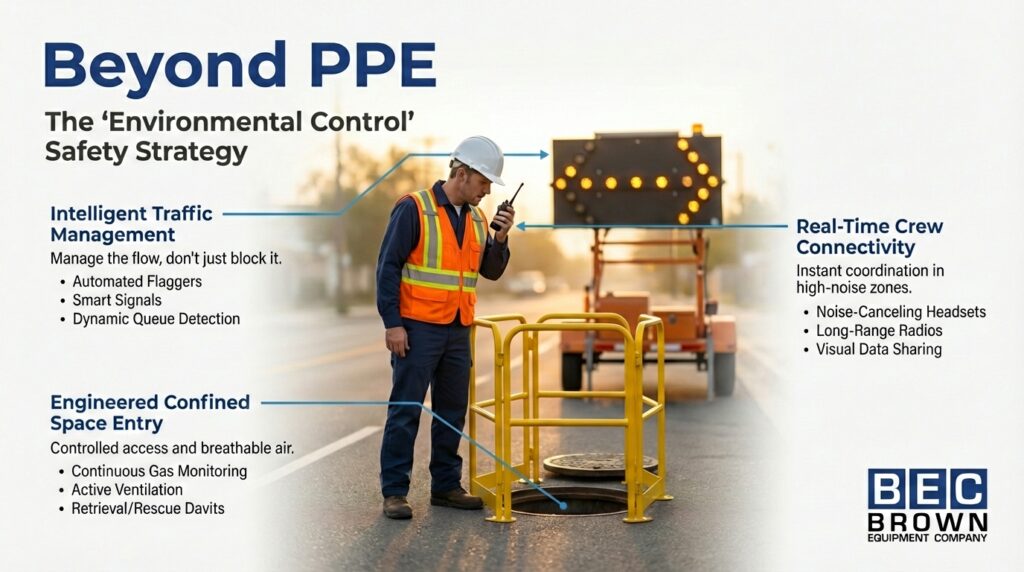
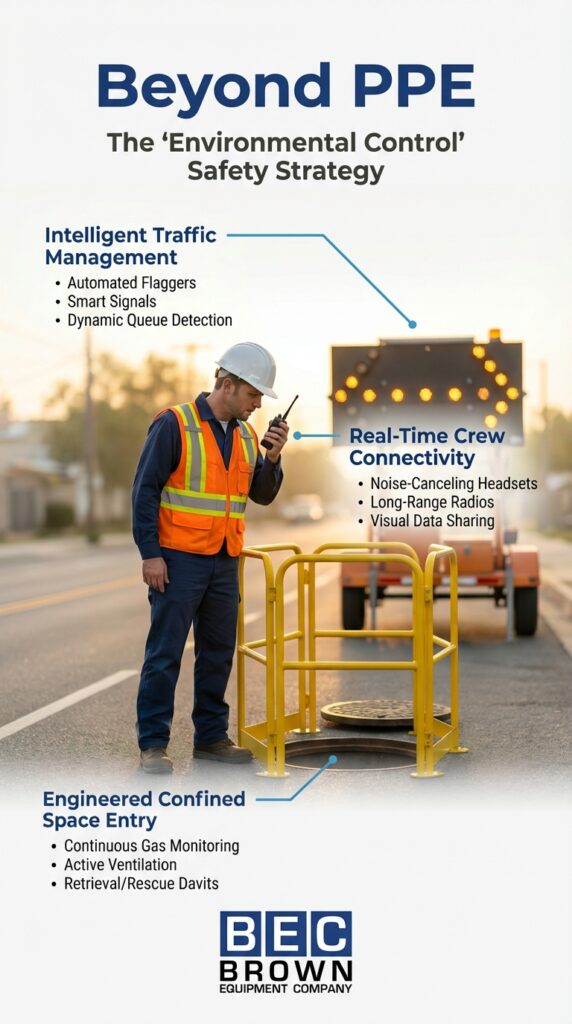
Integrated Safety: Traffic, Confined Spaces & Communications Working Together
The greatest impact comes when traffic control, confined space protection, and wireless communication systems are designed to work as a single safety network—not as isolated pieces of equipment.
In a typical underground utility repair, for example, smart work-zone systems slow and redirect traffic, confined space equipment manages fall risk and air quality, and wireless communication keeps topside and entry crews in constant contact. When these controls are integrated, hazards are identified sooner, responses are faster, and workers face fewer surprises.
This connected approach delivers clear advantages:
- Stronger protection with fewer incidents: Multiple layers of control—traffic management, gas detection, fall protection, and communication—work together to prevent accidents before they escalate.
- Lower costs over time: Fewer injuries, shutdowns, and delays reduce medical expenses, claims, and rework, while keeping projects on schedule.
- Simpler compliance and documentation: Standardized, integrated systems make it easier to align with OSHA and FHWA requirements and to prove it when audited.
- A safer, more trusted organization: Visible, well-coordinated safety measures build confidence among workers, the public, and stakeholders that municipal and utility projects are being managed responsibly.
By viewing safety systems as an interconnected framework instead of individual products, municipalities and utilities can protect crews more effectively while improving efficiency and long-term cost control.
Keep Your Safety Equipment Performing: Maintenance & Reconditioning
Even the best safety systems can’t protect crews if they’re worn, damaged, or out of calibration. Regular maintenance and periodic reconditioning are critical for keeping traffic control devices, confined space systems, gas detectors, and communication equipment reliable—and for staying in line with manufacturer recommendations and regulatory expectations.
Brown Equipment Company supports municipalities and utilities with maintenance & repairs service and reconditioning solutions that help:
- Restore performance and extend the life of existing equipment
- Identify issues before they cause failures in the field
- Keep critical devices (like gas detectors and fall protection) inspected and ready for use
By investing in ongoing maintenance and reconditioning, organizations protect their crews, preserve their budgets, and ensure that safety systems perform as expected when they’re needed most.
FAQs: Municipal & Utility Safety Solutions
What are the most important safety systems for municipal and utility work zones?
Beyond PPE, the most impactful systems are advanced work-zone traffic controls (smart signals, automated flaggers, queue detection), confined space and manhole safety equipment (fall protection, gas detection, ventilation, rescue systems), and wireless communication tools (hands-free headsets, radios, alerts). Together, they reduce exposure to moving traffic, falls, and hazardous atmospheres.
Why aren’t PPE and basic barricades enough for municipal crews?
PPE and cones are reactive—they help once a hazard is already present. Environmental safety controls such as smart traffic systems, engineered entry systems, and real-time communication change the work environment itself, reducing the chance that workers are ever exposed to the most serious risks.
How can utilities reduce confined space entry risks and stay aligned with OSHA?
Focus on three areas:
- Use proper equipment (manhole entry systems, gas detectors, ventilation, fall protection, rescue gear).
- Implement OSHA-aligned procedures for permit-required confined spaces, roles, and permits.
- Provide regular training and drills so crews know how to recognize hazards, monitor air quality, and execute rescues. Brown Equipment can help you select and maintain the right confined space systems to support this program.
How do wireless headsets and radios improve crew safety?
Wireless communication enables clear, hands-free, real-time coordination in loud, fast-changing environments. Crews can quickly warn each other about hazards, adjust traffic patterns, or initiate rescue actions without relying on shouting or hand signals that can be missed.
How can Brown Equipment Company help us improve our safety program?
Brown Equipment partners with municipalities and utilities to design, supply, and support safety solutions, including work-zone traffic systems, confined space and manhole equipment, and wireless communication tools. We also offer maintenance & repairs service and reconditioning solutions to keep your safety equipment reliable, compliant, and ready when it matters most.
Transforming Safety Strategies for Enhanced Municipal Operations
Adopting advanced municipal safety solutions transforms operations by shifting from reactive PPE measures to proactive environmental controls. By implementing dynamic traffic systems, specialized confined space equipment, and robust wireless communication tools, municipalities significantly reduce risks and improve overall safety and efficiency. This integrated approach not only protects crews but also builds community trust and operational excellence.
Ready to elevate your safety strategy? Brown Equipment Company offers tailored solutions to help you protect your teams and ensure smoother, more efficient municipal operations. Contact us today to discover how our advanced systems can transform your work sites into safer, smarter, and more resilient environments.