If your crew spends the first hour of every mulch job scooping material out of a dump trailer bed, a purpose-built mulch trailer changes that equation. This guide explains what mulch trailers are, how they work, and why landscaping contractors are choosing the Mulch Mule — available through Brown Equipment Company’s landscaping and vegetation equipment line — as their preferred bulk material handling solution. Whether you’re evaluating your first live-floor system or comparing options for an expanding operation, here’s what you need to know.
Key Takeaways
- A mulch trailer is a purpose-built bulk material trailer designed for controlled discharge of bulk landscaping materials directly into wheelbarrows at ground level — eliminating the manual scooping required with a standard dump trailer.
- The Mulch Mule features a 15-cubic-yard aluminum hopper, a belt-over-chain live floor driven by a 13HP Honda iGX390 engine, a curbside discharge conveyor with material conditioning tine bars, and an electric tarp system.
- A full 15-yard hopper discharges from the rear in approximately 45 seconds; a single wheelbarrow loads in 3-6 seconds.
- The Mulch Mule can help reduce labor costs by up to 30% and is estimated to deliver $10 or more in labor savings per cubic yard, per the BEC product page.
- Beyond mulch, the Mulch Mule handles topsoil, compost, bark, gravel, sand, and leaves — and accepts an optional Billy Goat 37HP vacuum debris loader for fall leaf collection.
- Brown Equipment Company offers the Mulch Mule for purchase or rental and provides free on-site demonstrations across a six-state Midwest service area.
What Is a Mulch Trailer (and How Does It Work)?

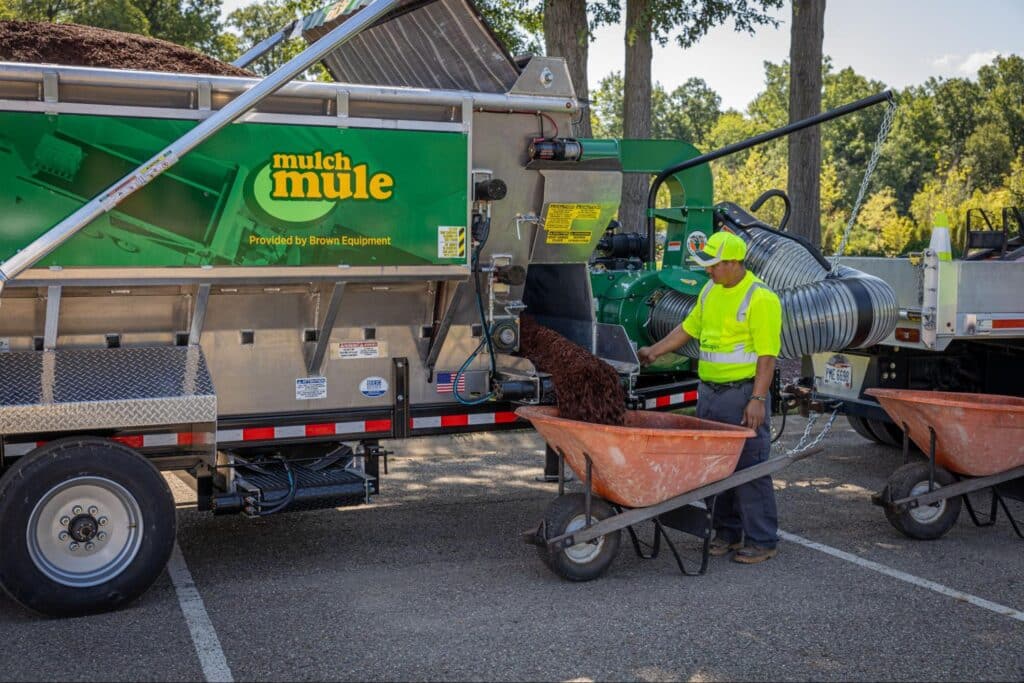
A mulch trailer is a specialized material handling trailer built for bulk landscaping materials. Unlike a conventional dump trailer that tips its full load at once, a mulch trailer uses a conveyor system to move material from inside the hopper toward a discharge chute at a controlled rate. Material flows directly into a waiting wheelbarrow at ground level — no one needs to climb into the bed to scoop.
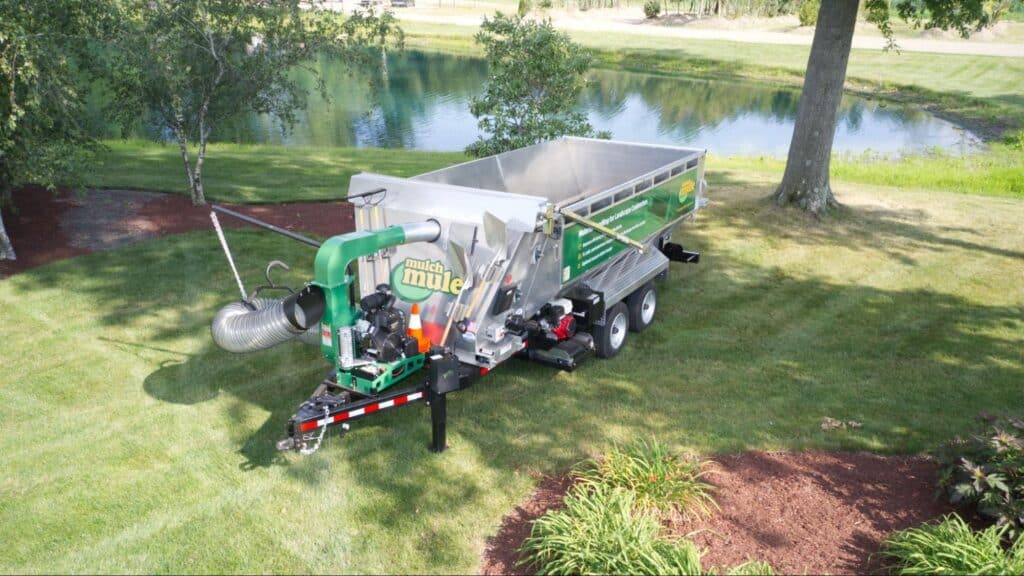
The live-floor system on the Mulch Mule uses a belt-over-chain design, not the slat-style floors found on some agricultural equipment. The belt moves material continuously toward the curbside discharge conveyor, where tine bars break up clumps and regulate flow. With the optional wireless remote upgrade, one operator can control the trailer while also running stand-on or sit-down equipment, such as a skid steer, mini skid, Toro Multi Force, or topdresser, working alongside it.
This design removes the manual-labor bottleneck that makes dump trailer workflows slow on high-volume jobs. The trailer handles the material movement. The crew handles placement.
Mulch Trailers vs. Dump Trailers: What’s Actually Different
A dump trailer deposits its entire load in one hydraulic lift. That’s useful for bulk delivery to a staging area, but it transfers the real labor problem to your crew. Someone has to get into the bed, manually scoop material into wheelbarrows, haul across the property, and repeat until the pile is gone. For high-volume mulch operations, those hours compound quickly.
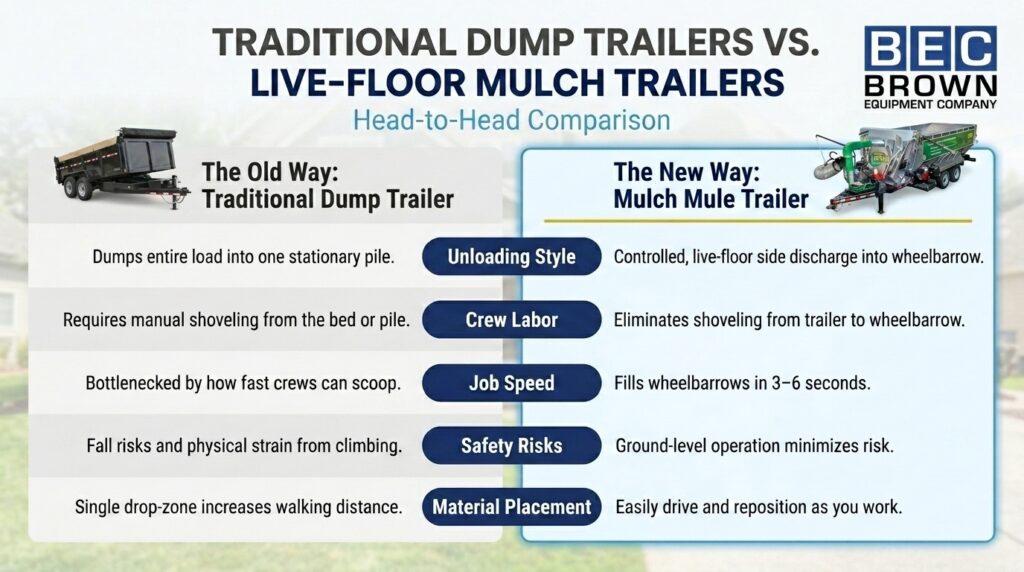
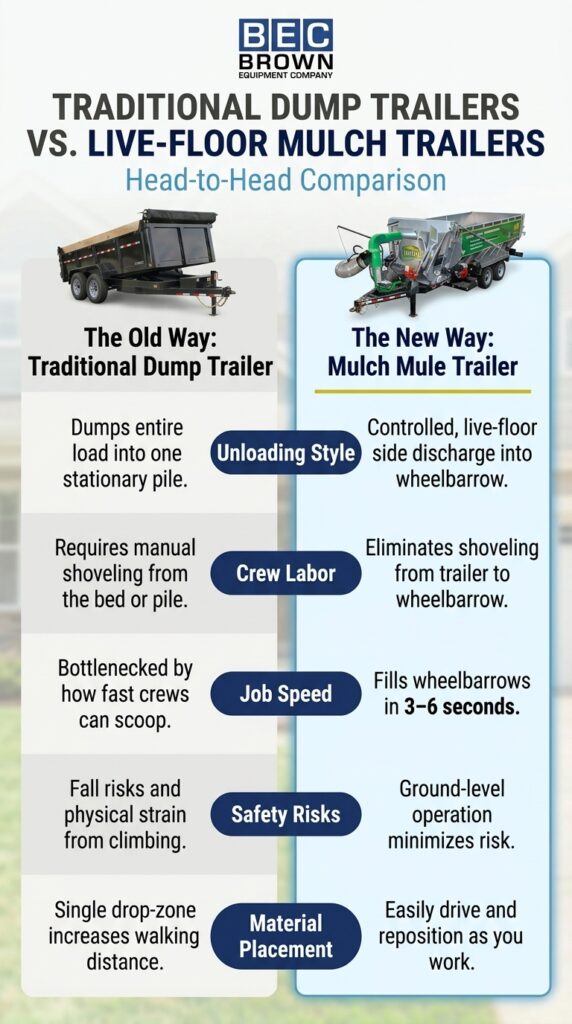
Here’s how the two approaches compare directly:
- Unloading method: Dump trailers tip the entire load at once. The Mulch Mule’s conveyor floor feeds material at a variable, operator-controlled rate.
- Labor at the trailer: Dump trailers require manual scooping from the bed. The Mulch Mule discharges from ground level, filling a wheelbarrow in 3-6 seconds.
- Material positioning: Dump trailers create a single pile. The Mulch Mule’s curbside discharge lets you reposition along the property as the load empties.
- Crew safety: Climbing into a dump trailer bed to scoop introduces fall exposure. Ground-level discharge eliminates that risk.
- Discharge speed: A fully loaded 15-yard Mulch Mule hopper can discharge completely from the rear in approximately 45 seconds.
For low-frequency bulk deliveries, a dump trailer may be sufficient. For contractors running multiple mulch jobs per week, the labor arithmetic shifts quickly in favor of a live-floor conveyor system.
The Mulch Mule: Specs, Features, and What It Handles
The Mulch Mule is purpose-built for high-volume bulk material handling. The core specifications:
- Hopper capacity: 15 cubic yards, aluminum construction
- Dimensions: 24’4″ length x 8′ width (fully loaded)
- Engine: 13HP Honda iGX390 with auto-choke and auto-throttle
- Floor system: Continuous and reversible, variable speed belt-over-chain live floor
- Discharge: Curbside conveyor with material conditioning tine bars
- Tarp system: Automatic electric
The Mulch Mule is designed for a wide range of bulk landscape and site materials, not just wood mulch. It handles bark and wood chips, topsoil, compost, gravel, sand, and leaves.
Two optional accessories extend its range. The optional Billy Goat 37HP vacuum debris loader mounts on top of the tongue and converts the trailer for fall leaf and debris collection. An optional extension conveyor attaches to the curbside discharge chute for additional reach on wider properties.
Watch how the optional leaf vacuum attachment expands the Mulch Mule’s capabilities beyond mulch season. In the video below, Spencer Lawn Care demonstrates the trailer’s leaf collection setup in a real field application.
For a deeper look at equipment options for fall leaf season, see Brown Equipment Company’s guide to evaluating top tools for efficient leaf cleanup.
The Labor Case for a Live-Floor Mulch Trailer
The landscaping industry is carrying a significant and persistent workforce shortage. Across the industry, 76% of landscaping companies report having at least one unfilled open position, and 59% say the labor market is slightly or much worse than before the COVID-19 pandemic. The U.S. landscaping market reached an estimated $188.8 billion in 2025, according to IBIS World data cited by the National Association of Landscape Professionals — but workforce growth has not kept pace with demand.
In that environment, equipment that lets a smaller crew accomplish more per day has clear operational value. The Mulch Mule can help reduce labor costs by up to 30% and delivers an estimated $10 or more in labor savings per cubic yard.
The math is straightforward. Fewer person-hours spent shoveling means more jobs completed per week, more revenue per crew day, and less physical strain on workers who are already hard to recruit and retain.
Is a Mulch Trailer Worth It for a Smaller Operation?
For contractors running high-volume mulch or bulk material work, the ROI case is strong. For smaller or more seasonal operations, the answer depends on job frequency and what manual loading is actually costing your crew. These questions help frame the decision:
- How many mulch or bulk material jobs does your crew complete per week during peak season?
- How many labor hours are consumed by manual scooping and wheelbarrow loading per job?
- What is your fully burdened hourly labor cost per worker?
- Are you limiting the number of jobs you take because crew time is the bottleneck?
If manual loading is consuming a significant share of your crew’s billable hours, the productivity gain from a purpose-built live-floor trailer tends to pay back quickly. For contractors not yet ready to purchase, Brown Equipment Company also offers equipment rentals — a lower-commitment path to evaluating the Mulch Mule’s impact on real jobs before committing to a full purchase.
Frequently Asked Questions About Mulch Trailers
What is a live floor mulch trailer?
A live floor mulch trailer uses a continuously moving conveyor floor inside the hopper to bring bulk material toward a side discharge chute at a controlled rate. Unlike a dump trailer that tips its full load at once, a live-floor system lets an operator fill wheelbarrows one at a time from the ground — with no manual scooping, no crew climbing into the trailer bed, and precise control over where material is deposited.
Mulch Mule vs. dump trailer: which is better for contractors?
It depends on job volume and workflow. Dump trailers are lower in initial cost and versatile for general bulk delivery, but they require manual loading of wheelbarrows from the bed, which adds significant labor time on high-volume jobs. The Mulch Mule’s live-floor system eliminates that step, making it the more productive choice for contractors running multiple mulch or bulk material jobs per week where crew time is the primary constraint.
What materials can the Mulch Mule handle besides mulch?
The Mulch Mule is designed for a wide range of bulk landscape materials, including topsoil, compost, bark, wood chips, playground mulch, gravel, and sand. With the optional Billy Goat 37HP vacuum debris loader attachment, it also handles leaves and yard debris for fall cleanup operations.
Can you use the Mulch Mule for leaf collection?
Yes. The optional Billy Goat 37HP vacuum debris loader mounts on the Mulch Mule’s tongue and is designed for leaf and yard debris collection. The trailer then serves as a high-capacity collection vessel, with the same controlled discharge capability for unloading at the end of the job.
Is a mulch trailer worth it for a small landscaping operation?
For low-frequency use, a standard dump trailer may be sufficient. The mulch trailer ROI case strengthens as job volume and crew labor costs increase. Brown Equipment Company offers Mulch Mule rentals for contractors who want to evaluate the trailer’s performance on actual jobs before making a purchase decision.
See the Mulch Mule at Work — Contact Brown Equipment Company
Brown Equipment Company carries the Mulch Mule and serves landscaping contractors across Indiana, Kentucky, Ohio, Illinois, Michigan, and Wisconsin from multiple service center locations. Rental options are available for contractors not ready to commit to a purchase, and free on-site demonstrations are offered so you can evaluate the trailer under your own job conditions. Contact Brown Equipment Company to request a demonstration, discuss your operation’s needs, or get a quote.