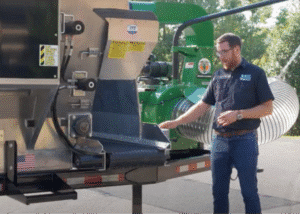
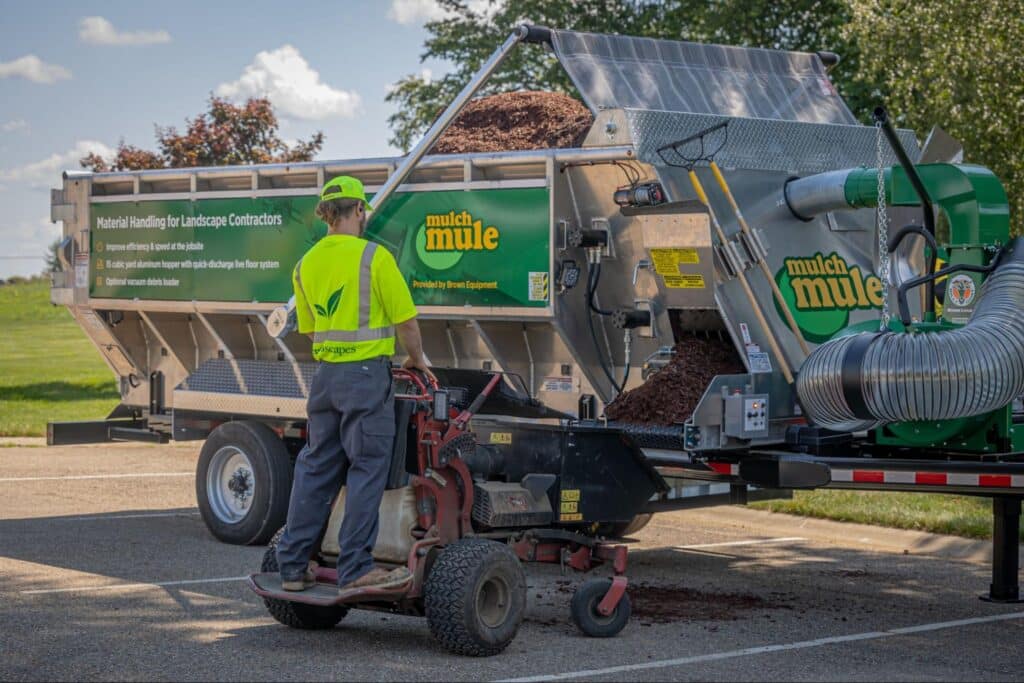
The Mulch Mule is named for its most common application, but the trailer is built for considerably more. Most landscape contractors buy it for spring mulch season and discover the rest as the calendar turns: topsoil, compost, gravel, sand, and fall leaf collection. This guide covers every material this mulch trailer handles, organized by material and season.
Key Takeaways
- The Mulch Mule handles eight material types: mulch, bark, topsoil, compost, gravel, rock, sand, and leaves (with the optional Billy Goat attachment), plus palletized and skidded materials.
- A 15-cubic-yard aluminum hopper and reversible belt-over-chain live floor handle both lightweight organic materials and dense aggregates.
- The curbside discharge conveyor with conditioner rollers loads a wheelbarrow in 3–6 seconds. The full 15-yard hopper clears in roughly 45 seconds via rear discharge onto the ground.
- Leaf collection requires the optional Billy Goat 37HP vacuum attachment. It does not come standard with the base trailer.
- The reversible live floor runs in both directions: forward for standard discharge, in reverse for loading or controlled unloading of palletized materials.
- Brown Equipment Company offers free on-site demonstrations so contractors can evaluate the trailer with their own materials and crew before purchasing.
Spring: Mulch, Bark, and Fibrous Organics
Mulch and bark are the materials the trailer is built around. The belt-over-chain live floor moves fibrous organic material continuously toward the curbside discharge conveyor, and conditioner rollers at the discharge break up compacted clumps that form during transport, a common issue with shredded and long-strand materials. A wheelbarrow loads in 3–6 seconds via the curbside conveyor. When running rear discharge, the full 15-yard hopper clears in roughly 45 seconds, keeping crews moving without waiting on the trailer.
Wood chips, playground chips, pine bark, double-ground hardwood, and similar fibrous materials all run through the same system. Live floor speed is adjustable, which matters for matching delivery pace to crew movement on large installs.
For a detailed look at how the live floor, conditioner rollers, and curbside conveyor work mechanically, the Complete Guide to Mulch Trailers covers the specs in depth. The official Mulch Mule applications page at mulchmule.com lists every rated material category.
Spring Through Fall: Topsoil, Compost, and Organic Blends
The Mulch Mule handles topsoil and organic blends for bed preparation and landscape installs, compost for topdressing and soil amendment, and blended organic products throughout the growing season. The live floor and conveyor move these materials the same way they handle mulch.
Dense organic blends behave differently on the floor than fibrous mulch. They distribute more evenly without the clumping that long-strand materials produce, which reduces conditioner roller intervention. The tradeoff is weight: compost and topsoil blends run significantly heavier per cubic yard than shredded mulch. With a 15-yard hopper, load weights with dense materials add up quickly, and operators should plan loads accordingly.
Year-Round: Gravel, Rock, and Sand
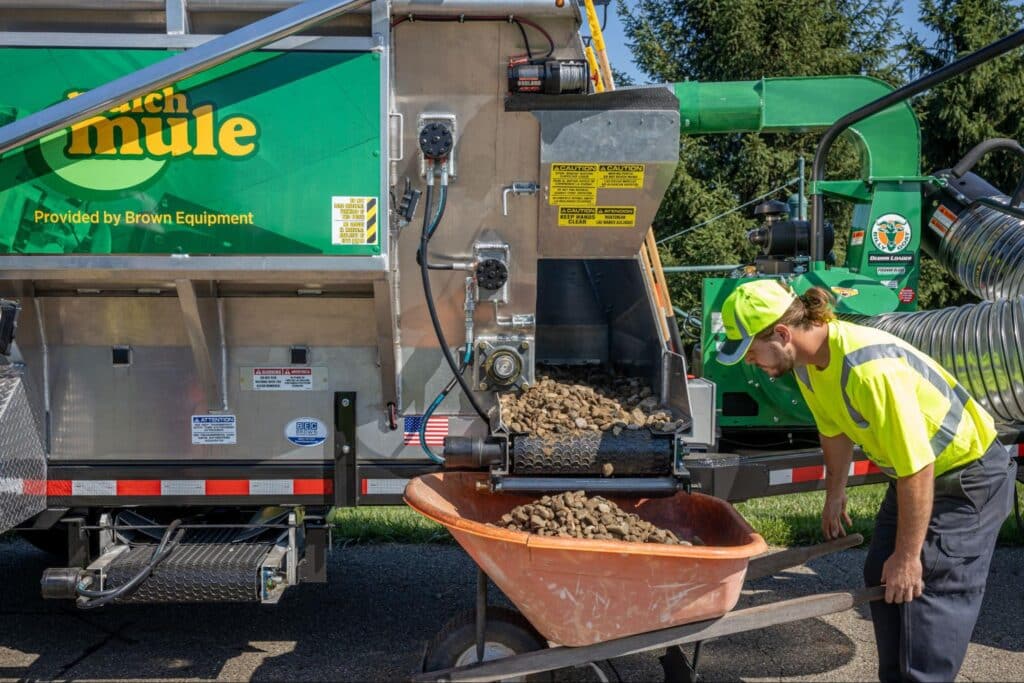
Aggregate applications are where contractors running mulch and soil installs find year-round utility in the trailer. Gravel, crushed rock, sand, and similar materials load and discharge through the same reversible live floor system. Common applications include:
- Drainage gravel for bed borders, French drains, and dry creek beds
- Decomposed granite and sand for pathway and patio base installations
- Pea gravel or crushed stone for playground and recreation area surfacing
- Crushed limestone and stone dust for hardscape base preparation
Weight is the key variable with aggregates. Gravel and crushed rock run considerably heavier per cubic yard than mulch or compost. Operators should calculate expected load weights against the trailer’s rated capacity and tow vehicle specifications before loading dense materials.
The reversible floor is particularly useful for aggregate work. It can run in either direction: forward toward the conveyor for standard discharge, or in reverse for rear loading and controlled unloading from the back of the hopper.
Fall: Leaf Collection with the Billy Goat Attachment
Leaf collection requires an add-on: the optional Billy Goat leaf vacuum kit, which mounts a 37HP Billy Goat debris loader to the Mulch Mule and converts the 15-yard hopper for curbside collection. The kit is designed for manageable transitions between mulch delivery and leaf pickup, so crews can run both applications in the same fall season.
Jef Gregg, operations manager at C&S Lawn Service and Landscape in Wadsworth, Ohio, described the impact of the Mulch Mule on his crews this way: “It makes their lives tenfold easier,” Gregg told Landscape Management, noting that the Billy Goat vacuum attachment had become another productivity driver for his teams. With the kit installed, the Mulch Mule is a three-season machine: spring and summer for mulch, soil, compost, and aggregate; fall for leaf collection.
For operations building out fall leaf programs, Evaluating Top Tools for Efficient Leaf Cleanup covers the broader range of leaf equipment options available through Brown Equipment Company.
See the Mulch Mule’s Billy Goat vacuum attachment in action for fall leaf collection:
Beyond the Basics: Palletized Materials and Optional Upgrades
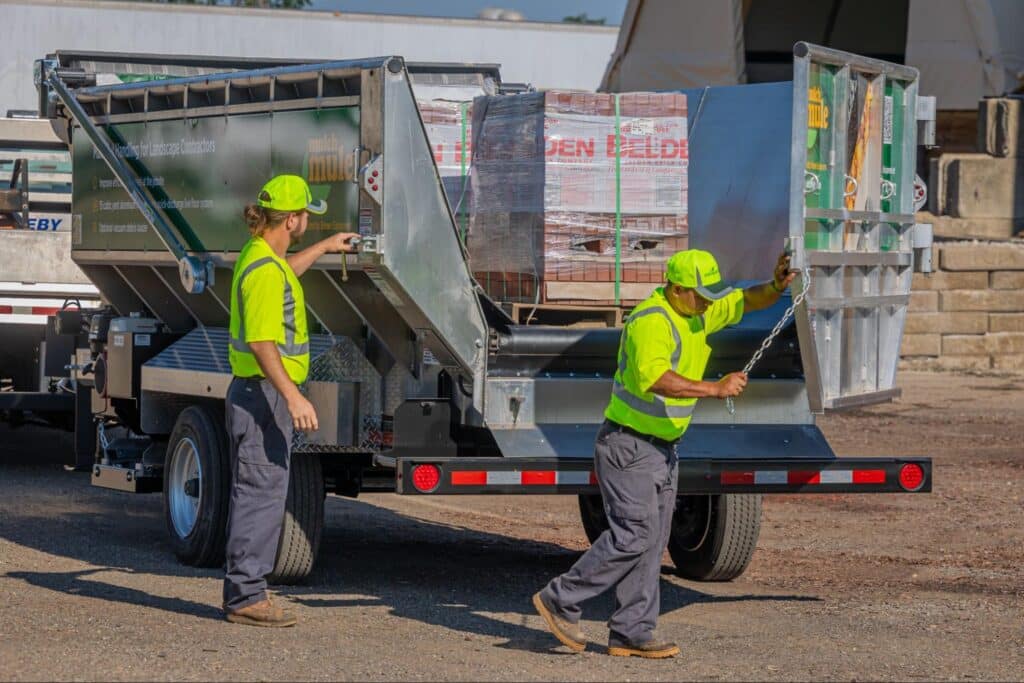
Palletized or skidded materials (bagged soil amendments, bulk bags, and similar products) can be handled using the reversible live floor running in reverse. This enables controlled loading from the rear and unloading of products that aren’t loose-poured into the hopper, extending the trailer’s utility beyond bulk materials.
Two optional upgrades expand what crews can do from a fixed position:
- Wireless remote control: allows one operator to manage conveyor direction solo, eliminating the need for a second crew member at the controls.
- Extension conveyor: increases discharge reach for wide beds, elevated plantings, and installations where the trailer can’t pull directly alongside the work area.
For contractors evaluating the Mulch Mule as part of a broader equipment investment, BEC carries a full range of landscaping and vegetation equipment for municipalities and commercial operators across the Midwest.
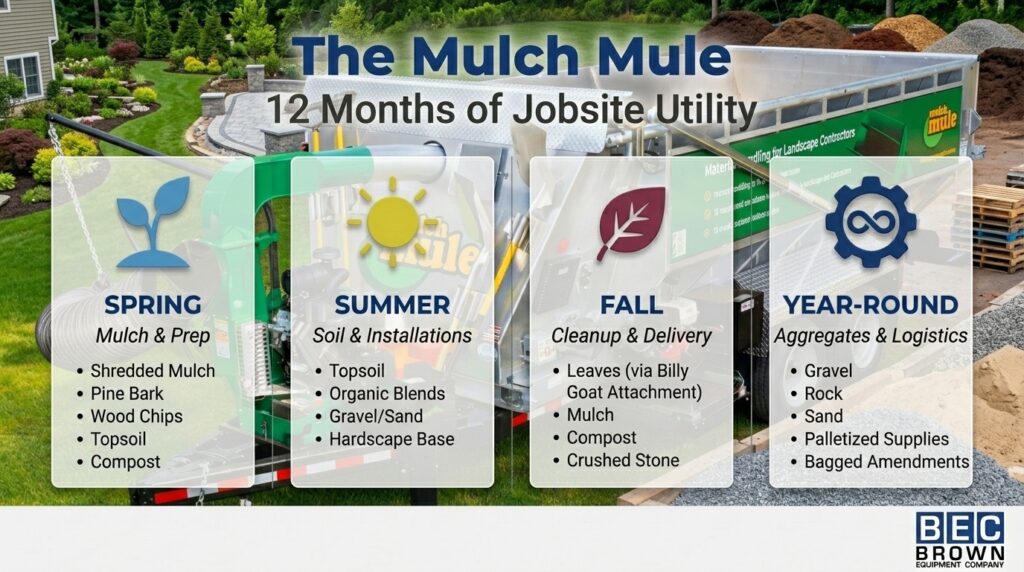
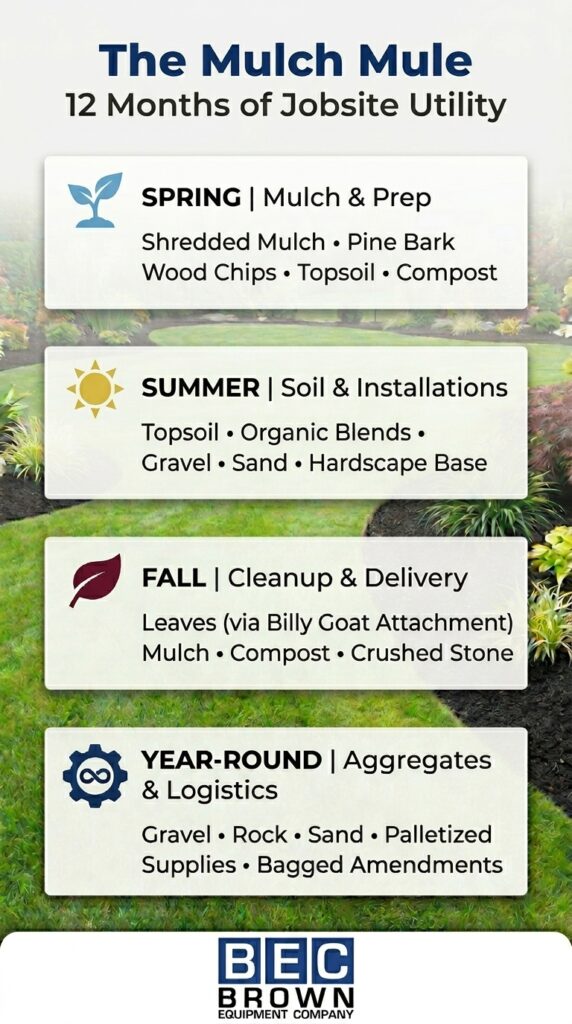
Mulch Mule Applications by Season
The table below summarizes primary material applications by season. Year-round aggregate and specialty applications are listed separately.
| Season | Primary Materials |
| Spring | Mulch, bark, wood chips, topsoil, compost, organic blends |
| Summer | Compost, topsoil, organic blends, gravel, sand, aggregate |
| Fall | Leaves (with Billy Goat attachment), mulch, compost, gravel |
| Year-Round | Gravel, rock, sand, palletized and skidded materials |
Frequently Asked Questions About Mulch Mule Applications
What materials can the Mulch Mule haul?
The Mulch Mule is rated for eight material types: mulch, bark, topsoil, compost, gravel, rock, sand, and leaves (with the optional Billy Goat vacuum attachment). Palletized and skidded materials can also be handled via the reversible live floor.
Can the Mulch Mule handle gravel and rock?
Yes. The reversible belt-over-chain live floor and 15-cubic-yard aluminum hopper are designed for aggregate materials including gravel, crushed rock, and sand. Weight is the main consideration: dense aggregates run considerably heavier per cubic yard than mulch, and load weights should be calculated against the trailer’s capacity and your tow vehicle’s specs before loading.
Does the Mulch Mule work for leaf collection?
Leaf collection requires the optional Billy Goat 37HP vacuum attachment, which is sold separately from the base trailer. With the kit installed, the trailer handles curbside leaf collection and is designed for straightforward transitions between leaf pickup and standard material delivery.
What is the Mulch Mule Billy Goat attachment?
The Billy Goat kit is an optional leaf vacuum attachment that mounts a 37HP Billy Goat debris loader to the Mulch Mule trailer, converting the 15-yard hopper into a curbside leaf collection unit. It’s the upgrade that extends the trailer from a two-season tool to a three-season one for operations running fall leaf programs.
Is the Mulch Mule a worthwhile investment year-round?
For operations that add the Billy Goat leaf attachment, the trailer generates billable work in spring, summer, and fall. Without the attachment, aggregate, gravel, and soil applications can provide year-round utility for contractors running hardscape, drainage, and landscape installation work.
See the Mulch Mule Work for Your Operation
If your crew handles mulch, compost, soil, gravel, or leaf collection, the Mulch Mule can earn its keep across more of the calendar than most contractors expect. The equipment is the same trailer from spring to fall. What changes is the material in the hopper and, for leaf season, the attachment on the front.
Brown Equipment Company is the national distributor for the Mulch Mule, with service centers and equipment consultants serving customers across Indiana, Ohio, Kentucky, Illinois, Michigan, and Wisconsin. The team can walk through configurations, available attachments, and what the trailer would look like working in your specific operation.
Ready to see it in the field? Contact Brown Equipment Company to discuss your needs or schedule a free on-site demonstration.