
Street sweeping equipment plays a critical role in maintaining clean and safe roadways, highways, and urban environments. Beyond ensuring visually appealing streets, the right equipment helps reduce air pollution, prevent stormwater contamination, and prolong pavement life. However, with several types of sweepers available, selecting the optimal solution requires understanding your specific needs and the unique features each type of machine offers.
This article explores the three main categories of street sweeping equipment—mechanical sweepers, vacuum street sweepers, and regenerative air sweepers—highlighting their strengths, limitations, and best use cases. By understanding how each type of sweeper works, you can choose equipment aligned with your cleaning requirements, budget, and environmental goals. You’ll also discover how Brown Equipment Company offers reliable advice and solutions to ensure you invest in equipment that delivers optimal performance and efficiency.
Mechanical Sweepers: Reliable Power for Heavy-Duty Cleaning
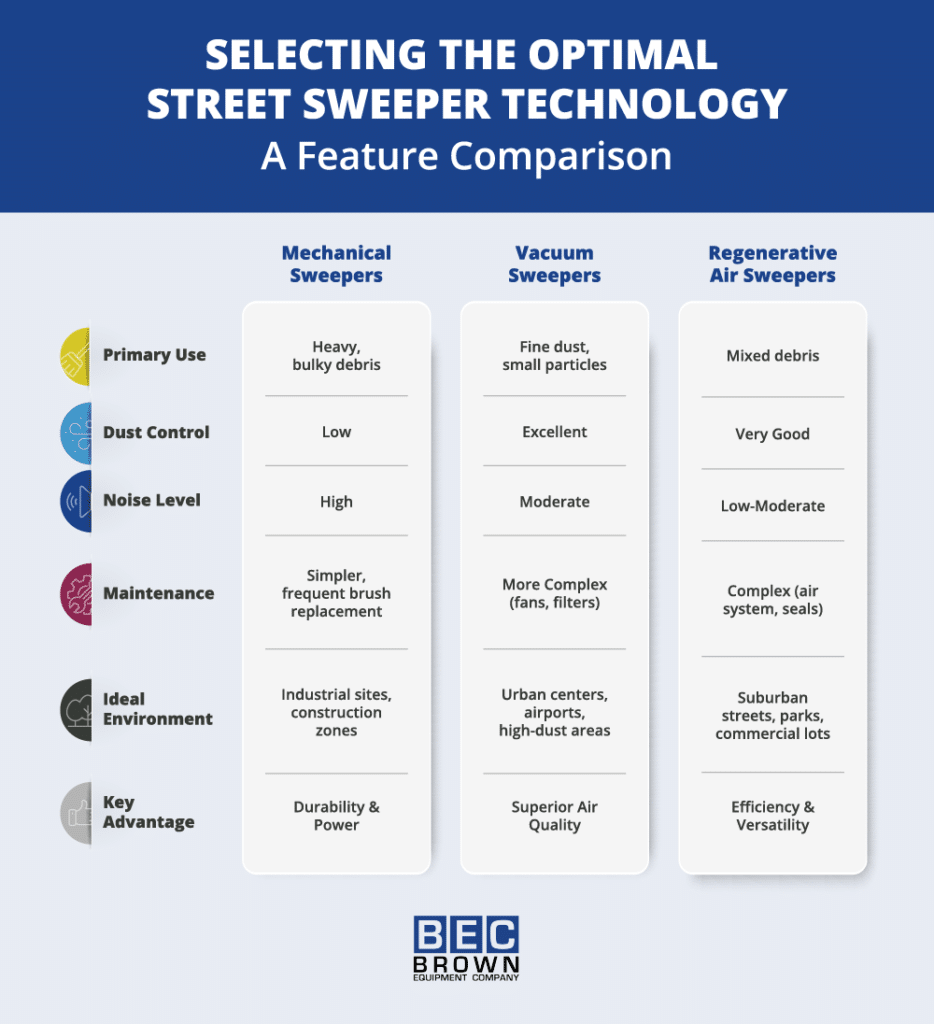
Mechanical sweepers have long been valued for their durability, simple design, and ability to handle large debris. They are often referred to as “broom sweepers” and use a series of rotating brushes and a conveyor mechanism to gather and transport debris into a hopper.
How Mechanical Sweepers Work
A rotating cylindrical broom at the center loosens and directs debris toward the machine’s conveyor system, which deposits it into the hopper. Side brooms help sweep curbs and gutters. This straightforward design makes mechanical sweepers especially suitable for tough environments.
Benefits of Mechanical Sweepers
- Efficient Handling of Large Debris: Ideal for heavier materials such as gravel, sand, asphalt millings, and other construction-related rubble.
- Durable Design: Fewer complex components mean they can withstand harsh conditions and continuous use.
- Simpler Maintenance: Parts are relatively straightforward to access and repair, offering a long-term cost advantage.
Drawbacks of Mechanical Sweepers
- Limited Fine Particle Capture: They may struggle with very fine dust and can sometimes release finer particles into the air.
- High Noise Levels: Ongoing brush and conveyor movement can produce considerable sound.
- Brush Wear: Recurrent contact with surfaces leads to regular brush replacements.
Best Applications
Mechanical sweepers excel in industrial areas, highway projects, and other locations where coarse or bulky debris is frequent. Their rugged construction and cost-effectiveness make them a dependable choice when noise sensitivity is not a major concern.
Mechanical sweepers have long been valued for their durability, simple design, and ability to handle large debris. They are often referred to as “broom sweepers” and use a series of rotating brushes and a conveyor mechanism to gather and transport debris into a hopper.
Vacuum Street Sweepers: Precision Cleaning for Dust and Fine Particles
Vacuum street sweepers are specifically designed to control airborne particles and capture finer debris that mechanical units may miss. These machines rely on suction-driven airflow and may feature water sprays to keep dust levels to a minimum.
How Vacuum Street Sweepers Function
A powerful fan creates suction beneath the sweeper, drawing in debris and dust into a central collection receptacle. Water spray systems are often used to moisten the road surface, which helps to suppress dust and makes it easier for the vacuum to pick up fine particles. Side brushes can also be used to direct debris under the machine’s intake. Restricting airborne particles is a primary advantage, enhancing local air quality.
Benefits of Vacuum Street Sweepers
- Superior Dust Control: Capable of effectively collecting fine dust. A review by Caltrans confirmed that vacuum sweepers equipped with adequate filters have the ability to reduce up to 80% of PM10 particles.
- Versatility: Well-suited to a wide variety of surfaces, from smooth roads to uneven pavement.
- Improved Air Quality: By trapping smaller particles, vacuum sweepers help reduce pollution.
Challenges of Vacuum Street Sweepers
- Limited Capacity for Larger Debris: Large objects can clog the intake system.
- Higher Maintenance Needs: Complex components, including fans and filtration systems, require more frequent servicing.
- Initial Investment: Advanced technology typically carries a higher price tag.
Best Applications
Vacuum sweepers are ideal in areas with stringent requirements for dust control, such as downtown commercial districts, airports, and industrial sites. Their ability to manage fine debris makes them especially valuable where air quality is paramount.
Regenerative Air Sweepers: The Versatile Solution for Mixed Debris
Regenerative air sweepers employ a closed-loop system to dislodge and recapture debris. These machines circulate high-velocity air to lift debris, then filter and reuse it to continue the cleaning process.
How Regenerative Air Sweepers Operate
A blast of air from one side of the sweeper head loosens debris from the pavement, which is then vacuumed up through a hood on the other side. The air is then filtered to remove the debris and recirculated in a continuous cycle. This closed-loop system minimizes dust emissions and makes the sweeper more eco-friendly.
Advantages of Regenerative Air Sweepers
- Adaptable Cleaning: Handles both small particles and moderate-sized debris.
- Reduced Dust Emissions: Helps comply with environmental regulations to recirculated air.
- Lower Noise Levels: Quieter operation can be beneficial in residential neighborhoods or shared public spaces.
Considerations for Regenerative Air Sweepers
They may be less effective on extremely heavy debris and, like other advanced systems, typically require consistent maintenance. However, the overall efficiency and environmental benefits often justify the investment for many operators.
Best Use Cases
Regenerative air sweepers are popular in locations where dust control, moderate debris volume, and reduced noise are important. Examples include suburban streets, parks, and mixed commercial areas.

Navigating Environmental Regulations: PM10, PM2.5, and Stormwater Rules
Choosing a street sweeper isn’t just about cleanliness; it’s about compliance. Modern environmental regulations place strict limits on air and water pollution, and the right equipment is your first line of defense.
- Air Quality Compliance (PM10 & PM2.5): The U.S. Environmental Protection Agency (EPA) regulates airborne particulate matter, specifically PM10 (particles <10 µm) and PM2.5 (particles <2.5 µm), because they can be inhaled and cause serious health issues. Mechanical sweepers are less effective at capturing fine particles, while vacuum and regenerative air machines are designed to trap these fugitive dust particles before they become a health risk.
- Stormwater Pollution Prevention: Street surfaces accumulate harmful pollutants like heavy metals, hydrocarbons, and trash. When it rains, these materials are washed into storm drains and contaminate local waterways. Effective street sweeping is a cornerstone of any Stormwater Pollution Prevention Plan (SWPPP), helping you meet Clean Water Act requirements by capturing pollutants at the source.
Understanding these regulations is crucial, as investing in a compliant sweeper protects the environment, public health, and your organization from potential fines.
Key Decision Factors When Selecting Street Sweeping Equipment
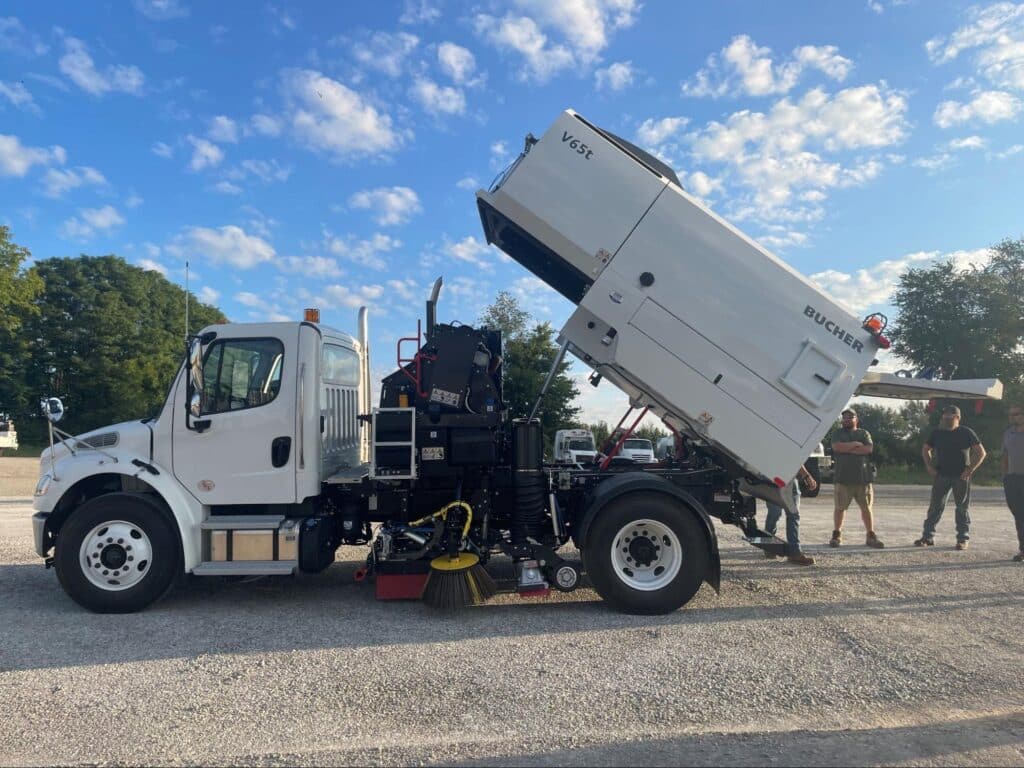
Selecting the right sweeper requires a careful analysis of your operational needs. Considering these factors ensures your investment delivers maximum efficiency, compliance, and value.
Type of Debris
The material you’re collecting is the primary driver of your decision. A mismatch between debris type and sweeper technology leads to inefficiency and poor results.
- Heavy vs. Fine Debris: Heavy materials like gravel and construction byproducts demand the power of a mechanical sweeper. Fine dust, sand, and other small particles require the powerful suction of a vacuum or regenerative air unit for effective air quality control.
- Debris Volume: Always consider hopper capacity. A larger hopper minimizes trips to the dump site, which saves valuable time, labor, and fuel on high-volume routes.
Cleaning Surface and Environment
The sweeping environment dictates the most suitable machine design and capabilities, as the ideal sweeper for a highway differs from one needed for a tight cul-de-sac.
- Surface Condition: Most sweepers perform well on smooth asphalt, but rough, uneven, or permeable pavement can limit the effectiveness of certain models and may require a specific technology.
- Maneuverability: In congested urban areas, a nimble three-wheel machine is often ideal. For long, straight routes like highways or airport runways, a more stable four-wheel chassis provides better performance.
Environmental Considerations
Compliance with air and water quality regulations is non-negotiable and directly influences your equipment choice.
- Airborne Particle Control: Strict air quality standards often mandate the use of certified vacuum or regenerative air sweepers to capture and control harmful PM10 and PM2.5 fugitive dust.
- Stormwater Contamination: Effective sweeping is a key part of any Stormwater Pollution Prevention Plan (SWPPP), capturing pollutants and debris before they enter local waterways.
Maintenance and Repair
Evaluate a machine’s long-term reliability and ease of service to minimize downtime and control lifecycle costs.
- System Complexity: Mechanical sweepers have simpler systems but require frequent broom replacements. Vacuum and regenerative models have more complex fan and filtration systems that demand specialized maintenance.
- Serviceability: Ensure that routine service points are easily accessible and that a reliable supply of parts and technical support is readily available to keep your machine operational.
Noise Sensitivity
Operational noise levels are a critical factor for community relations and determining when and where you can operate.
- Sound Levels: Mechanical sweepers are typically the loudest due to their moving brooms and conveyors. Vacuum and regenerative air models operate much more quietly, making them essential for use in residential areas, near hospitals, or during noise-restricted hours.
Budget and Total Cost of Ownership (TCO)
Look beyond the initial price tag to the Total Cost of Ownership (TCO) to understand the true long-term investment.
- Operating Costs: Calculate ongoing expenses like fuel, water, and common wear items.
- Maintenance & Parts: Factor in the cost and frequency of replacing critical components like brooms and filters.
- Downtime & Labor: Consider how the machine’s reliability and ease of service will impact your labor costs and overall productivity.
Frequency of Use and Seasonal Needs
Your sweeping schedule, whether daily or seasonal, dictates the required durability and features of your machine.
- Year-Round Operations: For daily, year-round use, prioritize durability and robust construction to withstand the demands of constant operation.
- Seasonal Demands: For targeted needs like fall leaf collection or spring cleanup, consider specialized features or cost-effective rental options for infrequent but intense tasks.
Maximizing Efficiency and Safety: The Importance of Operator Training

The most advanced street sweeper is only as effective as the person operating it. Proper operator training is a critical investment that pays significant dividends in performance, longevity, and safety.
A well-trained operator understands how to:
- Optimize Cleaning Performance: Adjust broom speed, angle, and water usage to match the debris and surface type, ensuring a one-pass clean.
- Reduce Wear and Tear: Avoid excessive down-pressure on brooms and operate the machine smoothly to extend the life of critical components.
- Enhance Safety: Safely navigate traffic, handle machine controls with confidence, and perform daily pre-operation safety checks to prevent accidents.
Investing in training from a reputable partner like Brown Equipment Company ensures you unlock the full potential of your machine and protect your crew and your investment.
Advantages of Choosing the Right Street Sweeper
Investing in equipment that perfectly matches your needs delivers clear operational and environmental benefits:
- Boosted Efficiency: Machines tailored to specific debris and surfaces reduce cleanup times.
- Better Air and Water Quality: Targeted dust and debris control measures lead to a healthier environment.
- Prolonged Pavement Life: Removing abrasive particles lessens long-term road damage.
- Enhanced Community Image: Clean, well-maintained streets improve public perception and safety.
Check out this video to see a walkaround of the Global M3 Street Sweeper. This street sweeper is built in the USA and designed for challenging sweeping conditions.
The Role of Brown Equipment Company in Street Sweeping Solutions
Selecting the right sweeper can be complex, but the Brown Equipment Company team streamlines the process with expert support and turnkey solutions:
- Comprehensive Equipment Line: From heavy-duty mechanical models to advanced vacuum and regenerative air sweepers, you can find what meets your operational needs.
- Professional Guidance: Brown Equipment Company’s specialists assess debris types, usage patterns, and budget constraints to recommend appropriate solutions.
- Lifecycle Support: Count on rentals, scheduled maintenance, repairs, and operator training to maximize your machine’s uptime and performance.
- Focus on Long-Term Value: Every recommendation factors in durability, efficiency, and return on investment to emphasize reliability over the full equipment lifecycle.
Frequently Asked Questions About Street Sweepers
How often should streets be swept?
Frequency depends on the area. High-traffic urban commercial districts may require daily sweeping, while residential streets might be swept weekly or monthly. Industrial sites with heavy debris may need sweeping after each shift.
Can street sweepers be used in the rain?
Yes, but with limitations. Light rain can actually help with dust control. However, heavy rain can make it difficult to pick up debris and may wash pollutants into storm drains before the sweeper can capture them. It’s often less effective and efficient to sweep during a downpour.
What is the main difference between PM10 and PM2.5 dust?
Both are types of inhalable particulate matter. PM10 includes particles with a diameter of 10 micrometers or less, which can get into the throat and nasal passages. PM2.5 (“fine particles”) are 2.5 micrometers or less and are more dangerous because they can travel deep into the lungs and even enter the bloodstream. Regenerative air and vacuum sweepers are most effective at capturing these fine particles.
Is it better to rent or buy a street sweeper?
This depends on your needs. Buying is a good long-term investment if you have consistent, year-round sweeping requirements. Renting is ideal for short-term projects, seasonal needs (like spring cleanup or fall leaf collection), or to test a specific model before committing to a purchase.
Making Informed Street Sweeper Purchasing Decisions to Meet Your Community’s Needs
Selecting the right street sweeping equipment is crucial for cleaner roads, safer communities, and more efficient operations. Each type of sweeper features unique advantages, from the heavy-duty capabilities of mechanical units to the dust control offered by vacuum models, and the versatility of regenerative air systems. By weighing factors like debris composition, noise sensitivity, maintenance demands, and environmental priorities, you can invest in a solution that yields long-term benefits.
Brown Equipment Company is here to help tailor solutions for your street sweeping needs. Whether you’re looking for a new purchase, a rental option, or comprehensive support services, we’re ready to guide you toward equipment that boosts productivity and sustainability. To learn more or request a personalized quote, contact Brown Equipment Company today.