Each winter, municipalities and contractors face the challenge of keeping roads, sidewalks, and critical infrastructure safe and accessible amid snow and ice. Traditional rock salt has long been used for maintenance, but liquid brine and alternative liquid road treatment systems offer a cost-effective and environmentally considerate approach. By leveraging a liquid salt solution, public works departments and private contractors can manage icy roads more efficiently, optimize resource usage, and strengthen confidence in their winter operations.
This guide outlines the benefits of liquid brine and alternative liquid systems, highlighting key differences from traditional salt treatments, practical applications, and actionable strategies for implementation. Whether you are new to liquid treatment technology or seeking to optimize your current program, this guide provides insights to help transform your winter operations.
Liquid Brine & Alternative Liquids vs. Traditional Rock Salt
Understanding the differences between brine systems and conventional salt application is essential. Municipalities and contractors have long relied on granular salt to clear roads. Although effective, this approach often results in excess material use, higher costs, and environmental challenges.
Liquid brine—typically a pre-dissolved sodium chloride solution around a 23% concentration—and other alternative liquid treatments are applied directly to roadways for targeted and effective ice control. Key distinctions include:
- Faster Activation: Because the salt is already dissolved, the solution starts melting ice immediately upon contact, unlike granular salt which must first dissolve.
- Reduced Waste: Brine adheres uniformly to the surface, minimizing losses and scatter compared to granular salt.
- Enhanced Precision: Modern application systems enable controlled, accurate distribution exactly where needed. Application rates are measured in gallons per lane-mile, replacing “best guess” spreading with calibrated, repeatable output.
- Consistent Coverage: Even application helps prevent material displacement from wind or traffic, ensuring more reliable treatment across routes, intersections, and high-priority areas.
While liquid programs require initial funding for production equipment and storage facilities, these upfront costs are balanced by lower overall material use, reduced operational expenses, and improved service outcomes over the long term.
Core Applications of Liquid Brine & Alternative Liquid Systems
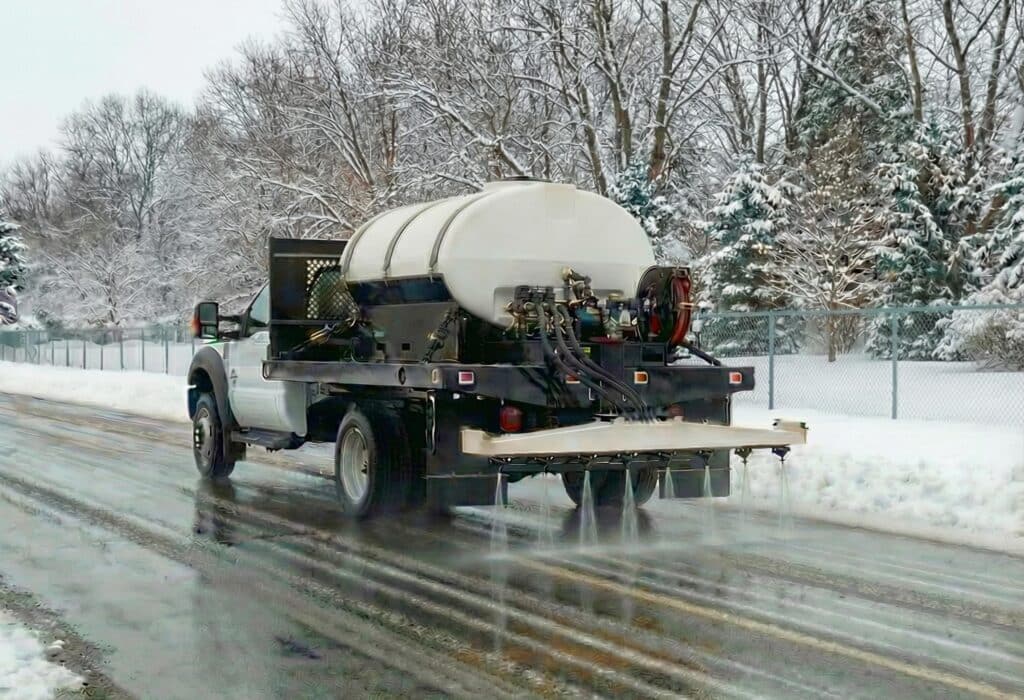
Liquid treatments bring flexibility to winter maintenance strategies. They support multiple strategies and can be adapted based on weather, timing, and roadway conditions. The three primary applications include:
Anti-Icing – Preventing Ice Before It Forms
Anti-icing involves applying liquid brine or alternative liquids to the roadway before a storm. This creates a protective, anti-bonding layer that reduces ice buildup, leading to more efficient post-storm treatment and improved use of resources.
Benefits include:
- Reduced accumulation and easier plowing
- Faster post-storm cleanup
- Less reliance on heavy salt applications after the storm
- Improved safety early in the event
Anti-icing is one of the most effective ways to reduce total salt usage while improving roadway performance.
Pre-Wetting – Making Granular Salt Work Smarter
In situations where granular salt application remains necessary, pre-wetting the salt with liquid brine or alternative liquids improves adhesion and speeds up melting. This method helps keep salt where it belongs—on the pavement—lowering material costs and mitigating environmental impact.
Pre-wetting:
- Helps salt stick to the pavement instead of bouncing away
- Accelerates melting action
- Improves performance at lower temperatures
- Allows crews to apply less material for the same result
For municipalities and contractors alike, pre-wetting bridges the gap between traditional and liquid-based strategies.
De-Icing – Breaking Down Existing Ice
When ice has already formed, liquid applications help reduce the ice layer and delay refreezing. Used with mechanical clearing such as plowing, the approach offers more targeted removal and smoother road conditions without excessive material use.
Faster Response and More Consistent Winter Service
Effective winter operations hinge on rapid, uniform responses across the network. With liquid treatments, municipalities and contractors can proactively treat roads before snow or ice accumulates. Key operational benefits include:
- Proactive Pre-Treatment: Applying liquid brine in anticipation of snow creates a barrier that deters bonding of ice, lowering the need for heavy post-storm interventions.
- Uniform Roadway Coverage: Computerized application systems often feature GPS tracking, ensuring consistent distribution in high-priority locations such as intersections, bridges, emergency corridors, and hospital access roads.
- Improved Response Times: Liquid brine’s near-instant activation allows operators to treat larger areas quickly, reducing extra passes and boosting overall efficiency.
- Improved Predictability: Regardless of operator experience or route assignment, calibrated liquid application delivers more consistent results.
For contractors, this consistency supports contract compliance and customer satisfaction. For municipalities, it strengthens service reliability and public confidence.
Material Efficiency and Defensible Cost Control
For most public works departments and contractors, liquid brine isn’t just a “better de-icer”—it’s a way to tighten material control and make winter spending easier to defend. Because liquids are applied more uniformly and at planned rates, organizations can reduce over-application, limit rework, and translate operational improvements into clear financial reporting.
Reducing Material Waste and Overtime Costs
Liquid programs often create savings in the places winter budgets typically spike: material loss, repeat applications, and storm-driven overtime.
- More controlled application rates: Liquid brine supports calibrated output (gallons per lane-mile) rather than “best guess” salt spreading. A consistent, measurable rate helps reduce overuse and prevents the “extra pass” mindset that inflates salt and fuel consumption.
- Less bounce, scatter, and loss: Granular salt can bounce off the road surface, get pushed to shoulders, or be displaced by traffic and wind. Liquid brine adheres to pavement more evenly, helping ensure more of what you apply actually contributes to performance.
- Fewer return trips (and fewer labor hours): Anti-icing with liquid brine can reduce bonding, making plowing and follow-up treatment more efficient. Operationally, that can mean fewer repeat applications and less time spent “catching up” after conditions deteriorate.
- Reduced overtime drivers: When roads are pre-treated and routes are planned around storm timing, supervisors can often reduce emergency call-ins and extended shifts. Better route predictability also supports smarter staffing (right crew size, right equipment, right time) instead of reactive escalation.
- Cleaner inventory and usage tracking: Liquid brine production and application encourages tighter record keeping: salt in, brine out, and gallons applied. That paper trail strengthens internal accountability and reduces end-of-season uncertainty about where material went.
Budget Narratives for Municipalities and Contractors
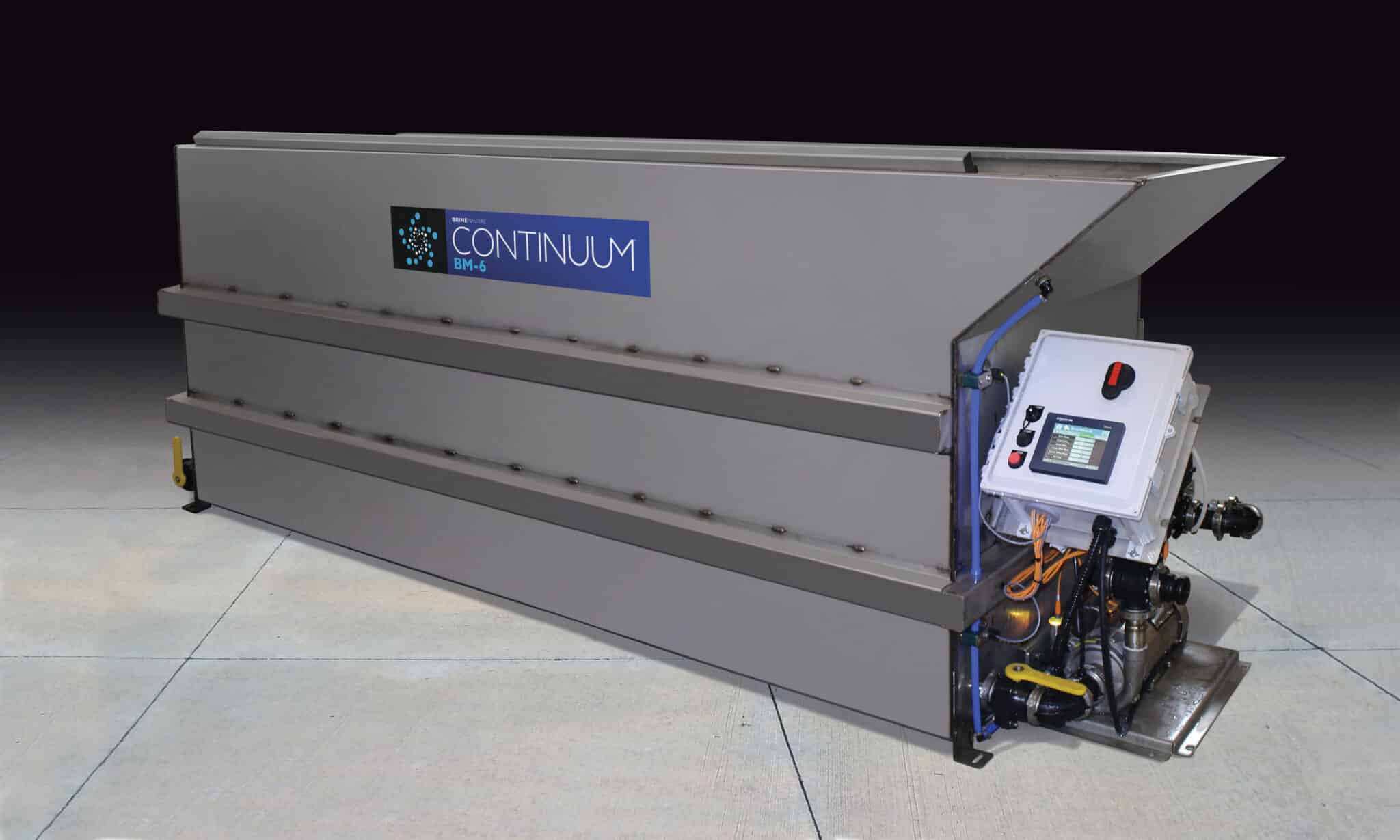
A liquid program is easiest to approve when it’s framed as a performance and risk-management investment—not just a new piece of winter equipment. A strong budget narrative typically separates one-time costs (CAPEX), ongoing costs (OPEX), and avoided costs that don’t always show up as a direct line item.
- Capital Investment (CAPEX)
- Brine maker/production unit, storage tanks, containment, pumps, plumbing, and site prep
- Application equipment (sprayers, controls, retrofits) and any needed truck upfits
- Training and setup to standardize production quality and application practices
- Operating Costs (OPEX)
- Salt inputs (often reduced through better efficiency, depending on strategy)
- Fuel, labor hours, maintenance, and equipment wear
- Testing/quality control (concentration checks), routine upkeep, and calibration
- Avoided costs (the most persuasive, when documented)
- Avoided material loss: fewer tons wasted through scatter and over-application
- Avoided overtime: fewer emergency call-ins and fewer repeat passes
- Avoided equipment wear: reduced spreader use, fewer unnecessary route miles, and less corrosion exposure from excess material
- Avoided risk and service failures: fewer service complaints, fewer problem intersections, better continuity on priority routes
Metrics That Make the Case Defensible
Tracking the right data helps make winter operations defensible and data-driven:
- Cost per lane-mile treated (before/after)
- Salt tons used per event/season and brine gallons per lane-mile
- Number of storm call-outs, overtime hours, and route passes per event
- Complaints/service requests and response time to priority routes
Environmental Responsibility and Clear Communication
Liquid brine and alternative liquid programs can support environmental goals while improving how winter operations are communicated to residents, boards, and private clients. With more precise application and better tracking, departments and contractors can reduce unnecessary chloride use and clearly explain what they’re doing, why they’re doing it, and how performance is measured.
Targeted Application Reduces Runoff
Because liquid brine is applied in controlled amounts and distributes evenly on the pavement, it can reduce over-application and limit excess chloride leaving the roadway. This targeted approach helps balance road safety needs with concerns about waterways, vegetation, and infrastructure.
Program Documentation and Compliance Reporting
Liquid systems are easier to document than traditional methods because production volume, concentration, and application rates can be tracked consistently. Maintaining records of salinity testing, gallons applied, and storm-event logs supports internal accountability and makes it easier to respond to audits, regulatory questions, or board-level reporting requirements.
Messaging to the Public: Transparency and Trust
Winter maintenance is highly visible, and proactive communication builds confidence. Sharing the basics—what liquid brine is, when it’s used, and how it improves efficiency—helps residents and customers understand why roads may be treated before a storm and what outcomes to expect. Highlighting measurable results such as reduced material usage, consistent coverage, and priority-route focus supports transparency and strengthens public trust.
Predictable Production, Logistics, and Quality Control
A successful liquid program depends on consistency—having the right volume available before a storm, maintaining reliable mix quality, and applying it the same way across routes and operators. When production and logistics are standardized, winter response becomes more predictable and easier to manage.
Planning Ahead
Liquid brine is most effective when it’s ready ahead of weather events. Adequate storage capacity helps ensure departments and contractors can produce in advance, stage product where it’s needed, and avoid last-minute bottlenecks. Well-designed fill stations and clear loading procedures also reduce truck downtime and keep routes moving during peak demand.
Maintaining Quality
Performance depends on producing brine at a consistent concentration and applying it at controlled rates. Routine testing and documentation help confirm salinity, avoid diluted batches, and maintain predictable results on the road. Calibrated equipment and standardized application targets (by lane-mile or route type) also reduce waste while improving coverage reliability.
Training and SOPs
Training ensures liquid systems are operated safely, efficiently, and consistently—regardless of who is on shift. Written SOPs for mixing, testing, loading, application, and equipment maintenance help reduce errors, improve repeatability, and support smoother operations throughout the winter season.
Considerations and Limitations
Liquid systems offer numerous advantages, but they are not always a perfect fit:
- Extremely Cold Temperatures: In severe cold, additional treatments may be required.
- Rapid, Heavy Snowfall: High accumulation rates can exceed the capacity of liquid brine’s protective barrier, requiring conventional or supplemental methods.
- Infrastructure Limitations: Municipalities and contractors lacking essential production and storage equipment may need phased implementation.
- Sensitive Areas: Certain roadways or environments may need alternative approaches to meet unique regulatory or ecological requirements.
In such circumstances, combining liquid treatments with other maintenance techniques can create a more resilient winter operations strategy.
Implementation Roadmap for a Successful Liquid Program
An effective brine program involves several coordinated actions:
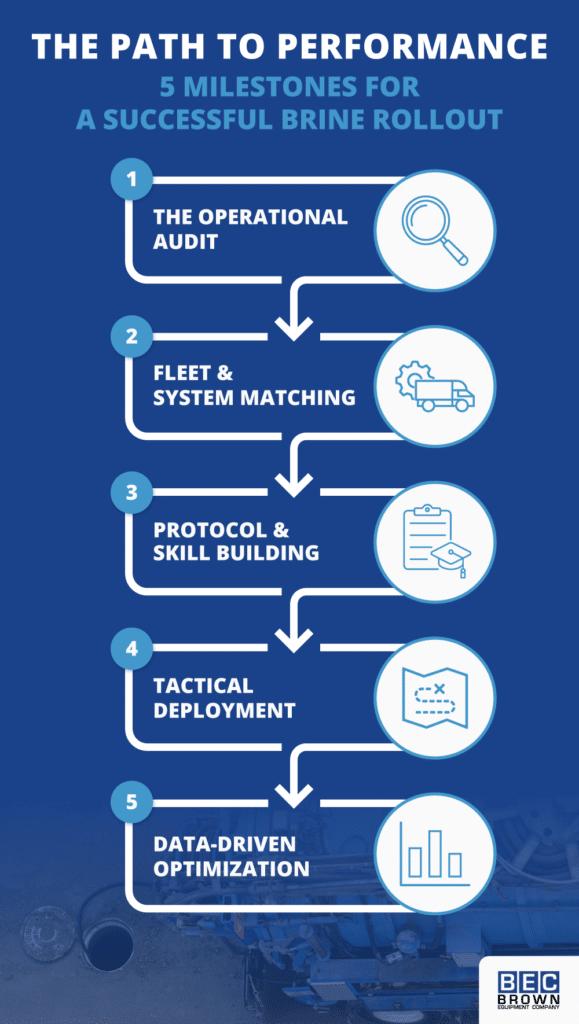
- Assess Current Operations: Evaluate current practices to identify areas (such as material overuse or delayed response) where liquid treatments could enhance outcomes.
- Choose the Appropriate System: Invest in equipment that meets both immediate and potential future needs. Capacity, output, and compatibility with existing infrastructure are essential considerations.
- Develop Standard Operating Procedures and Train Staff: Train staff and finalize SOPs for mixing, testing, loading, application, and maintenance. Municipalities may consult the Maryland brine training manual for detailed guidelines on application.
- Establish Efficient Workflows: Integrate liquid application into broader winter operations. Incorporate anti-icing, pre-wetting, and de-icing into a cohesive schedule for treating priority areas.
- Monitor and Optimize Performance: Track factors like labor hours, material usage, and response times. Use these insights to refine production and application strategies.
A Smarter Way to Treat Winter Roads
Liquid brine and alternative liquid systems give municipalities and contractors a more consistent, more measurable way to manage winter roads. With targeted application, predictable production, and standardized training, liquid treatments can reduce wasted material, improve response efficiency, and support stronger reporting to boards, regulators, and the public—all without changing the core mission of keeping routes safe and accessible.
If you’re evaluating a liquid program or looking to improve an existing one, Brown Equipment Company can help you size the right system, plan fill logistics, and select the best application setup for your fleet. Contact our team to request a quote or schedule a brine equipment demo so you can build a winter program that’s efficient, defensible, and ready before the next storm.