Choosing the right grapple truck comes down to one question: what kind of debris will it move, and how often? A machine built for post-storm cleanup is configured differently from one running a routine brush and limb route or loading bulky waste at a transfer station. This guide walks municipal public works teams and contractors through that decision, matching boom reach, body capacity, chassis class, and grapple type to the job in front of you.
Key Takeaways
- A grapple truck pairs a hydraulic knuckle boom and grapple with a dump body, so one operator can load and haul woody and bulky debris without a separate loader and crew.
- The right configuration depends on the job. Storm and disaster cleanup, routine brush and limb collection, and bulk and bulky-waste loading each call for different boom reach, body capacity, and grapple style.
- Fixed grapples are simpler and lower maintenance. Rotating grapples add positioning control that helps with selective picks and tight-access work, at a higher cost.
- Size the truck to your real debris volume, route access, and dump cycle, not to the largest machine available. Oversizing raises cost and can limit where the truck can work.
- Total cost of ownership, not sticker price, decides the real value. Factor in uptime, parts availability, maintenance, and how fast local service can turn a repair.
- Most full-size grapple trucks require a commercial driver’s license. Plan for the class the final build demands, and confirm it before the truck goes into service.
What Is a Grapple Truck Used For?
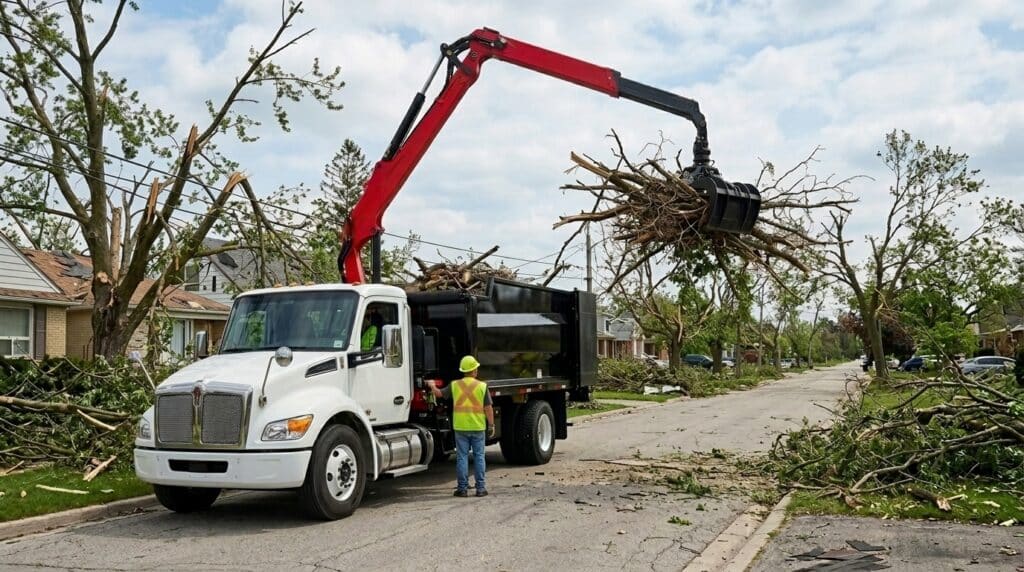
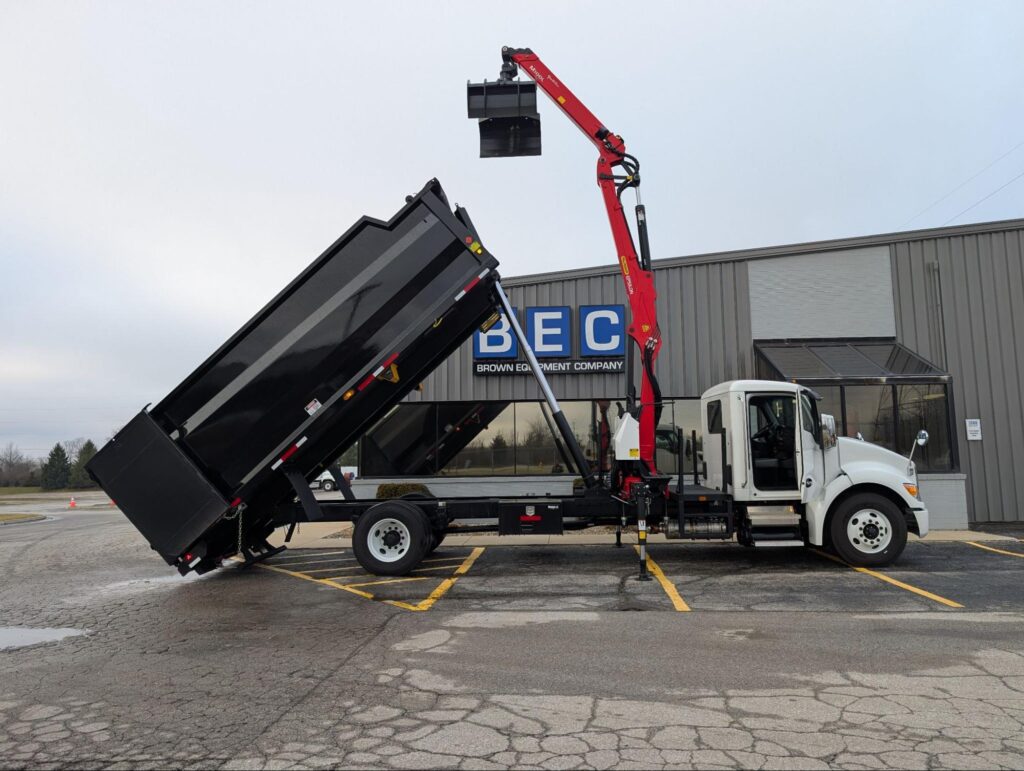
A grapple truck is used to pick up, load, and haul loose debris that a crew cannot handle by hand, especially branches, logs, brush, and bulky waste. It combines a hydraulic knuckle boom and a clamshell or tined grapple with a dump body, so a single operator can grab material from the curb or a debris pile and load it directly into the truck.
Across municipal and contractor fleets, grapple trucks handle three main types of work:
- Storm and disaster debris: clearing downed limbs, fallen trees, and wind-blown wreckage after severe weather, often under tight deadlines and federal reimbursement rules.
- Routine brush and limb collection: running scheduled curbside pickup routes for yard waste, trimmings, and seasonal limb drop.
- Bulk and bulky-waste loading: moving large, awkward material such as construction debris, scrap, and oversized items at transfer stations and collection sites.
Two trends explain why this equipment stays busy. Severe weather is generating more cleanup work: the United States recorded 27 separate billion-dollar weather and climate disasters in 2024, second only to the 28 events in 2023, and the 2020 to 2024 annual average of 23.0 events is more than double the long-run average of 9.0. At the same time, routine green waste is a steady, year-round load: the Environmental Protection Agency’s most recent figures (2018 data) estimate 35.4 million tons of yard trimmings, defined as grass, leaves, and tree and brush trimmings, entered the municipal solid waste stream that year, about 12.1 percent of the total.
Match the Grapple Truck to the Job: Storm, Routine, and Bulk Debris
The most important selection decision is matching the truck to the debris application, because storm cleanup, routine collection, and bulk loading place different demands on reach, capacity, and durability. Start with the job your crew runs most, then confirm the configuration can flex to your secondary needs. Brown Equipment Company maps equipment to specific municipal, roadway, and vegetation operations, which is a useful frame when you compare how a grapple truck fits next to the rest of your fleet.
Storm and Disaster Debris Cleanup
Storm and disaster work rewards reach, lift capacity, and a large dump body, because crews are clearing heavy mixed debris fast and hauling it a long distance to a staging site. The equipment decision carries real financial weight here.
Debris removal is frequently the most expensive part of disaster response and recovery, a point one state emergency management agency stresses, which is exactly why getting the equipment decision right matters. Local subrecipients can also be responsible for up to 25 percent of debris removal costs under federal public assistance cost-sharing, so the wrong truck can quietly raise the local share of a cleanup. Public agencies buying for disaster response can avoid costly missteps by reviewing common government equipment purchasing pitfalls before they write a specification.
Routine Brush and Limb Collection
Routine collection favors maneuverability and cycle speed over maximum reach, since the truck runs repeatable curbside routes and makes frequent stops. A moderate boom, a body sized to the route and dump distance, and good operator visibility matter more here than the longest possible reach. Steady seasonal volume, not a single storm, should drive the configuration for a dedicated collection truck.
Bulk and Bulky-Waste Loading
Bulk and bulky-waste loading prioritizes grapple strength and body volume, because the material is heavy and awkward and is loaded at a fixed site rather than along a route. A high-strength grapple, a high-volume body, and durable wear surfaces help the truck stand up to repeated heavy picks at a transfer station or collection point.
The table below maps each application to the configuration choices that usually fit it best. Treat it as a starting point and confirm the build against your specific workload.
| Debris application | Boom reach and lift | Body capacity | Grapple type | Chassis and CDL |
| Storm and disaster cleanup | Longer reach, higher lift for whole logs | Largest practical body to reduce hauls | Heavy-duty, often rotating for selective picks | Larger chassis; plan for a higher CDL class |
| Routine brush and limb | Moderate reach for curbside work | Sized to route length and dump distance | Standard tined grapple | Mid-size chassis; confirm CDL class |
| Bulk and bulky-waste loading | Moderate reach at a fixed site | High-volume body | High-strength grapple, fixed or rotating | Heavier chassis; plan for a higher CDL class |
What Should You Look for in a Grapple Truck?
When evaluating a grapple truck, focus on five things: boom reach and lift capacity, dump body size, grapple style, chassis and driver licensing class, and how easy the truck is to service. The right balance depends on your application, but every buyer should weigh all five before settling on a configuration.
- Boom reach and lift capacity: reach sets how far the operator can work from the truck, and lift capacity sets the heaviest single pick. Storm work needs more of both.
- Dump body capacity: measured in cubic yards, body size controls how often the truck leaves the route to dump. Bigger is not always better if access or weight limits get in the way.
- Grapple style: fixed or rotating, covered in the next section. The choice affects control, cost, and maintenance.
- Chassis and CDL class: the configuration drives gross vehicle weight, which determines the commercial driver’s license class an operator needs. Confirm the class against the final build.
- Serviceability and uptime: look at parts availability, maintenance access, and how the build can be tailored to your operation.
Because a grapple truck is configured rather than sold off a single spec sheet, it helps to review a dealer’s featured equipment lines and talk through options before committing. When an operation needs a nonstandard setup, custom builds and fabrication can tailor the truck to the work rather than forcing the work to fit the truck.
Fixed Grapple vs. Rotating Grapple
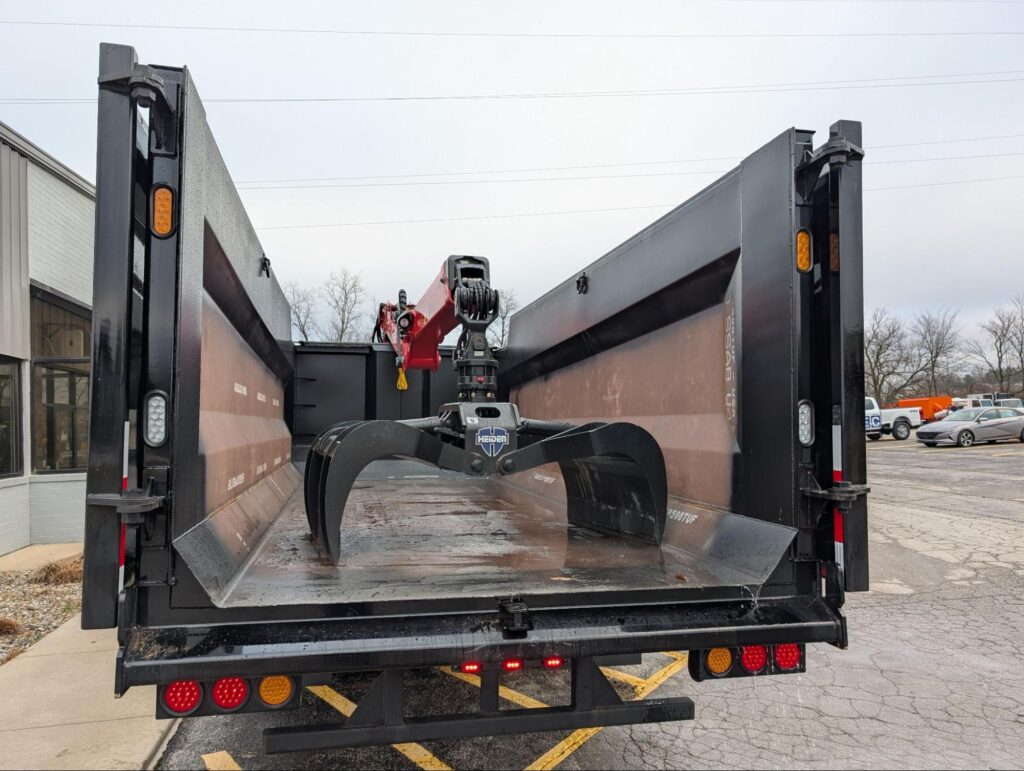
A fixed grapple opens and closes in one orientation and is simpler and lower maintenance. A rotating grapple adds 360-degree positioning that helps with selective picks, tight access, and precise loading. The trade-off is cost and added hydraulic components.
- Fixed grapple: fewer moving parts, lower upfront and maintenance cost, and a good fit for high-volume bulk loading where orientation matters less.
- Rotating grapple: more control for placing material, sorting selectively, and working around obstacles, which crews value for storm cleanup and congested sites.
What Size Grapple Truck Do I Need?
The right size is the smallest truck that handles your typical debris volume and routes without constant dumping, while still fitting the roads and sites where it works. Size to your real workload, not the worst-case storm, then plan separately for surge events.
Four factors should drive the sizing decision:
- Debris volume and frequency: estimate the cubic yards you move in a normal week, then size the body and boom to it.
- Route and site access: narrow streets, low clearances, and tight transfer stations can rule out the largest chassis.
- Dump cycle and distance: the farther your dump site, the more a larger body earns its keep by cutting trips.
- Driver licensing: larger trucks push into higher CDL classes, which affects staffing and training.
For seasonal peaks or storm surges, renting can add capacity without a permanent purchase, and starting with used or demo units at reduced prices can stretch a tight capital budget on a primary truck.
Total Cost of Ownership and Local Service Support
The purchase price is only the start. Total cost of ownership over the truck’s working life, not the sticker price, decides the real value, and four factors drive it:
- Uptime: every day a grapple truck sits idle, the route or cleanup falls behind, so minimizing downtime protects the schedule.
- Parts availability: fast access to OEM parts and delivery helps keep the truck working instead of waiting in a shop.
- Preventive maintenance: a preventive maintenance and repairs program can help reduce unplanned downtime and extend service life.
- Local service turnaround: how quickly a nearby service center can return a down machine to work, which is where distance to support starts to matter.
Building these costs into a resilient fleet maintenance budget makes the real number visible before you buy.
Local service is where a regional dealer can make a measurable difference. Brown Equipment Company backs its equipment with seven service centers across the Midwest, which shortens the distance between a breakdown and a fix. In business since 1968, the company sells, services, rents, and reconditions equipment rather than manufacturing it, and it works as a consultative partner to match the configuration to the operation.
Frequently Asked Questions About Grapple Trucks
How much does a grapple truck cost?
Grapple truck pricing varies widely with chassis size, boom reach and lift, body capacity, grapple type, and whether the unit is new or used, so there is no single sticker price. The most reliable way to get an accurate figure is to specify your application and configuration, then request current pricing and availability from the Brown Equipment Company team.
What is the difference between a grapple loader and a knuckle boom loader?
In everyday use the terms overlap. The knuckle boom is the articulated arm, and the grapple is the attachment at the end of it, so a grapple truck is typically a knuckle boom loader fitted with a grapple. For buyers, the distinction that matters is the attachment and the boom’s reach and lift, not the label.
Can you rent a grapple truck instead of buying one?
Renting can make sense for short-term needs, seasonal peaks, or trying a configuration before purchase. Brown Equipment Company offers equipment rentals and rental purchase options across its lineup. Because availability changes, confirm whether a specific grapple truck is available to rent by contacting the team.
Do operators need a commercial driver’s license to run a grapple truck?
Most full-size grapple trucks have a gross vehicle weight rating that requires the operator to hold a commercial driver’s license, and the exact class depends on the truck’s final configuration. Plan licensing and training around the build you choose, and confirm the required class before the truck goes into service.
Choosing the Right Grapple Truck for Your Operation
The best grapple truck is the one matched to your debris, your routes, and your budget, backed by service that keeps it working. If you are weighing configurations or want to see options side by side, contact the Brown Equipment Company team to talk through your operation and find the right fit.