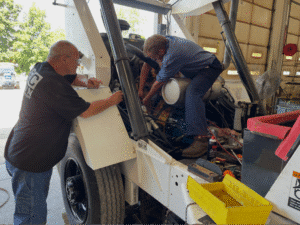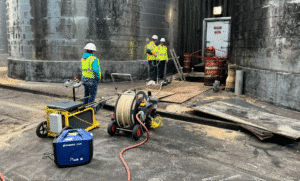
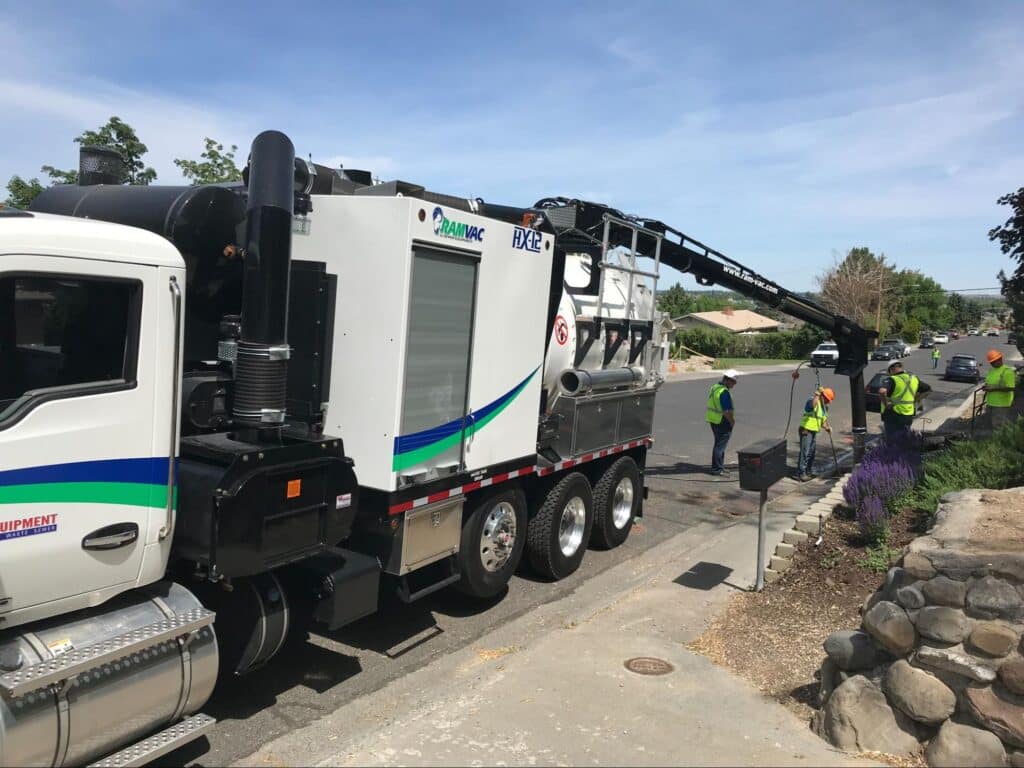
Effective hydro excavator maintenance is the foundation of uptime, safety, and operational efficiency. Whether you’re involved in municipal projects or pipeline work, a structured daily maintenance routine reduces unexpected downtime, minimizes safety risks, and extends equipment life. This guide outlines three essential phases: Pre-Start, During Use, and End-of-Day Inspections—each designed to catch issues early and keep your machinery running at peak performance.
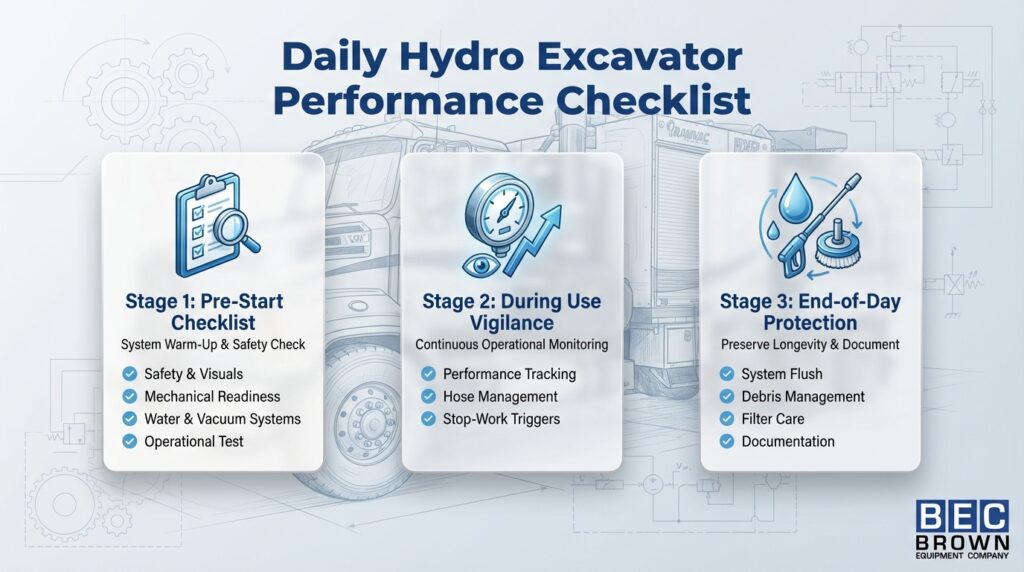
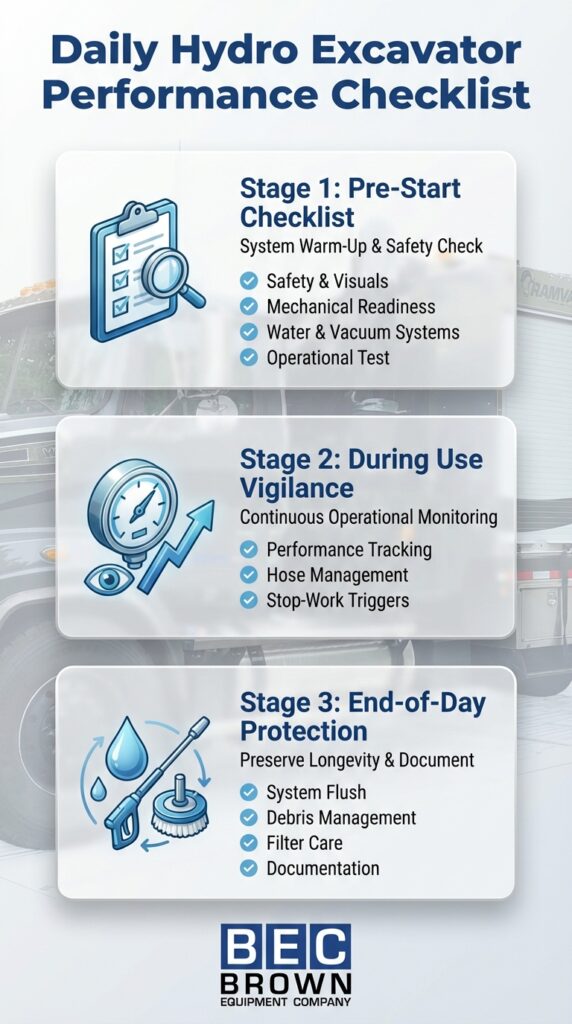
Pre-Start Checks: Preparing for Peak Performance
Before starting your hydro excavator, conduct key visual and system checks to prevent mid-job surprises. Begin with a brief 5-minute walkaround. Inspect for leaks, loose fittings, or damaged guards, and check that hoses and mechanical fixtures show no signs of wear. Verify that work lights, alarms, and personal protective gear are functional and accessible. This simple step sets the stage for a safe and productive workday by ensuring everything that could compromise performance is addressed before work begins.
General Engine & Chassis Checks
Before checking the water and vacuum systems, confirm the machine’s basic mechanical condition:
- Fluids: Check engine oil, coolant, hydraulic fluid (if applicable), and fuel/DEF per OEM specs.
- Belts/battery/wiring: Look for frayed belts, corrosion, loose terminals, or damaged wiring.
- Chassis/undercarriage: Inspect tires or tracks and clear debris buildup.
- Leaks: Check under the machine and around lines/fittings for fresh drips.
- Guards & safety systems: Confirm panels/guards are secure and alarms/lights/emergency stops function properly.
System-Specific Checks
Next, focus on system-specific checks. A quick check here helps prevent clogs, suction loss, and mid-job downtime.
- Water System: Confirm that the water tank is filled and that any required additives are present. Quickly inspect the pump and fittings for leaks or wear, and check that the nozzle and wand produce a consistent spray. Look for any signs of corrosion or irregular deposits that might reduce effectiveness.
- Vacuum System: Examine hoses and couplings for damage, ensure seals are intact, and inspect filters to maintain strong suction. Confirm that the debris recovery mechanisms are clean and that no obstruction is present in the vacuum pathway.
A proactive pre-start routine not only prevents breakdowns but also optimizes the machine’s efficiency, ultimately saving valuable time during operations.
Warm-Up and Function Test: A Quick Operational Check
Before intensive excavation begins, perform a quick warm-up test:
- Gradual Start-Up: Warm the engine slowly while listening for abnormal sounds or vibrations. This helps catch any issues that could signal deeper problems.
- Verify System Performance: Activate both the vacuum and water systems, ensuring stable suction and consistent water spray. Warm-up tests can reveal potential malfunctions that might not be visible during stationary pre-start checks.
- Test Controls: If remote functions or electronic controls are available, confirm that all settings respond correctly. This ensures every subsystem is functional for the day’s challenges.
Such operational checks confirm that the excavator is operating at its optimum level and help prevent unexpected stops during heavy use. For example, the warm-up test provides an added layer of assurance before proceeding with more demanding tasks.
During Use: Quick Checks to Prevent Mid-Job Failures
Even the best pre-start routines can miss issues that develop during operation. Regular, quick checks keep your equipment ready for the task at hand.
- Monitor Performance: Keep an eye on water pressure gauges. Watch for signs like reduced water flow or weak suction, which can indicate clogs or leaks. Frequent monitoring helps promptly address issues.
- Check Hose Routing: Ensure that hoses remain free of kinks or pinch points, and confirm that tank levels do not reach overcapacity. Adjust any loose or improperly aligned hoses on the fly to prevent damage.
Additionally, operators should continuously verify the seamless operation of all remote functions. Checking that any remote controls respond correctly ensures that the machine is always under precise control. This vigilance during use minimizes the risk of accidents and avoids extensive repairs that may occur if problems become severe.
Common Red Flags (Stop-Work Triggers) and Their Meanings
Recognizing early warning signs is vital for preventing serious malfunctions:
- Pressure Fluctuations: Sudden pressure spikes or drops may indicate blockages or leaks.
- Loss of Vacuum Power: Reduced suction can result from clogged filters or damaged hoses.
- Excessive Vibration or Noise: Unusual sounds might signal misalignments or worn components.
- Visible Leaks: Any fluid leaks require immediate attention to avoid safety hazards.
Monitoring these indicators and stopping work to address them can save time, reduce repair costs, and ensure safety on site.
End-of-Day Shutdown Checklist: Preserving Performance and Longevity
After operations finish, a proper shutdown routine prepares your machine for the next day’s work.
- Flush Lines and Hoses: Thoroughly flush water lines and nozzles to remove any slurry or grit. This step not only prevents blockages and corrosion but also ensures that abrasive materials are cleared.
- Clean and Inspect Nozzles: Remove and clean the nozzle. Carefully inspect it for any signs of wear, clogging, or damage that might affect future performance.
- Empty the Debris Tank: Safely empty and rinse the debris tank to eliminate residual mud and debris, helping to prevent buildup and sealing issues. Routine cleaning of the tank also extends the longevity of vacuum components.
- Maintain Filters and Screens: Inspect and clean filters to ensure the continued efficiency of the vacuum system. Replace any filter that shows signs of excessive wear or heavy contamination.
- Record Observations: Document any irregularities, unusual noises, or performance drops experienced during the day, and note the hours of operation. This record-keeping is valuable for trend analysis and can help schedule more comprehensive preventative maintenance assessments.
Documenting any issues and performing these end-of-day tasks maintains the equipment in prime condition and proactively prevents the need for costly and time-consuming repairs.
Daily vs. Weekly vs. Monthly Hydro Excavator Maintenance
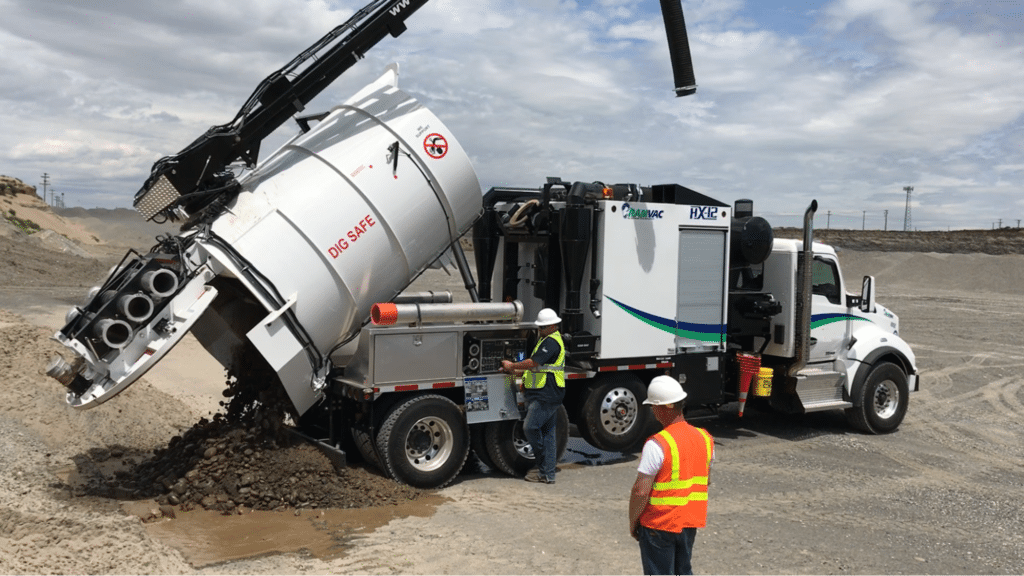
A daily checklist is essential, but long-term reliability comes from pairing it with weekly and monthly preventive checks.
Daily
- Walkaround (leaks, hoses, guards)
- Confirm water and vacuum performance; monitor gauges during use
- End-of-day flush/clean (lines, nozzle, debris tank, filters)
- Log hours and any issues
Weekly
- Inspect/clean or replace filters as needed
- Check hoses, clamps, and debris tank seals/latches
- Inspect nozzle wear; clear undercarriage buildup
Monthly / 250 Hours
- Review logs and schedule preventive repairs
- Deeper inspection of belts/couplings/pump components and electrical/controls
- Complete OEM service checks; verify seasonal cold-weather readiness
Cold-Weather Add-On Checklist: Keeping Your Equipment Winter-Ready
For operations in freezing conditions, additional maintenance steps are necessary:
- Protect the Water System: Drain residual water or add antifreeze according to manufacturer guidelines to prevent line and pump damage. This step is vital because frozen water can cause internal cracks and leaks.
- Check Heated Components: Ensure any built-in heaters or insulation systems are working properly. Simple tests can include verifying that heat indicators are active before use.
- Overnight Precautions: If indoor storage isn’t available, drain water systems completely to prevent ice formation, which can damage hoses and other components.
Extra precautions during cold weather operation not only protect the machine but also ensure that it operates reliably even under challenging climatic conditions.
Troubleshooting Common Issues: Practical Guidance for Field Operators
Even with rigorous maintenance, issues can sometimes arise. Here are some practical troubleshooting tips:
- Identifying Clogs: If you notice reduced water pressure or vacuum loss, check the filters and hoses for blockages. Sometimes, a quick cleaning is all that is needed to restore performance.
- Addressing Unusual Sounds: Any excessive vibrations or noise during the warm-up phase should prompt an immediate inspection of the mechanical components such as belts, couplings, and pump assemblies.
- Handling Fluid Leaks: Visible liquid leaks in hoses or connections require immediate attention. Isolating the issue early can prevent further equipment damage and ensure continued safety.
- Managing Temperature Variations: In fluctuating weather conditions, ensure that sensors and heated components maintain their performance. Regular temperature checks can help detect early signs of freezing or overheating.
Taking a methodical approach to troubleshooting saves time and minimizes the risk of extended downtime.
Documentation and Training: Turning Daily Checks Into Long-Term Reliability
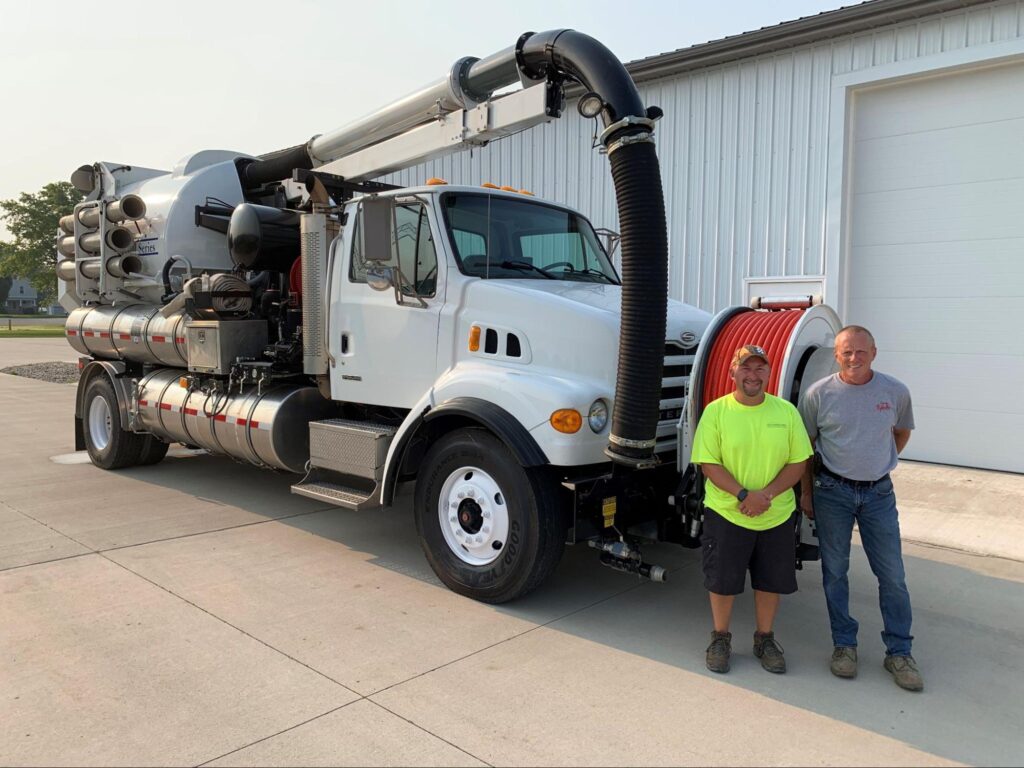
A daily checklist is most effective when it’s paired with consistent documentation and regular operator training. Have operators record hours, performance notes (pressure changes, suction loss, unusual vibration), and any repairs or parts replacements at the end of each shift. Over time, these logs reveal patterns—like recurring clogs, premature hose wear, or temperature-related issues—so you can schedule preventive maintenance before failures occur.
To reinforce safe, consistent operation across crews, build in scheduled training sessions (monthly or quarterly) that review checklist standards, common red flags, seasonal procedures (especially cold-weather steps), and any recurring issues found in the documentation. Even short refresher trainings help align operators on best practices, reduce avoidable wear, and ensure safety procedures are followed the same way every day. This combination of documentation plus training strengthens accountability and supports a proactive maintenance and safety culture.
FAQ: Hydro Excavator Maintenance
What should be included in a daily hydro excavator maintenance checklist?
A strong daily checklist covers pre-start walkaround checks, general engine/chassis checks, water and vacuum system checks, during-use monitoring, and an end-of-day cleanout (flush lines, clean nozzles, empty debris tank, inspect filters, and log any issues).
How often should I clean or replace hydro excavator filters?
Inspect filters daily and clean as needed—especially if you notice reduced suction or pressure changes. Replacement frequency depends on conditions and OEM guidance, but many crews do deeper filter checks weekly and replace filters when performance drops or filters show heavy wear/contamination.
What causes loss of vacuum suction on a hydro excavator?
Common causes include clogged filters/screens, blocked hoses, damaged hose sections, leaking couplings, or worn debris tank seals/latches. If suction drops suddenly, treat it as a stop-work trigger until you confirm the issue and correct it safely.
Why is flushing water lines and nozzles at the end of the day so important?
Flushing removes slurry, grit, and mineral buildup that can harden overnight and lead to clogs, corrosion, and inconsistent spray patterns. It’s one of the simplest ways to prevent next-day downtime and extend nozzle and pump life.
What are the most common stop-work triggers during hydro excavation?
Stop work if you see pressure fluctuations, loss of vacuum power, excessive vibration/noise, or visible leaks. These warning signs can indicate blockages, failing components, or safety hazards that can worsen quickly if ignored.
What should operators record in a daily maintenance log?
At minimum, document hours of operation, any performance changes (pressure/suction), unusual noises/vibration, leaks, clogs, and parts replaced or repairs needed. Consistent logs help spot repeat problems early and support scheduled preventive maintenance.
How should hydro excavation maintenance change in cold weather?
In freezing conditions, prioritize protecting the water system (drain lines or add antifreeze per OEM guidance), confirm heated components function properly, and follow overnight storage precautions to prevent ice damage to pumps, hoses, and fittings.
Ensuring Long-Term Reliability with Routine Maintenance
Ensuring long-term reliability starts with consistency. By following structured pre-start, operational, and end-of-day checklists, operators can catch small issues before they escalate, maintain safer job sites, and extend equipment life. Regular warm-up tests, cold-weather preparations, and proactive troubleshooting further help keep your hydro excavator performing at its best—regardless of conditions.
To take these daily habits a step further, pair your checklist with strong record-keeping and ongoing operator education. Continuous documentation and scheduled training sessions help standardize best practices, identify repeat issues early, and support a culture of proactive maintenance and safety. For additional guidance—or access to quality parts and professional service—contact Brown Equipment Company. Adopting these best practices today protects your investment and keeps your crews ready for productive, trouble-free operation.