Municipalities and contractors rely on efficient sewer cleaning to keep critical water and wastewater systems operational. At Brown Equipment Company, we work with organizations every day to match them with the right sewer and water management solutions that balance performance, reliability, and long-term cost. In today’s overview, we compare combination sewer cleaning units—machines that integrate high-pressure jetting and vacuuming—and standalone jetters, which focus solely on water jetting. By understanding the strengths and limitations of each, you can streamline operations and maximize efficiency.
What are Combination Sewer Cleaners and Standalone Jetters?
Sewer cleaning equipment broadly falls into two categories, each designed for different operational demands. Understanding their core functions is the first step in choosing the right tool for the job.
Combination Sewer Cleaning Units
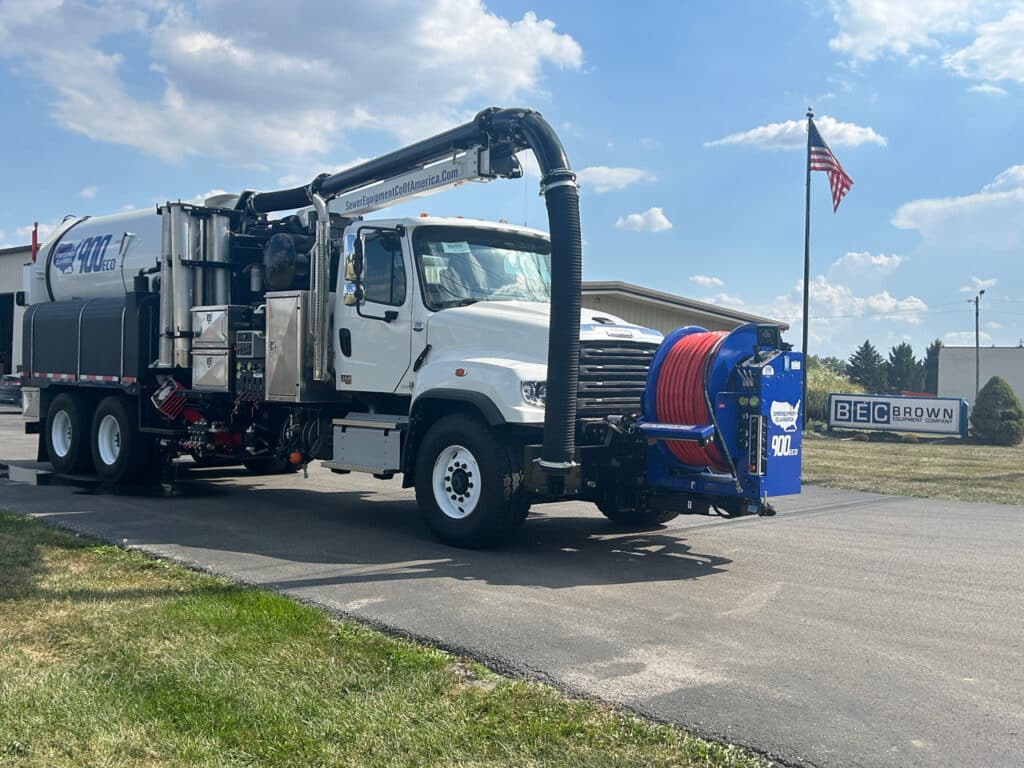
A combination sewer cleaning unit is a comprehensive, all-in-one solution designed for the toughest sewer cleaning challenges. Its key features include:
- Integrated Three-in-One System: It combines a high-pressure water jetter for breaking up blockages, a powerful vacuum for immediate debris removal, and a large debris tank to hold the collected material. This allows for a complete cleaning process in a single pass.
- Enhanced On-Site Productivity: Many advanced models feature water recycling systems that filter and reuse wastewater. This capability significantly reduces fresh water consumption and minimizes downtime spent on refills, making them highly efficient for large-scale operations.
- Ideal for Heavy-Duty Applications: This robust design makes combination units the go-to choice for municipalities and contractors facing heavy sludge, compacted sediment, and other challenging blockages that require both power and suction.
Standalone Jetters
A standalone jetter is a specialized machine engineered for targeted, high-pressure water jetting. It offers a different set of advantages for more specific tasks:
- Focused Jetting Power: Using powerful, specialized nozzles, these units are highly effective at clearing grease, sediment, scale, and other common obstructions, particularly in smaller-diameter pipes.
- Compact and Maneuverable: Their key advantage is a compact design, which makes them perfect for operating in environments with limited access, such as narrow urban streets, alleys, or residential properties where larger equipment cannot go.
- Practical for Routine Maintenance: While they lack an integrated vacuum—meaning dislodged material remains in the pipeline—their affordability and ease of operation make them a practical and efficient solution for routine maintenance and light-duty projects.
Key Decision Factors: Combo Unit vs. Standalone Jetter
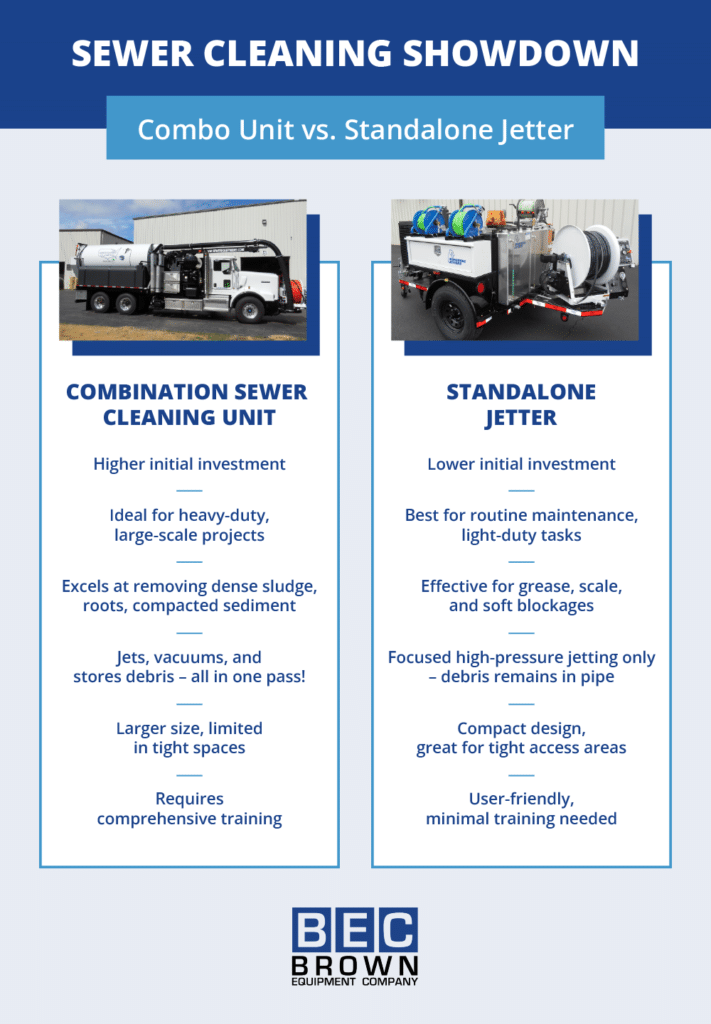
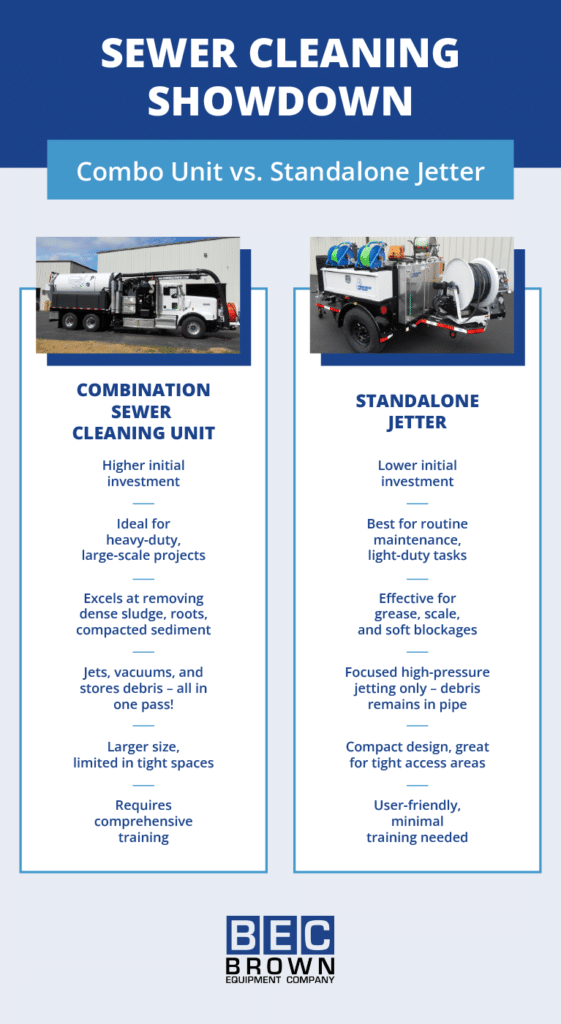
Choosing the right sewer cleaning equipment requires a careful evaluation of your specific operational needs. Here’s a head-to-head comparison of combination units and standalone jetters across the most important factors to help you make an informed decision.
Cost & ROI
- Combination Units: These units represent a significant upfront investment. However, their all-in-one functionality can lead to substantial long-term savings by reducing labor hours, minimizing the need for multiple vehicles on a job site, and increasing overall efficiency. For organizations handling high-volume, intensive cleaning projects, the return on investment is realized through lower operational expenses over the equipment’s lifespan.
- Standalone Jetters: With a more focused design, standalone jetters have a much lower initial purchase price, making them an accessible option for smaller companies or municipalities with limited budgets. They offer a cost-effective solution for routine maintenance and less complex jobs where a large, multifunctional machine isn’t necessary.
Ultimately, the return on investment depends on your project scale, frequency, and the specific challenges your sewer cleaning operations face. The experts at Brown Equipment Company can help you conduct a cost-benefit analysis to determine which machine will deliver the best long-term value for your specific needs.
Performance & Debris Type
- Combination Units: Engineered for heavy-duty applications, combination units excel at both dislodging and removing stubborn materials. Their integrated vacuum system is essential for clearing dense sludge, compacted sediment, tree roots, and other bulky debris in a single pass. Many models also feature water recycling systems, which conserve water and reduce downtime for refills, boosting productivity on large-scale projects. For comprehensive condition assessment alongside cleaning, many municipalities pair combination units with CCTV or camera-based inspections.
- Standalone Jetters: These machines are highly effective for clearing grease, scale, and other soft blockages. However, their primary limitation is the lack of a vacuum system. Any debris dislodged during jetting remains in the pipe, often requiring a separate vacuum truck for removal. This makes them less suitable for jobs involving large quantities of solid material.
For light, routine blockages, standalone jetters typically perform well, but combination units are the better fit when you’re dealing with heavy debris and need both cleaning and removal in one pass.
Maneuverability & Job Site Accessibility
- Combination Units: Their larger size and weight can pose a challenge in confined environments. Operating in narrow urban streets, tight alleys, or residential areas with limited access can be difficult, making site evaluation a critical step before deployment.
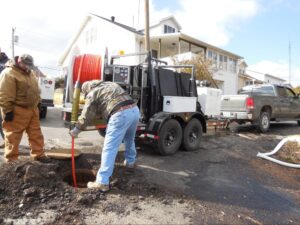
- Standalone Jetters: The compact and often trailer-mounted design of standalone jetters is a major advantage. They can be easily maneuvered into tight spaces where larger trucks cannot go, making them the ideal choice for residential work or maintenance in dense urban settings.
If your work frequently takes place in tight or congested areas, a standalone jetter’s smaller footprint is typically more practical than a full-size combination unit.
Operator Expertise and Maintenance
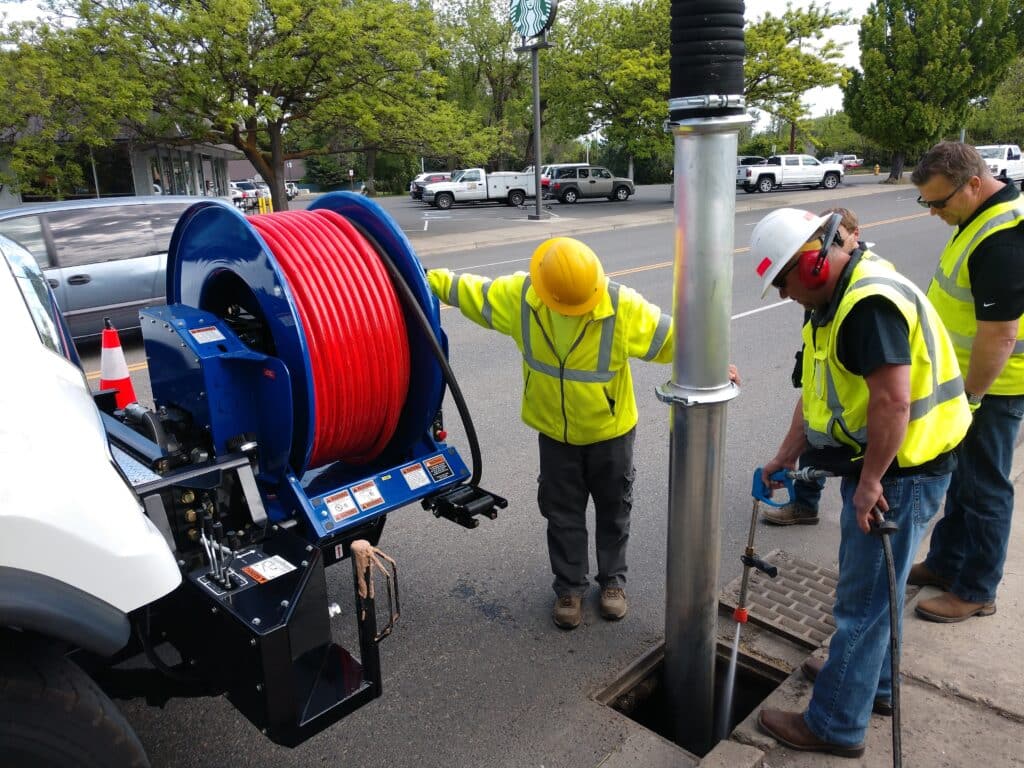
- Combination Units: The dual-functionality of these machines requires more comprehensive operator training to ensure safe and efficient use. Maintenance is also more complex, involving regular checks on the high-pressure pump, vacuum system, and recycling mechanisms to prevent downtime.
- Standalone Jetters: Simplicity is a key benefit. They are user-friendly, require minimal training to operate, and are easy to deploy quickly. While maintenance is more straightforward, the high-pressure systems mean that hoses and nozzles can experience faster wear and tear, requiring frequent inspections.
Teams with limited training resources may prefer standalone jetters, while operations with skilled staff and service support can take full advantage of the added capabilities of combination units.
Maintenance and Support
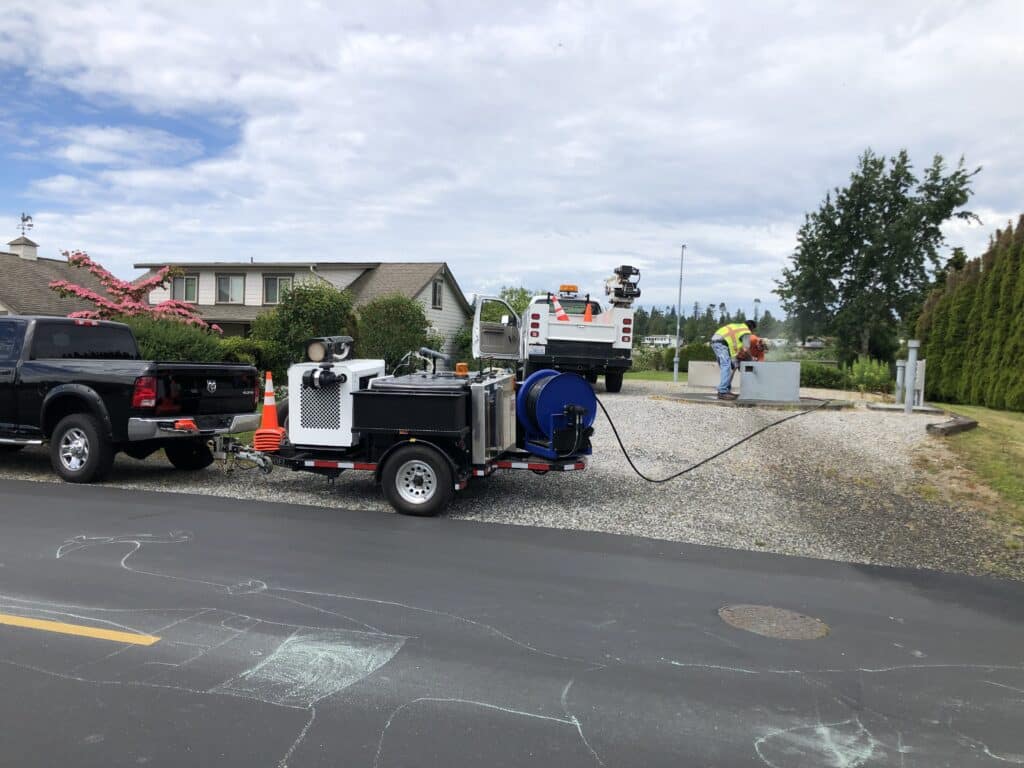
Regardless of the equipment type chosen, regular maintenance is crucial:
- For Combination Units: Focus on high-pressure pumps, vacuum systems, and recycling mechanisms. Routine cleaning of the debris tank and scheduled lubrication of moving parts keep the unit running efficiently.
- For Standalone Jetters: Regularly inspect hoses, nozzles, and pump systems for signs of wear or damage. Flushing the system helps prevent sediment buildup that can reduce jetting performance.
Proper training and reliable support are equally important. That’s why Brown Equipment Company provides comprehensive operator training and has a dedicated service team to help you protect your investment. A well-maintained machine, backed by expert support, is the best way to extend equipment lifespan, minimize downtime, and avoid costly repairs.
Frequently Asked Questions (FAQ)
What is the main difference between a combination unit and a standalone jetter?
The primary difference is functionality. A standalone jetter is a specialized tool that uses high-pressure water to break up blockages. A combination unit, on the other hand, is an all-in-one machine that not only jets the lines but also simultaneously vacuums and removes the dislodged debris, storing it in a tank for disposal.
What are PSI and GPM, and why do they matter?
PSI (Pounds per Square Inch) refers to the water pressure, which is the force that breaks apart blockages. GPM (Gallons Per Minute) refers to the water flow, which is what flushes the debris out of the pipe. The right balance is crucial: higher PSI is needed for tough clogs like roots or hardened grease, while higher GPM is essential for flushing debris down larger-diameter pipes. The ideal specifications depend entirely on the type of work you do most often.
Can I use a standalone jetter for heavy debris?
While a standalone jetter is excellent for clearing grease, scale, and minor blockages, it is not designed for heavy debris removal. Because it lacks a vacuum system, any dislodged solid material (like rocks, compacted sediment, or heavy sludge) will remain in the pipe. For these jobs, a combination unit is necessary to both dislodge and remove the material effectively.
Is a water recycling system worth the investment?
For contractors or municipalities that perform extensive sewer cleaning, a water recycling system offers a significant return on investment. It saves time by eliminating the need to stop work to refill fresh water tanks, reduces overall water consumption (which can lower operational costs), and allows crews to stay on the job longer, increasing productivity. For smaller-scale or occasional jobs, it may not be as critical.
How often does sewer cleaning equipment require maintenance?
Regular maintenance is critical to extend the life of your equipment and prevent costly downtime. A daily pre-operation check of fluid levels, hoses, and nozzles is recommended. More thorough inspections and preventative maintenance on the pump, engine, and vacuum system (for combination units) should be performed based on the manufacturer’s recommended service intervals, typically measured in operating hours. These practices align with preventive maintenance principles found in EPA guidance on collection system maintenance and sewer cleaning.
Selecting the Optimal Sewer Cleaning Solution
Selecting the right sewer cleaning equipment is essential for maintaining efficient, cost-effective operations. Combination units and standalone jetters each address different cleaning needs—from heavy-duty, large-scale tasks to routine maintenance of smaller systems. By thoroughly evaluating operational demands, budget constraints, and environmental factors, you can make an informed decision that enhances productivity while ensuring a safe and clean working environment.
Let our expert team at Brown Equipment Company help you choose the right equipment to maximize efficiency and safeguard your infrastructure. Contact us to schedule a hands-on demonstration today.