
When temperatures drop and the ground freezes, municipal crews and contractors don’t get to stop working. Burst utilities, emergency repairs, and urgent infrastructure projects happen year-round — and cold weather hydro excavation is often the only method capable of exposing buried utilities in frozen ground without creating unacceptable strike risk. With the right preparation, your hydrovac operation can remain productive and safe throughout a Midwest winter.
Key Takeaways
- Hydro excavation can penetrate frozen ground using heated water, making it one of the few reliable excavation methods when other approaches fail in hard freeze conditions.
- Ground begins to freeze below 36°F, solidifies at 32°F, and reaches hard freeze at 28°F or lower — each threshold changes your operational approach.
- Winter hydrovac operations can take 2–3x longer than summer jobs; realistic scheduling prevents rushed, unsafe work.
- Between-job winterization — not just end-of-day procedures — is essential in climates with sustained freezing temperatures.
- Ice buildup in water lines, tanks, and pumps is the top cold-weather equipment damage risk; water expands as it freezes and can burst lines and crack tanks.
- Extending your hydrovac work season by just two weeks on each end can increase revenue potential by approximately 8%.
Why Winter Hydro Excavation Demands a Different Approach
Frozen ground doesn’t behave like warm soil. Soil begins to frost below 36°F, reaches a freeze at 32°F, and hits hard freeze conditions at 28°F or lower. At hard freeze, mechanical excavation creates fractured soil, lateral ground disturbance, and significantly elevated utility strike risk — operators lose the tactile feedback they rely on in softer ground.
Hydrovac trucks are uniquely capable in this environment because heated water thaws and breaks up frozen ground directly at the excavation point. Cold and wet conditions are where air excavation underperforms relative to hydro — a gap that becomes decisive in winter.
One more reason winter hydrovac readiness matters: emergencies don’t pause for the weather. Burst utilities and urgent infrastructure repairs are among the most common cold-weather excavation scenarios — and exactly when crews can least afford equipment downtime or a method that fails.
Assessing Ground Conditions Before You Dig
Cold-weather hydro excavation starts before the truck leaves the yard. A pre-job site assessment — ground conditions, soil type, estimated freeze depth, and utility density — tells your crew how to configure the equipment and how much time to budget.
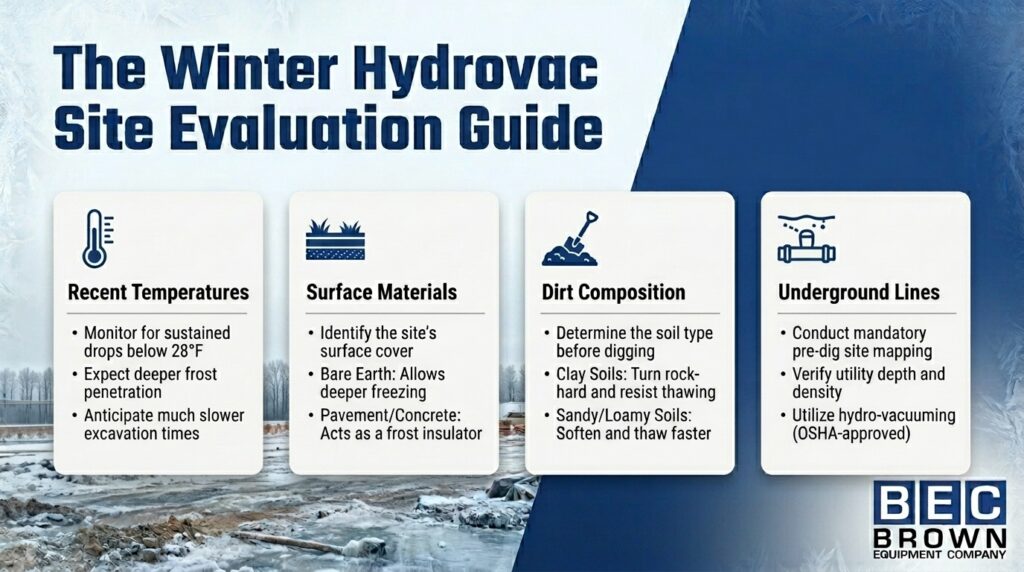
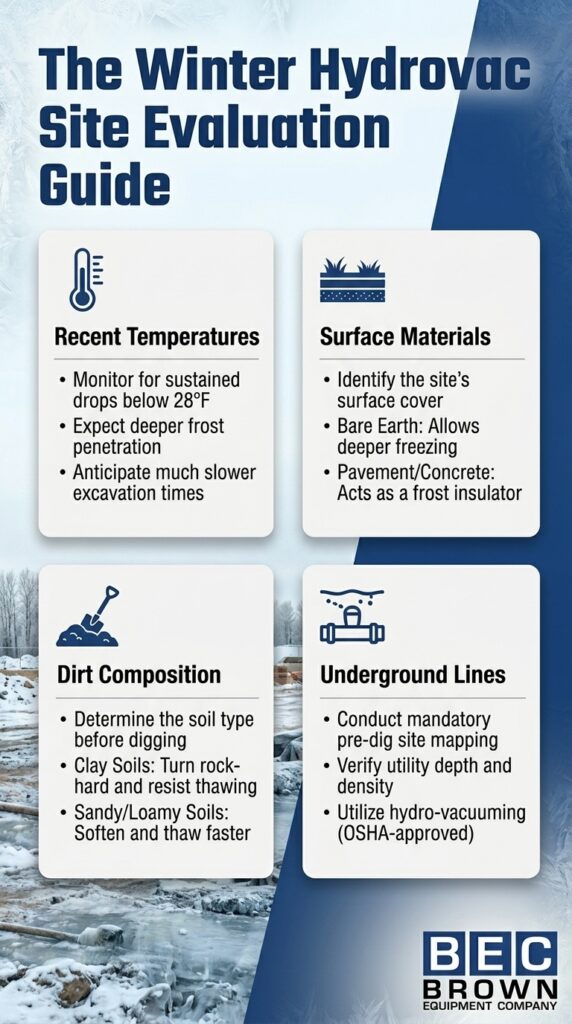
Key pre-job considerations:
- Surface temperature history: Has the site been below 28°F for multiple consecutive days? Sustained hard freeze means deeper frost penetration and longer dig times.
- Surface cover: Asphalt and concrete hold heat differently than exposed soil. Pavement can insulate frost; bare earth often freezes deeper.
- Soil composition: Clay soils freeze harder and resist thaw longer than sandy or loamy soils.
- Utility depth and density: OSHA 1926.651(b)(3) recognizes hydro-vacuum excavation as an approved method for utility locating in frozen ground conditions, but a thorough site assessment is still required before breaking ground.
One critical scheduling note: winter hydrovac operations can take 2–3x longer than comparable summer jobs. Build that time into your schedule. Rushed winter excavation is where mistakes happen.
Getting the Most from Your Heated Water System
A hydrovac truck’s heated water system is its most important cold-weather asset. Hot water thaws frozen ground on contact and keeps slurry fluid enough to pump. Without sufficient water temperature and pressure, you’re fighting the ground instead of working with it.
Practical guidelines for cold-weather water system management:
- Monitor water temperature throughout the job. Heat loss increases as ambient temperatures drop, particularly over long water travel distances.
- Warm up the system completely before starting excavation. Cold or lukewarm water delivered to hard-frozen ground wastes time and stresses the pump.
- Check your water source temperature before drawing from a cold reservoir or municipal standpipe — feed water temperature affects your effective output temperature at the nozzle.
Managing Blower Distance and Depth in Cold Conditions
Vacuum performance is the other half of the cold-weather equation. Frozen slurry is heavier and more viscous than warm-weather spoil, which puts extra strain on the blower and vacuum system.
A standard blower on a hydrovac truck is effective up to 200 feet from the truck; greater horizontal distance or significant excavation depth requires a more powerful blower. In winter, that effective range shrinks because frozen slurry moves harder through the system. Plan truck positioning with that in mind, and verify blower capacity before taking on jobs with deep utility targets or long lateral runs.
If your current equipment isn’t rated for the job conditions, Brown Equipment Company’s hydro excavator inventory and rental fleet include options sized for more demanding winter applications.
Winterizing Your Hydro Excavator: Between Jobs and End of Season
Winterization is where most cold-weather hydrovac operations break down. A single freeze event inside an unwinterized system can burst water lines, crack tanks, and sideline a truck for days. Ice expansion inside lines, tanks, and pumps is the number one cold-weather equipment damage risk for hydrovac fleets.
Between-Job Winterization
In sustained freezing conditions, winterization can’t wait until end of day. There are two primary between-job winterization approaches:
- Air purge systems: Most modern hydrovac trucks have onboard compressors that push residual water out of lines after each job. This is the minimum between-job procedure when temperatures are below freezing.
- Antifreeze recirculation: More thorough than air purge alone, recirculating antifreeze through the water system while driving to the next job site is the preferred approach for crews operating through multi-month freeze conditions.
End-of-Season Winterization
For extended cold-weather storage or end-of-season shutdown, the procedure goes further:
- Drain all tanks, water lines, and pump components completely.
- Inspect and replace fittings and seals showing wear — cold temperatures accelerate deterioration of rubber components.
- Check batteries. Battery strength can drop by up to half in cold weather, and a failed battery on a winter job site is a serious problem.
- Verify that heated shroud enclosures for all water system components are intact, particularly for equipment stored or operated through extended freeze conditions.
Brown Equipment Company’s maintenance & repairs team supports end-of-season winterization inspections and can identify components that need service before the next operating season.
Cold-Weather Slurry Management
Slurry disposal is a practical logistics challenge that cold-weather guides consistently ignore. The spoil coming out of a winter hydrovac job is colder, heavier, and often partially frozen — which creates two problems.
First, it moves harder. Slurry that pumps easily in summer may partially solidify in the vacuum tank during a long winter job. Keeping the system active and the truck moving, rather than letting it sit idle in freezing air, helps maintain flow. Some crews insulate debris tanks in extreme cold climates.
Second, disposal options may narrow in severe weather. Some disposal facilities reduce operating hours or suspend operations in extreme cold. Know your disposal destination before the job begins — and have a contingency. A full slurry tank and a closed facility at the end of day isn’t just inconvenient; it can put the next day’s job at risk.
Worker Safety During Winter Hydro Excavation
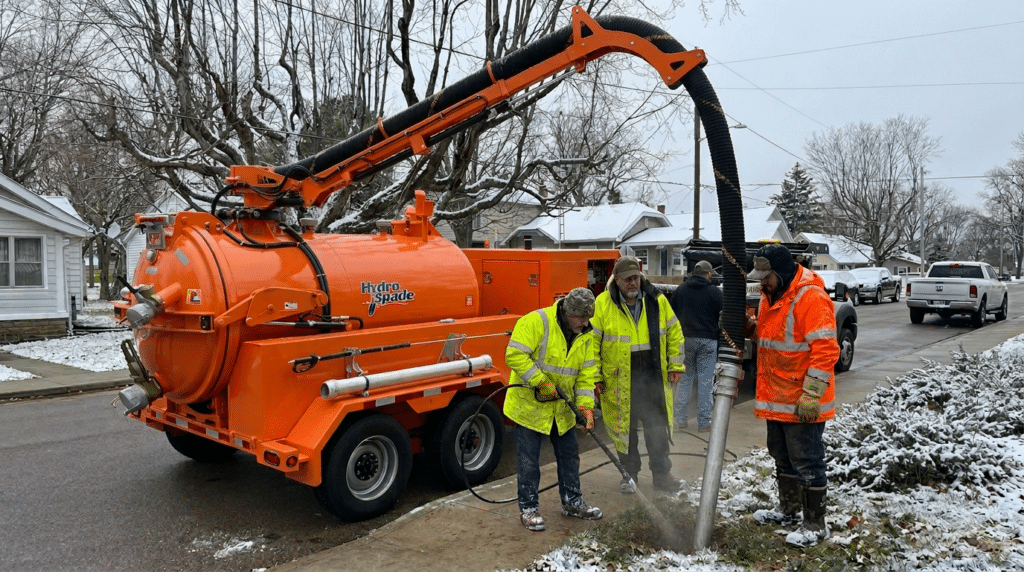
Equipment readiness and worker safety aren’t separable on a winter hydrovac job. Both require the same advance planning.
Standard cold-weather PPE applies: insulated waterproof outerwear, layered base clothing, waterproof gloves rated for water handling, and slip-resistant footwear rated for ice. Water exposure is constant on hydrovac jobs. In freezing temperatures, wet clothing becomes a hypothermia risk quickly.
Additional safety practices for winter operations:
- Weather monitoring belongs on the job, not just in the pre-trip check. Conditions can change mid-dig, and an approaching temperature drop can affect both ground conditions and crew safety.
- Set pace expectations with crews. Winter operations take longer — communicating that ahead of time reduces pressure to rush and improves safety outcomes.
- Establish a warm-up rotation. Workers stationed near excavation points in sub-freezing temperatures with water misting should rotate off exposure periodically.
Frequently Asked Questions About Cold Weather Hydro Excavation
Can hydro excavation be used in winter or on frozen ground?
Yes. Hydro excavation can penetrate frozen ground using heated water to thaw and break up frozen soil at the excavation point. It remains effective in hard freeze conditions (28°F or lower) where mechanical excavation creates unacceptable utility-strike risk. Proper equipment setup, heated water management, and winterization procedures are required for safe and efficient operation.
What temperature does ground freeze for excavation purposes?
Ground begins to frost below 36°F and reaches a freeze at 32°F. Hard freeze conditions occur at 28°F or lower. At hard freeze, mechanical excavation becomes risky — frozen ground resists penetration, creates lateral disturbance, and increases utility strike potential significantly. These are the conditions where hydrovac has its clearest advantage over other methods.
How do you winterize a hydro excavator between jobs?
In sustained freeze conditions, run the truck’s onboard air purge system after every job to push residual water from the lines, or use antifreeze recirculation while in transit to the next site. For end-of-season storage, fully drain all tanks, lines, and pump components; inspect and replace worn rubber seals and fittings; verify battery capacity; and confirm that heated shroud enclosures for water system components are intact and functional.
What are the biggest challenges of winter hydro excavation?
Operations typically run 2–3x longer than comparable summer jobs; frozen slurry is heavier and puts extra strain on vacuum systems; equipment requires between-job winterization to prevent ice damage to lines and pumps; and slurry disposal logistics can be complicated by facility closures in severe weather. Thorough pre-job planning addresses most of these challenges before they become problems in the field.
Is it worth extending the hydrovac season into winter months?
For most municipal and contractor operations, yes. Extending the operating season by just two weeks on each end can increase annual revenue potential by approximately 8%. For emergency and utility work, winter capability often isn’t optional — crews need to respond regardless of the temperature.
Ready to Keep Your Hydrovac Operation Running Through Winter?
Winter doesn’t have to mean downtime for your hydrovac fleet. With the right equipment, proper winterization procedures, and realistic scheduling, hydro excavation can be a year-round capability for municipal crews and contractors across the Midwest.
Whether you’re evaluating new equipment, need pre-winter service, or want to explore rental options for seasonal work, Brown Equipment Company has the equipment and expertise to help. The Hydro-Spade is our featured hydrovac line, purpose-built for demanding year-round applications.
Contact the Brown Equipment Company team to discuss your operation’s needs — whether that’s equipment selection, service support, or a free on-site demonstration.
For a closer look at Brown Equipment Company’s featured hydrovac unit built for year-round use, watch the Hydro-Spade truck walkthrough below.