Pothole season never really ends. When a pothole opens up, your crew’s ability to make a durable repair depends as much on the equipment behind them as the technique they use. Choosing the right asphalt hot box starts with understanding what separates one system from another and which configuration fits your fleet, crew size, and annual repair volume.
Key Takeaways
- An asphalt hot box keeps hot mix at working temperature for extended holds, so crews can deliver durable repairs without repeated trips to the plant.
- The three main configurations are trailer-mounted, truck-mounted, and skid-mounted patch truck inserts. Each serves a different fleet and operational profile.
- Capacity, heating system type, fuel source, and recycler capability are the four factors that drive most buying decisions.
- Whether a hot box can function as an asphalt recycler — processing millings and chunks into reusable patching material — depends on its heating system design and burner configuration. Confirm recycler capability before purchasing if material reclamation is a priority.
- Municipalities with lower-volume or seasonal patching needs may find renting a hot box more cost-effective than purchasing outright.
What Is an Asphalt Hot Box and How Does It Work?
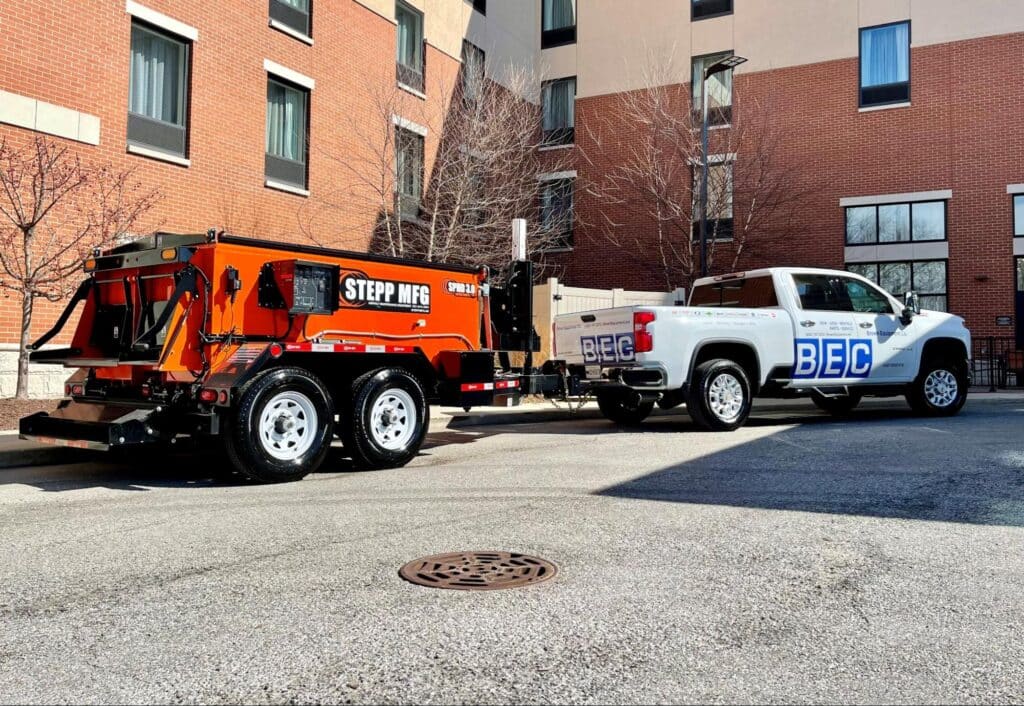
A hot box is a thermally insulated container that holds hot mix asphalt (HMA) at working temperature until it’s ready to be placed. Unlike cold patch, which can be applied at ambient temperature but produces less durable repairs, HMA requires heat to bond properly with surrounding pavement. A hot box uses a propane or diesel burner system to maintain that heat for hours or even overnight.
Compared to hauling material in a standard dump truck, a hot box delivers two significant operational advantages:
- Extended hold time. Crews can load in the morning, hold material through the day, and complete multiple stops without the mix cooling and becoming unworkable.
- Fewer plant runs. A crew can dramatically reduce trips to the asphalt plant throughout the day, cutting fuel, labor, and downtime costs across a shift.
The Federal Highway Administration’s pavement research program identifies hot mix application as part of a semi-permanent pothole repair approach that delivers meaningfully better long-term performance than cold patching. For public works departments managing tight budgets, durable first-time repairs matter. The American Public Works Association’s pothole fact sheet reinforces this point, noting that repair method selection is one of the most consequential decisions crews make at the job site.
For a broader look at why advanced patching equipment matters for municipal operations, see BEC’s overview of essential asphalt pothole patching equipment for safe roads.
The Three Main Asphalt Hot Box Configurations
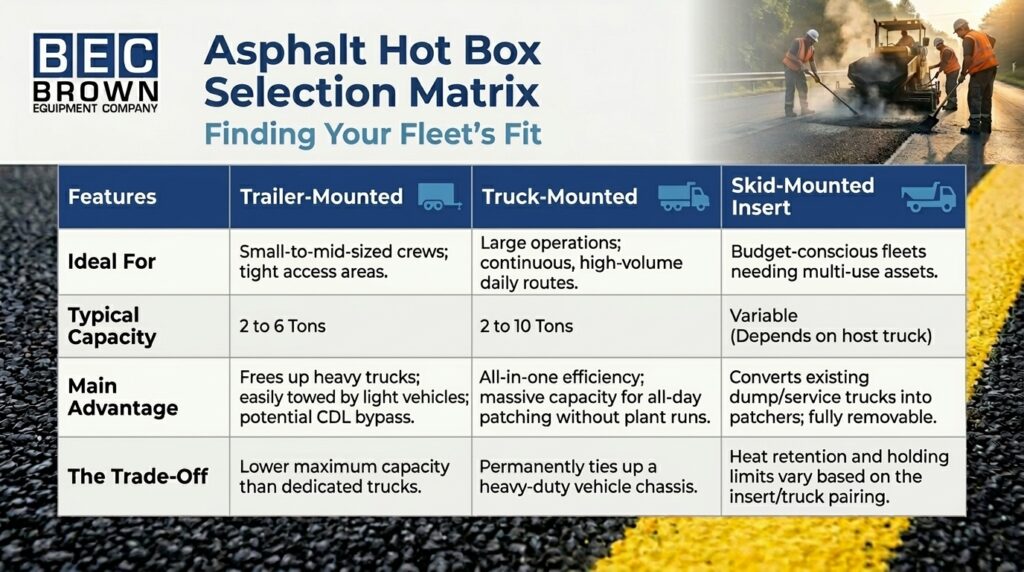
Hot box systems come in three primary mounting configurations. The right choice depends on your fleet setup, crew size, and how equipment is deployed in the field.
Trailer-Mounted Hot Box
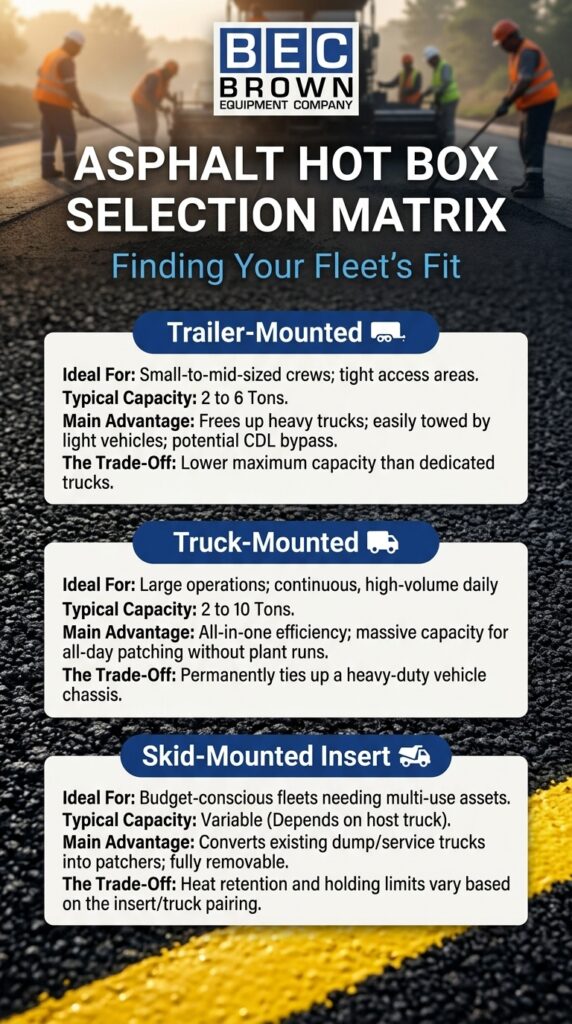
A trailer-mounted unit is pulled by a pickup truck or light utility vehicle. These systems are available in smaller capacity ranges, typically 2 to 6 tons, making them well-suited for municipalities or contractors with lighter patching workloads or tight access situations where a full truck would be harder to maneuver. The trailer format allows departments to pair a hot box with existing fleet vehicles without dedicating a full truck to the task. Smaller trailer units may also fall below the GVWR thresholds that require a commercial driver’s license, though operators should verify CDL requirements with their state DOT.
Truck-Mounted Hot Box
Truck-mounted systems integrate the hot box directly onto a dedicated truck chassis, combining hauling and heating capacity into a single unit. These are the most common choice for larger municipal operations and contractors with high daily repair volumes. Capacity ranges are broader, typically 2 to 10 tons depending on chassis and configuration, and the dedicated setup reduces operational steps. The trade-off is that a truck-mounted hot box ties up a vehicle full-time, which can be a constraint for smaller fleets.
Skid-Mounted Patch Truck Insert
A skid-mounted system installs in the bed of a dump truck or service truck, converting existing fleet assets into patching units. This configuration appeals to operations that want hot box capability without adding a dedicated vehicle. Portability is the key advantage: the skid can be removed and reassigned between trucks as needed. Capacity and heat retention capabilities vary by unit, so confirm what a given system can hold and for how long before committing to a purchase.
Key Selection Factors for an Asphalt Hot Box
Capacity, heating system type, fuel source, and recycler capability are the four decisions that drive most asphalt hot box purchases. Each factor maps to a real operational variable — crew size, material handling requirements, fuel infrastructure, and materials budget. Evaluating them in order prevents both over-buying and buying the wrong configuration for how your crew actually works.
Capacity
Capacity, measured in tons, should match your daily repair volume and crew size. Oversizing leads to unused material and fuel waste; undersizing means the crew runs out of material before the route is complete. A smaller two-person crew handling scattered residential calls has different requirements than a six-person crew running a coordinated maintenance program.
When evaluating capacity, also consider how far your routes run from the nearest asphalt plant. The more isolated the job sites, the more valuable a larger capacity hold becomes.
Heating System: Oil-Jacketed vs. Air-Jacketed
Hot box units use one of two primary heating approaches. Understanding the trade-offs helps you match the system to your material handling needs:
- Oil-jacketed systems heat asphalt through oil as a transfer medium. Heat distributes evenly throughout the material, reducing hot spots and scorching. These systems typically require only one burner to maintain temperature and to function as a recycler.
- Air-jacketed systems use airflow to distribute heat. They reach working temperature faster initially but require a second burner to achieve recycler capability, which increases fuel cost for reclaiming operations.
If recycling millings and chunks is a priority for your operation, the heating system affects both capability and operating cost.
Fuel Source: Propane vs. Diesel
Propane and diesel are the two standard fuel options. Diesel offers better fuel economy for sustained operation, making them cost-efficient for crews in the field all day. Propane burns cleaner and is easy to source in rural areas but may cost more per BTU. For municipal fleets already standardized on diesel vehicles, using diesel hot boxes simplifies fueling logistics in the field.
Recycler Capability
A standard hot box maintains the temperature of pre-purchased hot mix. An asphalt recycler does more: it processes millings, chunks, and reclaimed material into usable patching mix. Whether a hot box has this capability depends on its heating system design and burner configuration — it is not a simple single-vs.-dual-burner rule. Air-jacketed systems typically require a second burner to generate enough sustained heat for recycling. Oil-jacketed systems distribute heat through oil as a transfer medium and can often recycle with a single burner. The right answer depends on which brands and configurations BEC currently carries, so confirm recycler capability and its specific requirements before purchasing.
For municipalities managing tight materials budgets or operating in areas with limited plant access, recycler capability can meaningfully reduce material costs. Processing millings from other roadway projects turns what would otherwise be waste into usable patching material.
Brown Equipment Company’s roadway and highway maintenance equipment page is the right starting point for exploring available patching system options. If you’re also thinking through a year-round maintenance program, BEC’s post on proactive roadway maintenance strategies for lasting safety provides a useful seasonal framework.
Rent vs. Buy: Matching the Equipment to Your Patching Volume
Not every operation needs to own a hot box. For municipalities with shorter patching seasons or lower annual repair volumes, renting a unit can be more cost-effective than purchasing and maintaining one year-round. Brown Equipment Company offers equipment rentals for operations that need patching capability without a full capital commitment.
Ownership makes more sense when annual patching volume is high, routes are consistent, and the equipment will be deployed regularly across multiple seasons. When weighing buy vs. rent, factor in not just the purchase price but also parts availability, service support, and the cost of downtime when a unit needs repair. BEC’s OEM parts inventory and maintenance and repair services are available for equipment purchased through BEC, helping keep your patching operation productive.
Brown Equipment Company’s history in this category runs deeper than most dealerships. The company’s roots trace back to the Porta-Patcher, a patching machine BEC developed and patented before transitioning to its current role as a full-service equipment dealership. That background informs how the BEC team advises customers on patching equipment today.
Frequently Asked Questions About Asphalt Hot Boxes
What is an asphalt hot box and how does it work?
An asphalt hot box is an insulated container with a propane or diesel burner that maintains hot mix asphalt at working temperature until it is ready to be placed. This allows repair crews to hold material for extended periods without the mix cooling and becoming unworkable, eliminating the need to return to the asphalt plant throughout the day.
What is the difference between a hot box and an asphalt recycler?
A standard hot box holds and maintains pre-purchased hot mix at working temperature. An asphalt recycler does more: it processes millings, chunks, and reclaimed pavement material into usable patching mix. Whether a given hot box can do this depends on its heating system design and burner configuration. Air-jacketed systems typically need a second burner for recycling; oil-jacketed systems can often recycle with a single burner. Not all hot boxes have recycler capability, and the specific configuration required varies by manufacturer. If material reclamation is a priority, confirm what is needed before purchasing.
Trailer-mounted or truck-mounted: which is right for my operation?
Trailer-mounted systems pair with existing pickup trucks and work well for lighter-volume operations or those building around an existing fleet. Truck-mounted systems are better suited for high-volume operations that can commit a dedicated vehicle to patching work. The right answer depends on your daily repair volume, fleet configuration, and how frequently the equipment will be deployed.
What size asphalt hot box does my crew need?
Match capacity to your daily repair volume and the distance from your routes to the nearest asphalt plant. Smaller crews handling scattered calls typically work well with 2- to 3-ton units; larger crews running systematic maintenance programs may need 4 to 10 tons of capacity to stay productive through a full shift. Contact the BEC team to discuss which capacity range fits your operational profile.
Do smaller hot boxes require a commercial driver’s license?
CDL requirements depend on the GVWR of the truck-and-trailer combination, not the hot box itself. Smaller trailer-mounted units may fall below the CDL threshold, which can give municipalities more staffing flexibility. Requirements vary by state, so operators should verify applicable GVWR limits with their state DOT or a commercial licensing authority before making a purchase decision based on CDL factors.
Find the Right Patching Equipment for Your Operation
Choosing the right asphalt hot box means matching the system to how your crew works: the routes you run, the volume you handle, and the fleet you’re building around. Brown Equipment Company can help you work through the trade-offs and find the configuration that fits.
Ready to explore your options? Contact Brown Equipment Company to discuss your patching equipment needs with the BEC team.