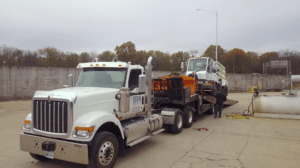

Municipal fleets are the backbone of essential city services, including sewer maintenance and other critical public works operations. When these vehicles fail or experience extended downtime, city officials face challenges such as service disruptions, higher costs, and potential public dissatisfaction. To mitigate these issues, it’s crucial to track measurable data points known as Fleet Maintenance Key Performance Indicators (KPIs). With these metrics, municipal fleet managers can optimize maintenance schedules, allocate resources effectively, and ultimately ensure reliable service delivery within tight budget constraints.
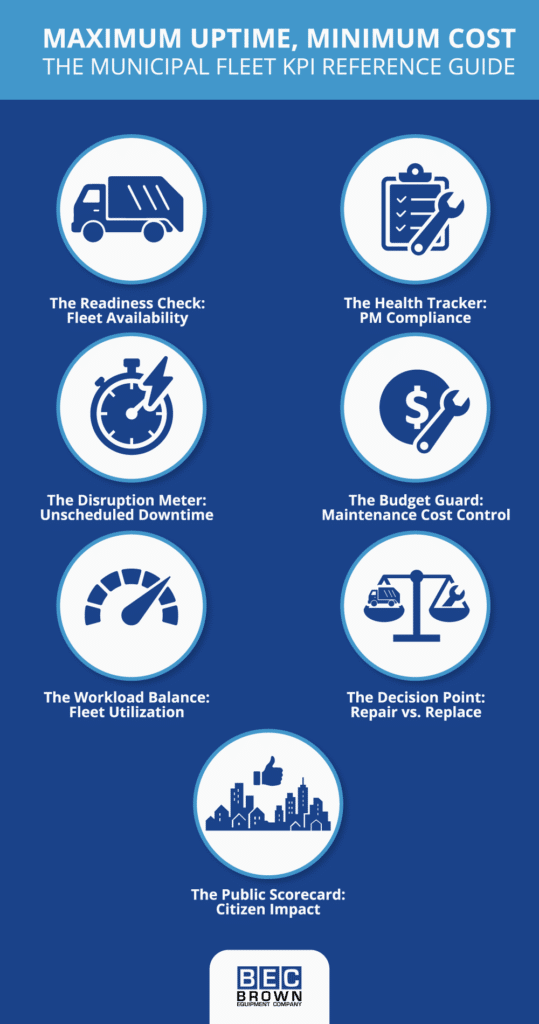
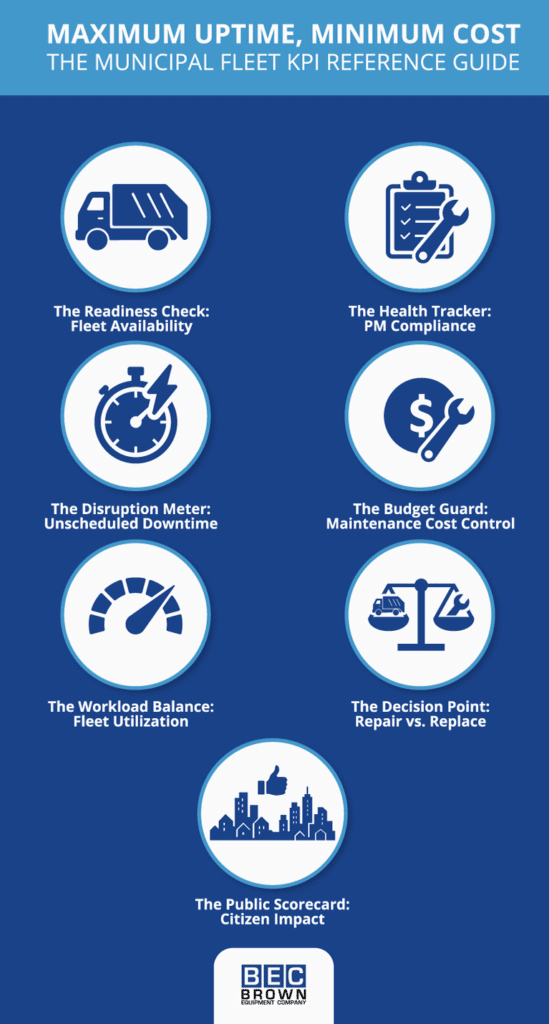
This guide details seven essential fleet maintenance KPIs and explains why they matter for municipalities aiming to deliver uninterrupted and cost-effective services. By incorporating data-driven strategies, public works departments can reduce unexpected breakdowns, improve operator safety, and maintain a high standard of public trust.
Fleet Maintenance KPIs for Municipalities
Municipal fleet needs vary seasonally and by department. For instance, sanitation vehicles face heavier loads during certain months, and landscaping equipment may be in higher demand in summer. These fluctuations can affect maintenance requirements and budget planning. Tracking KPIs provides clear insights into when vehicles need upkeep, how frequently they break down, and what resources go into repairs. This information helps city administrators make informed choices when investing in new equipment or upgrading existing assets.
By proactively monitoring maintenance metrics such as availability and downtime, city leaders can mitigate service gaps before they become community-wide issues. Each KPI discussed below reflects a vital aspect of municipal fleet efficiency, from ensuring vehicles are always ready for action to controlling long-term maintenance expenses.
1. Fleet Availability Metric
Fleet availability measures the percentage of vehicles or pieces of equipment ready for active service at any given time. Municipal tasks often run on strict schedules—like trash collection or emergency debris cleanup—and any downtime can cause significant delays that affect local residents’ routines.
Why It Matters
- Ensures timely delivery of essential services, from clearing storm debris to street sweeping.
- Assists in anticipating staffing and scheduling needs, allowing managers to allocate vehicles properly.
- Helps maintain public confidence by minimizing disruptions in day-to-day operations.
Calculation and Strategies
Fleet Availability (%) = (Number of Operational Vehicles ÷ Total Fleet Vehicles) × 100
For instance, if 50 out of 58 vehicles are ready to operate, the availability is approximately 86%. During challenging seasons—such as a Midwest city experiencing heavy winter demands—service vehicles may face more wear and tear.
To further enhance availability, a city confronting recurring issues with its sewer or storm drainage systems might consider investing in specialized sewer and water management equipment. Other strategies include:
- Scheduling additional inspections during peak operational periods.
- Conducting proactive repairs to prevent major breakdowns.
- Utilizing telematics for real-time monitoring of engine and drivetrain health.
Managers can also review workload data periodically. When certain departments, such as parks, have reduced demand in off-seasons, these vehicles can be shifted to basic maintenance routines to optimize availability during busier times.
2. Preventative Maintenance (PM) Compliance
Preventative Maintenance (PM) Compliance tracks the consistency with which scheduled maintenance tasks are completed. This metric is key to extending vehicle longevity and ensuring reliability in environments where usage can be intensive.
Why It Matters
- Detects minor issues before they escalate into major failures.
- Helps extend the operational life of vehicles, potentially delaying the need for costly replacements.
- Enhances safety for both vehicle operators and the public.
Calculation and Strategies
PM Compliance (%) = (Number of Completed PM Tasks ÷ Total Scheduled PM Tasks) × 100
For example, if 40 out of 45 scheduled tasks are completed, the compliance rate reaches nearly 89%. Municipalities that adhere to regular preventative maintenance often enjoy lower overall repair costs because early fixes prevent major failures.
Strategies to ensure high compliance include:
- Automating service reminders using maintenance management software.
- Training operators to correctly identify and report early warning signs.
- Fostering a culture that prioritizes regular maintenance over reactive repairs.
3. Unscheduled Downtime
Unscheduled Downtime refers to the time that vehicles are out of service due to unexpected breakdowns. Delays in repairing critical vehicles, like street sweepers or wastewater trucks, can significantly impact public services and community satisfaction.
Why It Matters
- Disrupts essential functions such as stormwater management and waste collection.
- Can lead to higher repair costs if breakdowns are not addressed swiftly.
- May force other vehicles to work overtime, which in turn increases the risk of additional failures.
Calculation and Strategies
Unscheduled Downtime (%) = (Unscheduled Downtime Hours ÷ Total Available Hours) × 100
If a vehicle is unexpectedly offline for 12 hours out of a possible 120 service hours, its unscheduled downtime is around 10%. Reducing unscheduled downtime is especially crucial in departments responsible for critical services.
Effective strategies to reduce downtime include:
- Implementing predictive maintenance techniques that use sensor data to anticipate issues.
- Keeping an inventory of commonly used spare parts to expedite repairs.
- Training technicians well so that they can troubleshoot and fix issues quickly.
4. Maintenance Cost Control
Municipal budgets are often limited, and controlling maintenance costs is a key metric for city leaders. This KPI measures the money spent on parts, labor, and external services, ensuring every dollar is used wisely.
Why It Matters
- Keeps fiscal oversight tight by preventing budget overruns.
- Highlights areas where repair costs might be nearing the point that replacement becomes more economical.
- Supports strategic planning by balancing short-term fixes with long-term investments in fleet health.
Strategies for Cost Control
- Conducting cost-benefit analyses to determine whether repairs or replacements are more economical over time.
- Managing parts inventories efficiently to avoid unnecessary storage and holding costs.
- Consolidating maintenance tasks to reduce repeated labor charges.
- Evaluating repair costs relative to a vehicle’s market value can help determine the optimal time for replacement.
5. Fleet Utilization
Fleet Utilization examines how effectively each vehicle is used relative to its capacity. Overused vehicles may incur excessive wear, while underused ones can represent wasted resources.
Why It Matters
- Balances the workload across the fleet, which can help extend vehicle longevity.
- Avoids the pitfalls of idle equipment and the associated financial inefficiencies.
- Provides insights into whether vehicles can be shared across multiple departments.
Calculation and Strategies
Fleet Utilization (%) = (Actual Usage Hours or Miles ÷ Total Available Hours or Miles) × 100
For example, a dump truck running 180 hours out of a possible 240 hours has a utilization rate of 75%. High utilization rates need close monitoring to avoid premature wear, while underused vehicles may signal the need to reassign assets to more critical tasks.
Strategies to improve utilization include:
- Rotating assignments to prevent overuse of individual vehicles.
- Sharing equipment among departments during off-peak periods.
- Planning vehicle use around community needs to maximize overall usage.
6. Repair vs. Replace Decisions
Municipal fleet managers often face the challenging decision of whether to repair an aging vehicle or replace it entirely. Analyzing repair costs against a vehicle’s current market value helps in making a fiscally sound choice.
Why It Matters
- Prevents excessive expenditure on vehicles that require frequent, costly repairs.
- Ensures funds are allocated effectively among various municipal priorities.
- Sets the stage for maintaining a modern and reliable fleet, capable of meeting public service demands.
Evaluating Repair vs. Replace
Fleet managers typically analyze annual repair costs, vehicle downtime, and overall mileage. If repair expenses start to approach a significant portion of a vehicle’s market value, it may be more economical in the long run to replace the asset. Data-driven analyses, including lifecycle cost assessments, support these decisions.
7. Citizen Impact and Service Mandates
The ultimate measure of a municipal fleet’s success is its impact on the community. Delays in trash collection or snow removal can quickly erode public trust and satisfaction.
Why It Matters
- Provides a direct link between fleet performance and public service delivery.
- Affects both budget approvals and political support for fleet initiatives.
- Indicates whether the city is meeting established service mandates.
How to Assess Citizen Impact
City officials can monitor resident feedback through complaints, social media, and call-center reports to gauge satisfaction. A data-driven approach to correlating fleet performance with service quality can provide the evidence needed for internal discussions regarding resource allocation and training enhancements.
Implementing robust safety protocols further supports consistent service quality. When services are delivered smoothly, public trust in municipal operations is reinforced.
Seasonal Demands and Performance Indicators
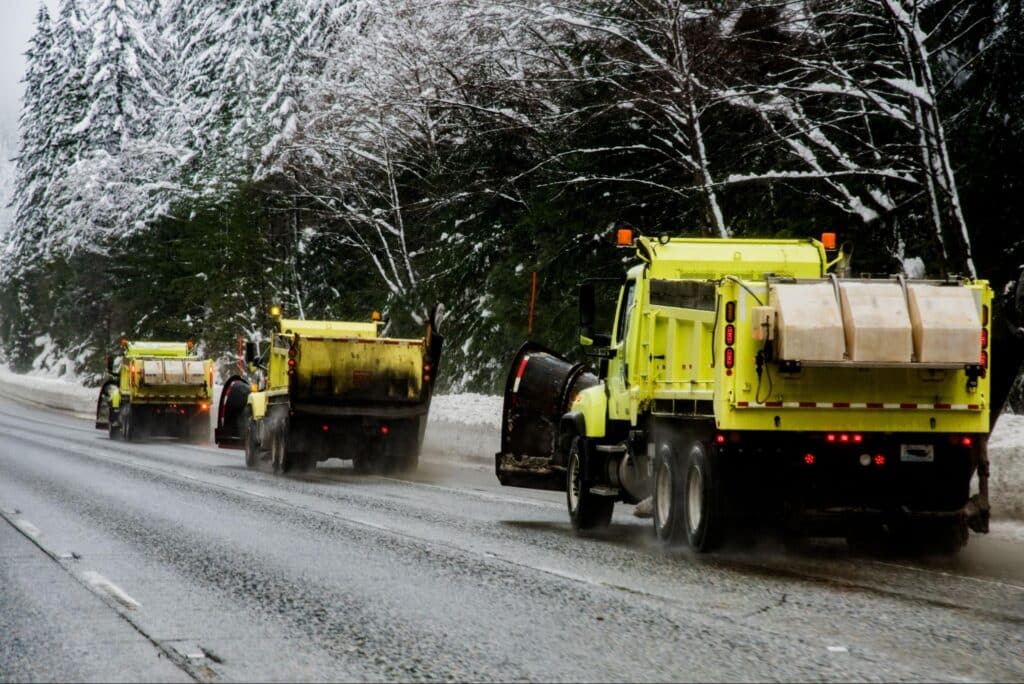
Seasonal changes bring unique challenges. Snowplows dominate winter operations, while street sweepers and landscaping vehicles are in higher demand during the warmer months. Understanding seasonal performance trends ensures that fleets are prepared for every eventuality.
Why Seasonal Readiness Matters
- Allows for the timely reassignment and reconfiguration of vehicles in response to weather changes.
- Ensures that critical services remain reliable during periods of high demand.
- Reduces the risk of accidents and failures by ensuring regular inspections and maintenance during peak seasons.
Tracking and Strategies
Monitoring seasonal KPIs, such as equipment allocation and usage rates, can help cities plan for seasonal fluctuations. For example, extra inspections prior to winter storms can prepare a fleet for severe conditions, while early spring reviews can prevent unexpected downtime in road maintenance vehicles.
Leveraging Technology for Enhanced KPI Tracking
Modern telematics, electronic diagnostics, and advanced data analysis tools allow city managers to monitor fleet performance in real time. With these digital solutions, maintenance issues can be addressed proactively.
- Digital dashboards consolidate maintenance schedules and task lists, making it easier to spot overdue items.
- Automated alerts provide real-time updates on engine health and fluid levels, reducing unexpected failures.
- Real-time driver behavior tracking supports training initiatives, improving overall safety and efficiency.
Improved connectivity also fosters collaboration between departments. When detailed fleet data is shared across teams, decisions regarding equipment usage, repair scheduling, and budgeting benefit from a comprehensive view.
The Role of Training and Employee Development in KPI Improvement
No matter how sophisticated the technology, effective fleet management depends on the skills and knowledge of its personnel. Training ensures that operators, mechanics, and supervisors know how to interpret KPI data and apply it in their daily work.
- Training technicians to use diagnostic tools can lead to faster repairs and improved turnaround times.
- Coaching drivers on safe and efficient driving practices helps reduce vehicle strain and maintenance costs.
- Educating administrative staff on KPI analysis ensures that every metric is understood and acted upon.
Implementing regular refresher courses and cross-departmental workshops promotes a culture of continuous improvement, leading to substantial gains in overall fleet performance.
Integrating Long-Term Strategic Planning with KPI Analysis
Effective municipal fleet management is not just reactive—it’s proactive. Strategic planning, supported by thorough KPI analysis, ensures that every investment in the fleet aligns with both current needs and long-term community goals.
- Use historical maintenance data to forecast future budget needs and adjust capital investments accordingly.
- Align new vehicle purchases with current usage trends to ensure that the fleet evolves with community demands.
- Monitor broader external factors, such as evolving environmental regulations, to inform fleet composition over the coming years.
For example, consider a scenario where a mid-sized city faced recurring issues with its aging leaf collection fleet during autumn. The fleet manager began monitoring key KPIs—such as Fleet Availability, Unscheduled Downtime, and Maintenance Cost Control—to document the frequency of unexpected breakdowns. Observing that repair costs were increasingly consuming a significant portion of the vehicles’ market value, the city decided to gradually replace a portion of its aging leaf trucks over several years. In subsequent operating periods, fleet availability improved noticeably, leading to fewer service delays and enhanced operational efficiency.
How Brown Equipment Supports KPI Improvement
Brown Equipment Company partners with municipal fleets to turn KPI goals into day-to-day results. Instead of leaving you to interpret the data alone, BEC helps connect the numbers—like fleet availability, PM compliance, and unscheduled downtime—to specific maintenance actions and equipment decisions.
- Parts & Diagnostics: Fast access to critical parts and expert diagnostic support reduces unscheduled downtime and shortens repair cycles.
- PM Programs: KPI-informed PM schedules and checklists improve PM compliance and extend equipment life through custom preventative maintenance programs.
- Reconditioning: Targeted reconditioning of aging units supports smarter repair-vs.-replace decisions and better maintenance cost control.
- Fleet Review & Support: KPI-focused fleet reviews help you pinpoint what’s really driving downtime, costs, and availability issues.
If you’d like support reviewing your fleet’s KPIs or refining your maintenance approach, Brown Equipment Company can walk through your metrics with you and offer practical recommendations tailored to your operation.
Watch the video below to learn about our commitment to quality and customer satisfaction, and see firsthand why Brown Equipment Company is the trusted partner for professionals across industries.
Turning Fleet Maintenance KPIs into Reliable Service
When municipal fleets treat KPIs as everyday decision tools—not just reports—they gain tighter control over reliability, costs, and citizen-facing service levels. Metrics like fleet availability, PM compliance, unscheduled downtime, and maintenance cost control make it possible to move from reactive firefighting to a proactive, planned approach that supports both budget discipline and public trust.
If your municipality needs additional guidance on implementing a robust KPI-driven fleet management approach, reach out to Brown Equipment Company. As a full-service dealership focused on municipal needs, Brown Equipment Company delivers customized solutions that support safe, efficient, and reliable fleet operations—from preventative maintenance strategies to equipment reconditioning and custom builds.